At a glance
Paperwhite narcissus are one of the best things about indoor gardening in winter. They need no cold treatment, no specialist equipment and no real expertise. Plant bulbs in a bowl of gravel or a pot of compost in November, keep them watered, and they will reward you with clusters of intensely fragrant white flowers in time for Christmas. Getting the timing right and knowing how to prevent the stems from flopping are the two things that separate a beautiful display from a disappointing one.
They can also be planted in stages to extend the display through December and into January, which gives a succession of fresh flowers rather than one brief flush. A few bowls started two weeks apart provides flowers for the whole of the festive season for very little outlay.
What paperwhite narcissus are
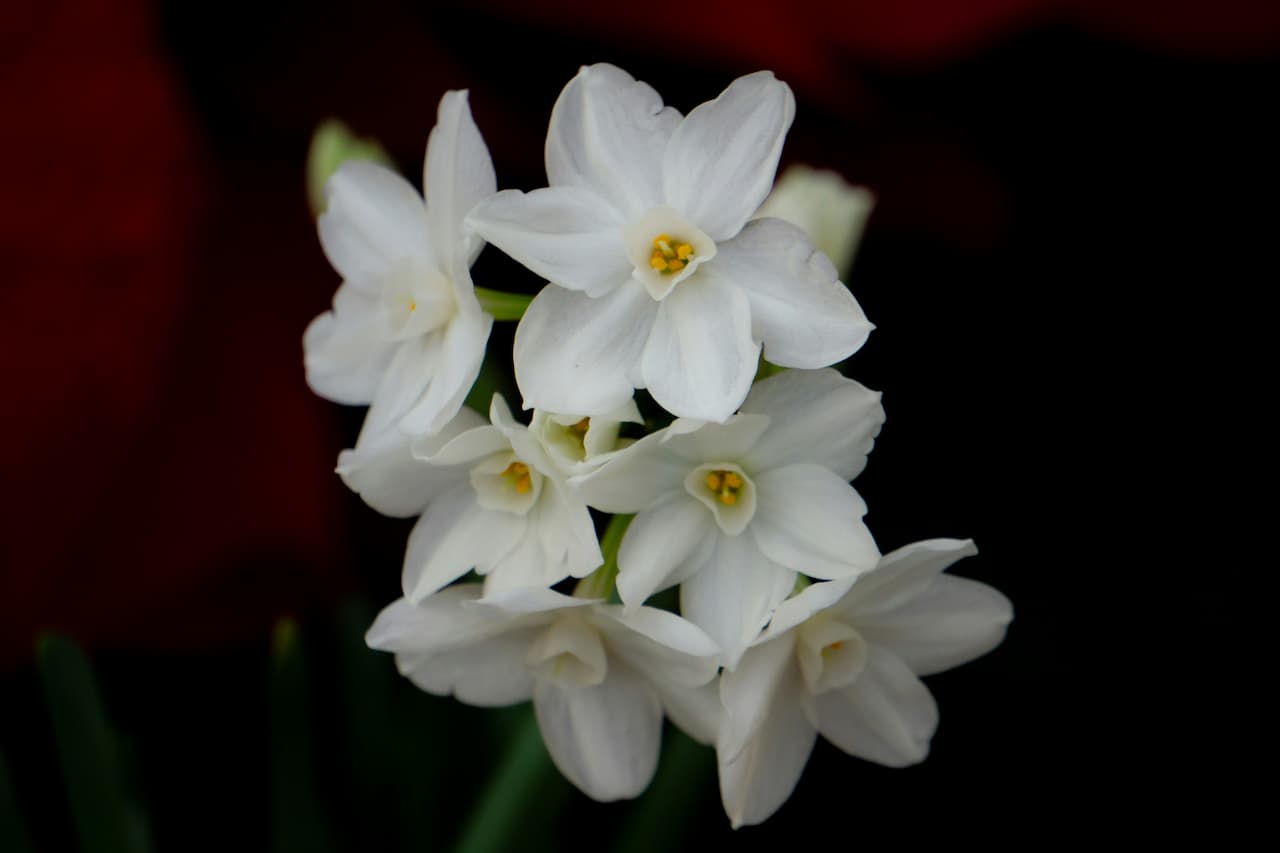
Paperwhite narcissus, botanically Narcissus papyraceus, are a group of tender narcissus that produce clusters of small white flowers with a strong, sweet fragrance. Unlike most other narcissus, they do not need a cold period to trigger flowering, which is exactly what makes them suitable for indoor forcing. They can be brought into flower in as little as four to six weeks from planting, making them one of the most reliable ways to have fragrant flowering bulbs indoors for Christmas and the weeks either side of it.
The flowers are borne on slender stems, typically three to eight blooms per stem, and the fragrance is powerful and distinctive. Not everyone finds it pleasant at close quarters in an enclosed room, which is worth bearing in mind before placing a bowl on a dining table. In a larger room or hallway the effect is more appealing. Paperwhites are not hardy in most of the UK and cannot be planted outdoors to naturalise after flowering in the way daffodils can. They are treated as a seasonal annual purchase and discarded or kept as warm-room houseplants after their flowering is done.
Choosing bulbs
Paperwhite narcissus bulbs are sold from September onwards. The most widely available variety in the UK is simply labelled Paperwhite or Narcissus papyraceus. Ziva is the most common named cultivar and the standard for commercial forcing. Inbal is another common variety with slightly shorter, sturdier stems. Both are reliable and widely available. Choose the largest bulbs you can find, as bigger bulbs contain more stored energy and produce more flower stems per bulb. Avoid any that are soft, mouldy, shrunken or have long pale shoots already showing, as these have depleted some of their energy reserves and will underperform.
Buy bulbs as early in the season as possible if you want to force them in stages through December and January. Bulbs bought in September or October can be started immediately, with further batches planted two to three weeks apart to extend the display across the whole festive period.
When to plant for Christmas flowers
Paperwhites take approximately four to six weeks from planting to flowering, depending on the temperature they are kept at. Warmer conditions speed up growth. Cooler conditions slow it down and produce sturdier, less leggy stems. In a warm living room kept at around 20 degrees Celsius, expect flowers in four to five weeks. In a cool hallway at around 15 degrees Celsius, expect five to six weeks. For flowers at Christmas, count back six weeks from Christmas Day and plant in mid to late November. If your home runs warm, count back five weeks and plant in late November.
Growing methods
There are two main methods for forcing paperwhites: growing in compost, and growing in water with gravel or stones. Both work well and each has clear advantages.
Growing in compost produces the most robust plants with the strongest root systems. Use any free-draining peat-free compost in a pot with drainage holes and plant bulbs so that just the upper third sits above the surface. Multiple bulbs can be planted with their sides almost touching for a denser display. Water moderately after planting and keep the compost just moist throughout. Overwatering causes the bulb bases to rot before they have properly rooted. Do not stand the pot in a saucer of water.
Growing in gravel or pebbles and water is a popular and attractive alternative. Place a layer of stones in a container without drainage holes and nestle bulbs so they are held upright with their bases just touching the water level, not submerged. The roots grow down into the water and the stones keep bulbs stable. Top up the water periodically to keep the level just at the base of the bulbs. Growing in hyacinth glasses, which hold a single bulb suspended over water, is a third option that works with paperwhites exactly as with hyacinths, and allows the root development to be watched, which is particularly appealing for children.
Light and temperature management
After planting, the key to good paperwhites is managing temperature and light. A common mistake is placing newly planted bulbs in a warm bright room immediately. This produces rapid, soft growth and the stems grow tall and floppy very quickly. The better approach is to start paperwhites in a cool location, around 10 to 15 degrees Celsius, for the first two weeks after planting. A cool hallway, an unheated spare bedroom or a cool windowsill work well. This slower, cooler start produces shorter, sturdier stems that are much less prone to flopping. After two weeks, or once shoots are around five to eight centimetres tall, move the pot to a warmer, brighter position to bring on flowering.
Once in flower, keeping paperwhites away from direct radiator heat and very warm spots extends the flowering period. Flowers in a cool room at around 15 to 18 degrees Celsius will last one to two weeks. In a warm room above 20 degrees, they may last no more than ten days to two weeks.
Dealing with floppy stems
Tall, floppy stems are the most common problem with paperwhites grown indoors. The main causes are insufficient light, excessive warmth during early growth, or simply the natural tendency of some varieties to produce long stems. Staking with thin canes and garden twine is the conventional fix. Insert two or three thin bamboo canes around the edge of the pot and loop twine around the outside to create a corral that keeps the stems upright without tying individual stems.
A well-documented alternative is watering with a dilute alcohol solution during the early growth phase. Wait until the shoots are around two to three centimetres tall, then pour off the plain water and replace with a five percent alcohol solution. This is made by diluting one part of a 40 percent spirit such as gin or vodka with seven parts of water. The solution causes mild water stress that significantly reduces stem elongation without affecting the flowers. Research from Cornell University found that stems grown with a five percent alcohol solution were one third to one half shorter than water-grown equivalents, with no reduction in flower size or quality. Continue using the solution for all subsequent watering until flowering begins. Do not use beer or wine as they contain sugars that can damage the bulbs.
After flowering
Once paperwhites have finished flowering, the options are limited. Unlike hardy narcissus, which can be fed and allowed to die back naturally before replanting in the garden, paperwhites rarely perform well the following year. They can be kept in a warm, light room and fed with a liquid fertiliser to allow the leaves to die back naturally and rebuild some energy into the bulb, but the chances of a reliable second flowering are low. In mild areas of the UK, particularly in sheltered coastal gardens in the south-west, paperwhites can sometimes survive outdoors if planted in a very sheltered, free-draining spot after flowering. They are not reliably hardy through UK winters and this is a gamble rather than a reliable plan. Most gardeners discard the bulbs after flowering and purchase fresh ones the following autumn. The bulbs are inexpensive enough that this is the sensible approach.
Pests and diseases
Paperwhites forced indoors have few serious pest or disease problems, but a few issues occasionally occur. Aphids may cluster on soft new growth and are easily dealt with by wiping stems with a damp cloth or a light spray of insecticidal soap. Basal rot causes the base of the bulb to become soft and dark before the bulb has properly rooted or flowered. It is caused by planting in too wet a medium or by using bulbs that were already infected. There is no recovery once rot sets in. Remove affected bulbs immediately to prevent it spreading to others in the same container. The best prevention is starting with firm, plump bulbs and not overwatering. Narcissus bulb fly can affect bulbs that have been stored or grown outdoors, but is rarely an issue with freshly purchased forcing bulbs. Soft, hollow bulbs at purchase indicate possible larvae damage, which is another reason to select only firm, full-weight bulbs. Etiolated growth, where stems are very pale and weak, is caused by insufficient light rather than pests. Move the container to a brighter position.
Toxicity
All narcissus, including paperwhites, are toxic to humans and animals if ingested. The bulbs contain alkaloids that cause nausea, vomiting and other symptoms if eaten. Keep bulbs and plants away from children and pets. The sap can also cause skin irritation and contact dermatitis in sensitive individuals, so wearing gloves when handling bulbs is sensible for those with sensitive skin. The cut stems exude a sticky sap that can shorten the vase life of other cut flowers, so keep paperwhite stems separate from other flowers in arrangements.
Buying a ready-made display
Paperwhite narcissus already in growth or bud are commonly sold in garden centres and supermarkets from November onwards. These are a practical option for anyone who did not plan ahead, or as a gift that will flower reliably without the recipient needing to do anything except water them. When buying ready-started paperwhites, choose plants where the buds are just visible at the top of the shoots rather than plants already in full flower, as these will last longer once home. Check that the stems are short and sturdy rather than tall and already flopping.
Common problems at a glance
Most paperwhite failures come down to just a handful of causes. The table below covers the most common symptoms and their fixes.
Plant in batches for a longer season. A single batch of paperwhites produces flowers for one to two weeks. Starting fresh bowls every two weeks from October through December gives a succession of blooms through the whole festive period rather than one brief flush that may or may not coincide with the date you want.
Share on socials: