At a glance
November is the month when the UK garden settles into its winter rest. Growth has largely stopped, the borders are bare and the kitchen garden is producing its last winter crops. It can feel like there is little to do – but the gardener who uses November well is the one who hits the ground running in March. Tree and shrub planting, soil improvement, structural maintenance and tool care all happen most efficiently now, when the pressure of the growing season has lifted and there is time to do things properly.
It is also one of the best months for bare-root planting. Bare-root trees, hedging plants, fruit bushes and roses are available from November through to March and cost a fraction of container-grown equivalents. A bare-root planting session in November gives plants the maximum time to establish before spring growth begins. If you completed your October gardening jobs including tulip bulb planting, November is a natural continuation of the autumn preparation work.
Planting in November
If the ground is frozen, heel bare-root plants in temporarily rather than leaving roots exposed. Bare-root trees and shrubs can survive out of the ground for several days if kept cool and moist. If conditions prevent immediate planting, dig a shallow trench in a sheltered spot, lay the roots in and cover with soil. Plants heeled in like this can wait several weeks without damage.
Vegetable garden jobs
Continue harvesting winter brassicas – leeks, kale, Brussels sprouts and winter cabbage are at their best through November and December. Leeks improve in flavour after a hard frost. Kale is at its most tender and nutritious in cold weather. Lift and store root vegetables before the ground freezes hard – parsnips can stay in the ground through light frost and actually improve in flavour, but carrots and beetroot must be lifted and stored in boxes of barely damp sand in a cool shed.
The traditional November task of digging empty vegetable beds and leaving the surface rough allows frost to break down clods and improve soil structure over winter. Add a generous layer of well-rotted compost or manure at this point – it will be incorporated naturally by worms over winter. Inspect stored onions, potatoes and squash regularly and remove any showing signs of rot immediately.
Borders and perennials
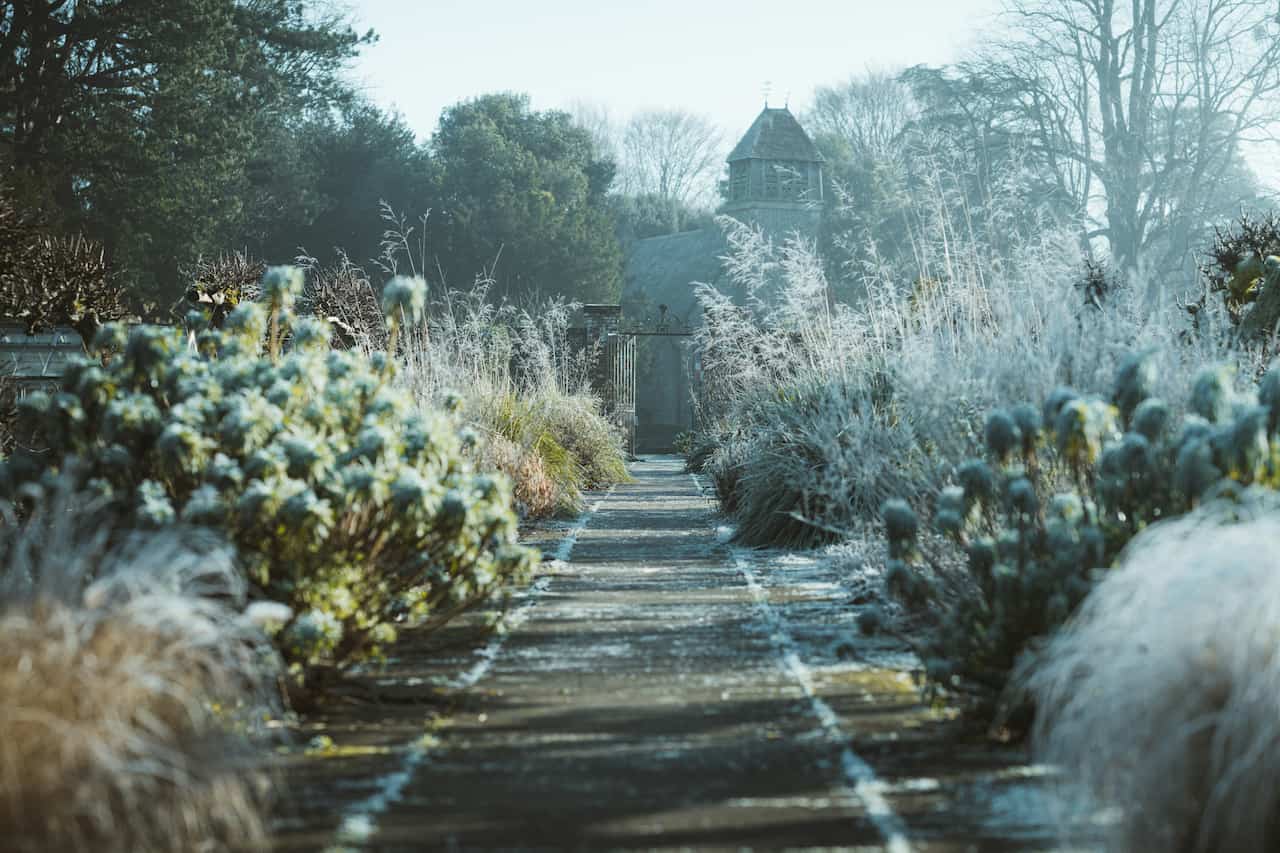
Resist the impulse to cut everything back in November. Seed heads provide food for birds through winter, the dead stems provide overwintering habitat for beneficial insects and the structural interest of frosted seed heads and grasses is genuinely attractive through the coldest months. Cut back tender perennials that have been blackened by frost – pelargoniums, salvias and dahlias – removing the dead top growth and covering the crowns with a thick mulch of straw or bark if you are attempting to overwinter them in the ground.
Apply a 10cm layer of bark chips or composted material around the base of newly planted trees, shrubs and any borderline-hardy plants to insulate the roots from the worst of the frost.
Lawn care in November
The lawn needs very little active management in November but there are two important rules. Stay off the lawn when it is frozen – walking on frozen grass breaks the cell walls of individual grass blades and leaves brown footprint-shaped marks that persist for weeks. Keep fallen leaves off the lawn – a blanket of wet leaves excludes light and traps moisture, creating ideal conditions for fungal disease and moss. Blow or rake leaves off regularly through November. The mowing season is typically over by mid-November. If grass is still growing slowly, a final cut at a high setting (4-5cm) is worthwhile. Do not apply any fertiliser – the growing season is over and autumn feeds applied in November will produce no benefit.
Frost protection
Insulate outdoor pots containing tender plants – terracotta pots crack when water in the compost freezes and expands. Move valuable container plants into a frost-free shed, or wrap pots in bubble wrap or hessian and move them to a sheltered wall position. Lag outdoor taps if not already done – wrap with foam pipe lagging secured with duct tape. A split outdoor tap caused by frost is an entirely avoidable repair. Check greenhouse heating is working before the first hard frost rather than discovering a problem on a -5°C night in January.
Tool and structure maintenance
November is the ideal time for the annual tool maintenance session. Clean all tools thoroughly, remove rust with wire wool, sharpen cutting edges and oil metal surfaces with a light coating of linseed or WD-40. Well-maintained tools last decades and perform dramatically better than neglected ones. Check all garden structures – fences, raised bed timbers, pergolas and arches – and carry out any repairs needed before winter weather worsens them. Our guide on how to fix a broken fence UK covers fence repair in detail if any panels need attention before the worst winter weather arrives.
November is also the right time to review what worked and what did not in the garden this year. Notes made now – which varieties performed, where the soil needs improvement, what to grow more or less of – are invaluable when planning next year’s garden.
Share on socials: