At a glance
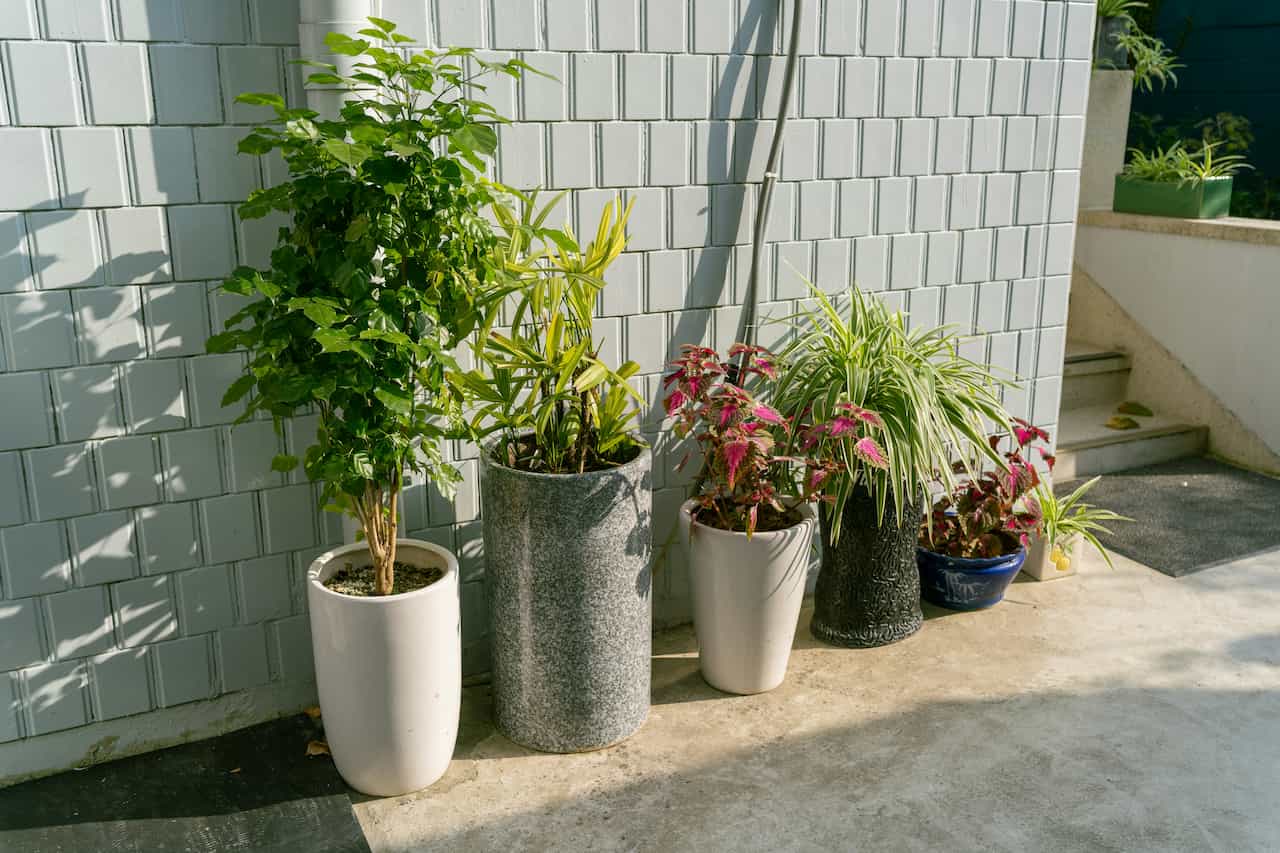
The most common mistake with planters is filling them entirely with summer bedding – which gives a spectacular June display that collapses by late August and leaves bare containers for eight months of the year. The alternative is thinking about planters as permanent structures with seasonal layers: an evergreen or structural plant as the spine, one or two seasonal performers that change through the year, and trailing or edging plants that soften the container rim. This approach gives something worth looking at in every month and makes the overall display far more resilient to the variable UK summer.
The choice of plant also needs to match the position. A sun-loving lavender in a north-facing courtyard will survive but will never thrive. The right plant in the right exposure – even if it is a less showy variety – will always outperform an inappropriate plant in a supposedly premium position. This guide is organised by situation first, with specific variety and plant recommendations for each, covering sunny spots, shade, edibles and permanent structural planting for year-round impact.
Container size is the other variable that determines success more than most gardeners realise. A 30-litre pot dries out twice as fast as a 60-litre pot in summer, which means twice the watering and twice the risk of failure during holidays or busy periods. Where possible, err toward larger containers – the visual impact is also better, as a generous plant in a generous pot always looks more considered than the same plant crammed into something undersized. The minimum practical size for most shrubs and perennials is 30cm diameter; for trees and large structural plants, go to at least 50cm.
Planning for year-round interest
A well-planned planter has something happening in every season. This does not require constant replanting – it requires selecting plants with overlapping seasons of interest so that as one finishes, another takes over. The simplest approach is the thriller, filler, spiller structure: one tall structural plant, a mounding mid-height plant for bulk, and a trailing plant that softens the pot rim. Apply this in seasonal layers and the display practically manages itself.
Best plants for sunny planters
A south or west-facing planter in full sun is the easiest to fill successfully – the widest range of plants thrives in these conditions and the challenge is managing heat and moisture rather than finding performers. The priority in a sunny planter is good drainage and regular watering in summer; terracotta pots dry out particularly fast and may need daily watering in July and August. Add perlite to the compost mix to improve drainage and reduce the risk of root-rotting in prolonged wet periods.
For long-season sunny displays, the key is choosing plants with overlapping flowering periods rather than peak performers that all bloom at once and leave nothing for late summer. Start with a backbone of pelargoniums and lavender in early June, add calibrachoa and bidens for trailing colour, and keep a few late-summer performers like osteospermum in reserve to replace spent plants in August. This staggered approach gives a continuously full display from May to October without the sudden collapse that comes from a single-plant strategy.
Pelargoniums are the hardest-working plant in a sunny UK planter. They flower continuously from May to October, tolerate dry conditions better than almost any other bedding plant, come in an enormous colour range and are virtually maintenance-free beyond deadheading. If you choose only one plant for a sunny summer planter, make it a pelargonium.
Best plants for shaded planters
North-facing planters and those in permanent shade are genuinely more demanding to fill well. The range of plants that performs strongly in shade is narrower, and the temptation to use plants that prefer sun – because they look good in the garden centre – leads to leggy, pale, disappointing displays. The key is to embrace the shade palette rather than fight it: hostas, ferns, astilbes and heucheras create genuinely beautiful combinations that work with the conditions rather than against them.
The most underused shade planter plant in UK gardens is Hakonechloa macra – the golden Japanese forest grass. It forms graceful mounds of arching golden-green foliage that brighten a dark corner dramatically, tolerates deep shade well, and looks excellent through autumn as the blades take on copper and orange tones before dying back. Pair with a dark-leaved heuchera such as ‘Obsidian’ or ‘Palace Purple’ for a contrast that works from spring through to the first frosts.
Hostas in exposed positions need slug protection from day one. Hostas are the most effective large-leaved shade plant for planters but slugs target them relentlessly. Raise the pot on feet to reduce slug access, use copper tape around the rim and apply slug pellets at soil level from early spring before new growth emerges. A hosta with slug damage never fully recovers its appearance.
Edibles in planters – vegetables and herbs
Growing food in planters has become one of the most popular forms of UK container gardening, and for good reason – a productive herb planter by the kitchen door delivers daily use from March through to November, and a single well-managed tomato plant in a 30-litre container can yield several kilograms of fruit across a season. The key disciplines are pot size, water and feeding: edibles are far less forgiving of neglect than ornamentals, and the performance difference between a well-fed, consistently watered edible planter and a neglected one is dramatic.
The single biggest mistake with edibles in containers is underfeeding. Most composts exhaust their starter nutrients within six weeks, after which plants rely entirely on what you add. For fruiting crops like tomatoes and chillies, switch to a high-potassium liquid feed – tomato fertiliser is ideal – from the moment flowers appear and apply it weekly through the harvest period. Leafy crops and herbs respond better to a balanced liquid feed every two weeks. Without this feeding regime, container edibles will produce a fraction of their potential yield.
The most rewarding edibles to start with are herbs and salad leaves – both are fast-growing, can be harvested repeatedly rather than all at once, and respond well to the conditions in most UK garden spaces. A mixed herb planter with basil, parsley, chives, thyme and mint in a 40cm pot by the kitchen gives year-round harvesting and costs less than a month’s worth of supermarket herb packets.
Evergreens and permanent planting
Evergreen plants are the scaffolding that holds a container display together through winter and provides the visual anchor that makes the whole arrangement look intentional rather than accidental. The best evergreens for planters in the UK are tough enough to withstand frost, compact enough to stay in scale with their container for several years and interesting enough in leaf alone to carry the display when nothing else is flowering.
Pot size matters more for permanent evergreens than for seasonal bedding. A bay tree or cordyline will stay healthy and in proportion for two to three years in a 40-litre container, but will need potting on eventually – either into a larger pot or root-pruned and returned to the same container with fresh compost. Check root health annually by looking at the drainage holes; roots appearing in quantity signal that a repot is due.
The most versatile evergreen for UK planters is euonymus – specifically Euonymus fortunei varieties such as ‘Emerald ‘n’ Gold’ and ‘Silver Queen’. They grow in virtually any position including deep shade, tolerate neglect well, hold their variegated colour through winter and stay compact in a container for years without becoming root-bound. They are not the most exciting plant individually but as anchor plants in a mixed display, they earn their space every month of the year.
Share on socials: