At a glance
Wooden garden pots bring warmth and natural texture to patios, balconies and doorsteps that plastic containers simply cannot replicate. The material ages well – darkening and silvering gracefully over seasons in a way that improves the overall look rather than degrading it – and the insulating properties of wood protect plant roots from the temperature extremes that thin-walled plastic pots transmit freely. For plants that stay in containers year-round on UK patios, that root temperature buffer genuinely matters through cold winters and hot summers.
The challenge with wooden garden pots is longevity. The UK’s wet climate is hard on timber in contact with moist compost – wood rots from the inside out, and cheaper softwood pots treated with inadequate preservatives can fail within two or three seasons. The difference between a well-made hardwood planter that lasts fifteen years and a poorly treated pine one that collapses in three is not always visible at purchase. This guide cuts through the options and ranks the five best wooden pot types available in the UK, with honest assessments of what each one actually delivers over time.
How we assessed these pots. Each option was evaluated across five criteria: timber quality and expected lifespan, drainage provision, weight and practicality, value for money over a five-year period, and suitability for different planting uses. UK climate durability – resistance to rot and freeze-thaw damage – was weighted heavily because it is the primary failure point for wooden pots in British gardens.
Quick verdict summary
All 5 wooden pots ranked
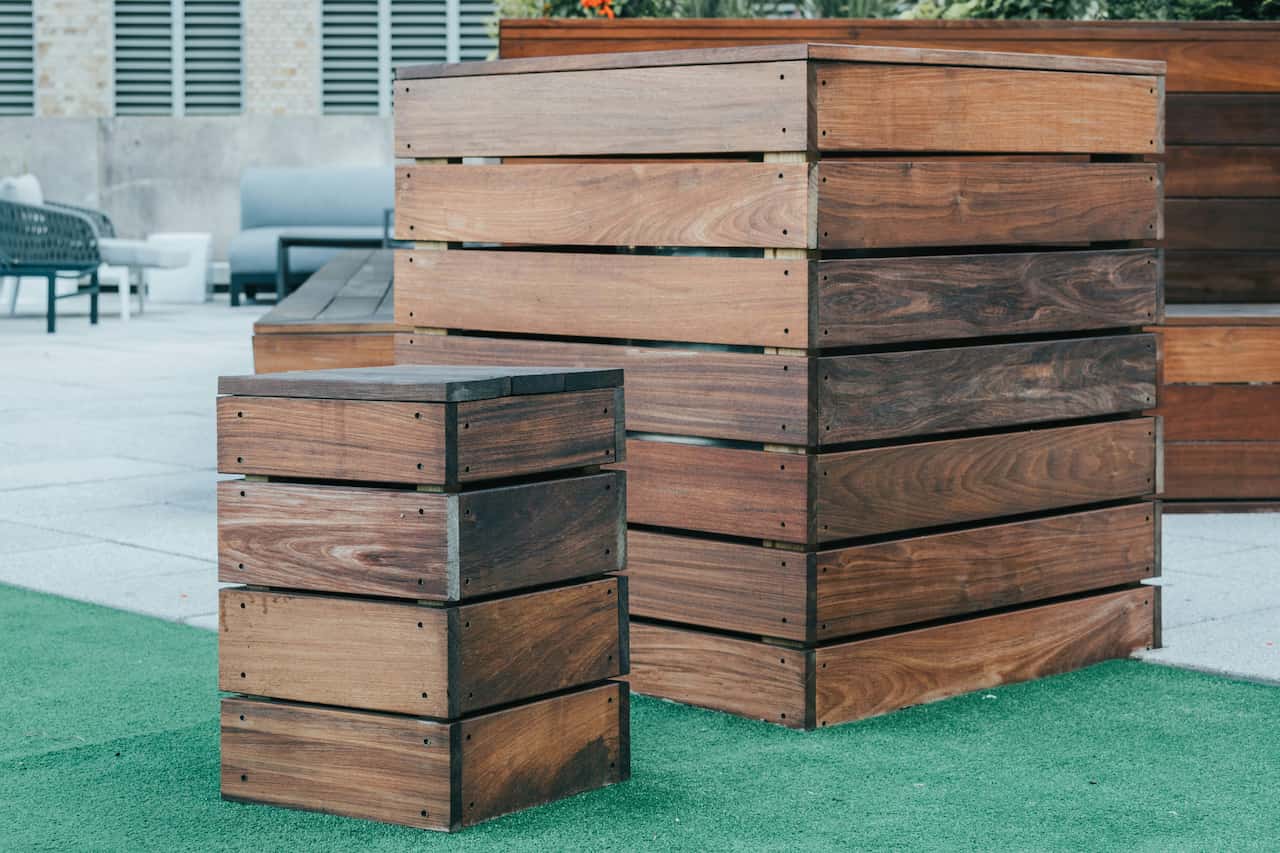
A well-made FSC-certified hardwood square planter is the benchmark wooden pot for UK gardens. Hardwoods like iroko, accoya or treated oak have significantly higher natural rot resistance than softwoods – a quality hardwood planter with pre-drilled drainage holes and a properly finished interior will reliably last ten to fifteen years in UK outdoor conditions without rotting out. The square format is versatile: it works as a standalone focal point or groups in multiples for a cohesive terrace display.
The FSC certification matters beyond the ethical dimension – it typically indicates a manufacturer engaged in responsible sourcing who is also more likely to use properly dried, well-graded timber and appropriate treatments. Look for pre-drilled drainage holes (not just one central hole but multiple holes across the base), feet or recessed base rails that lift the pot off the ground for airflow, and a minimum wall thickness of 19mm. Below that thickness the wood warps more readily under the weight of wet compost.
As an Amazon Associate I earn from qualifying purchases.
Teak is among the most rot-resistant timbers available for outdoor use. Its high natural oil content repels moisture, resists splitting and prevents the fungal growth that destroys cheaper timber. A quality teak trough planter will outlast most other wooden pots by a significant margin – fifteen to twenty-five years is realistic with minimal maintenance. Teak weathers to a handsome silver-grey if left untreated, or retains its warm honey tone if oiled annually.
The trough format suits herbs, shallow-rooted bedding plants and trailing plants well. The one significant limitation is weight – a fully planted large teak trough is extremely heavy and essentially impossible to move once filled. Plan placement carefully and ensure decking or paving can bear the load. Check for FSC certification on any teak product – unsustainable teak sourcing remains an industry issue.
As an Amazon Associate I earn from qualifying purchases.
Acacia barrel planters occupy the mid-market well – harder than pine, more affordable than teak, and with a rounded form that adds visual interest to a patio layout. Acacia has reasonable natural oil content and with annual treatment performs well for seven to ten years outdoors. The barrel shape provides a generous volume for deep-rooted plants and the curved stave construction is inherently strong. Good drainage is critical with barrel planters – ensure the base has adequate holes and sits clear of the ground on feet or risers.
As an Amazon Associate I earn from qualifying purchases.
Pressure-treated pine troughs are the entry point for wooden container gardening and the most common wooden pot sold in the UK. The pressure treatment forces preservative deep into the wood fibres under pressure, giving meaningfully better rot resistance than paint or dip-treated alternatives. A good pressure-treated pine trough will last five to eight years in UK conditions – respectable value at the price point, particularly for seasonal planting where the pot can be stored under cover in winter. Treat annually with exterior decking oil or fence paint to extend lifespan further.
As an Amazon Associate I earn from qualifying purchases.
Oak half barrels have a distinct rustic charm that suits cottage gardens, vegetable patches and informal settings. The weathered stave construction and metal hoops give an authentic character that purpose-made planters cannot quite replicate. The main issues with half barrels are inconsistent drainage – many lack adequate holes and need to be drilled before use – and variable timber quality depending on whether they are genuine reclaimed whisky casks or reproduction barrels made from lower-grade oak. A genuine reclaimed cask will outlast a reproduction significantly. Check the interior for residual liquid and treat if necessary before planting.
As an Amazon Associate I earn from qualifying purchases.
Head to head comparison
| Type | Timber | Lifespan | Cost | Score |
|---|---|---|---|---|
| FSC Hardwood Square | Iroko / accoya / oak | 10-15 yr | ~£65 | 4.6 / 5 |
| Teak Trough | Teak (FSC) | 15-25 yr | ~£95 | 4.4 / 5 |
| Acacia Barrel | Acacia | 7-10 yr | ~£45 | 4.1 / 5 |
| Pressure-Treated Pine | Pine (treated) | 5-8 yr | ~£28 | 3.8 / 5 |
| Oak Half Barrel | Oak (reclaimed) | 5-12 yr | ~£40 | 3.6 / 5 |
What to look for
Wooden pot quality is not always visible at purchase. The following criteria separate pots that will last from those that will disappoint within a few seasons, and are worth checking before buying any wooden container regardless of price.
Never line a wooden pot with plastic sheeting to retain moisture. This is the single most common cause of premature rot in wooden planters. Lining traps moisture against the wood constantly rather than allowing it to drain and dry between waterings. The interior wood stays perpetually damp and rots within two to three seasons regardless of how good the timber is. If you want to retain moisture, use water-retaining gel granules in the compost mix instead.
Final verdict and recommendations
The single most important factor when choosing a wooden garden pot is timber quality rather than price or format. A well-made hardwood pot at a higher upfront cost represents better value over five years than two cheaper pine pots that fail mid-term. The maths are straightforward: a £65 hardwood planter lasting twelve years costs roughly £5 per year. A £28 pine planter replaced every six years costs the same but with the inconvenience of replanting twice.
For the best long-term result: FSC hardwood square planter. Reliable, attractive and genuinely durable across UK outdoor conditions with no special maintenance beyond annual oiling.
For maximum longevity without compromise: Teak trough. The material is essentially the benchmark for outdoor timber performance. Plan its position carefully because it will not move easily once planted up.
For the best balance of cost and performance: Acacia barrel planter. Delivers a good seven to ten years with annual treatment, and the rounded form suits informal garden settings well.
For seasonal planting on a budget: Pressure-treated pine trough. Entirely workable for five to eight years if maintained and stored carefully over winter when empty.
Buy the best timber you can afford upfront. The difference in lifespan between a quality hardwood pot and a budget pine one is measured in years, not months – and the annual cost calculation almost always favours spending more at the start. Whatever you choose, get the drainage right: multiple holes, pot feet and no plastic lining. Good drainage matters more than any other single factor for how long a wooden pot lasts in the UK.
Share on socials: