At a glance
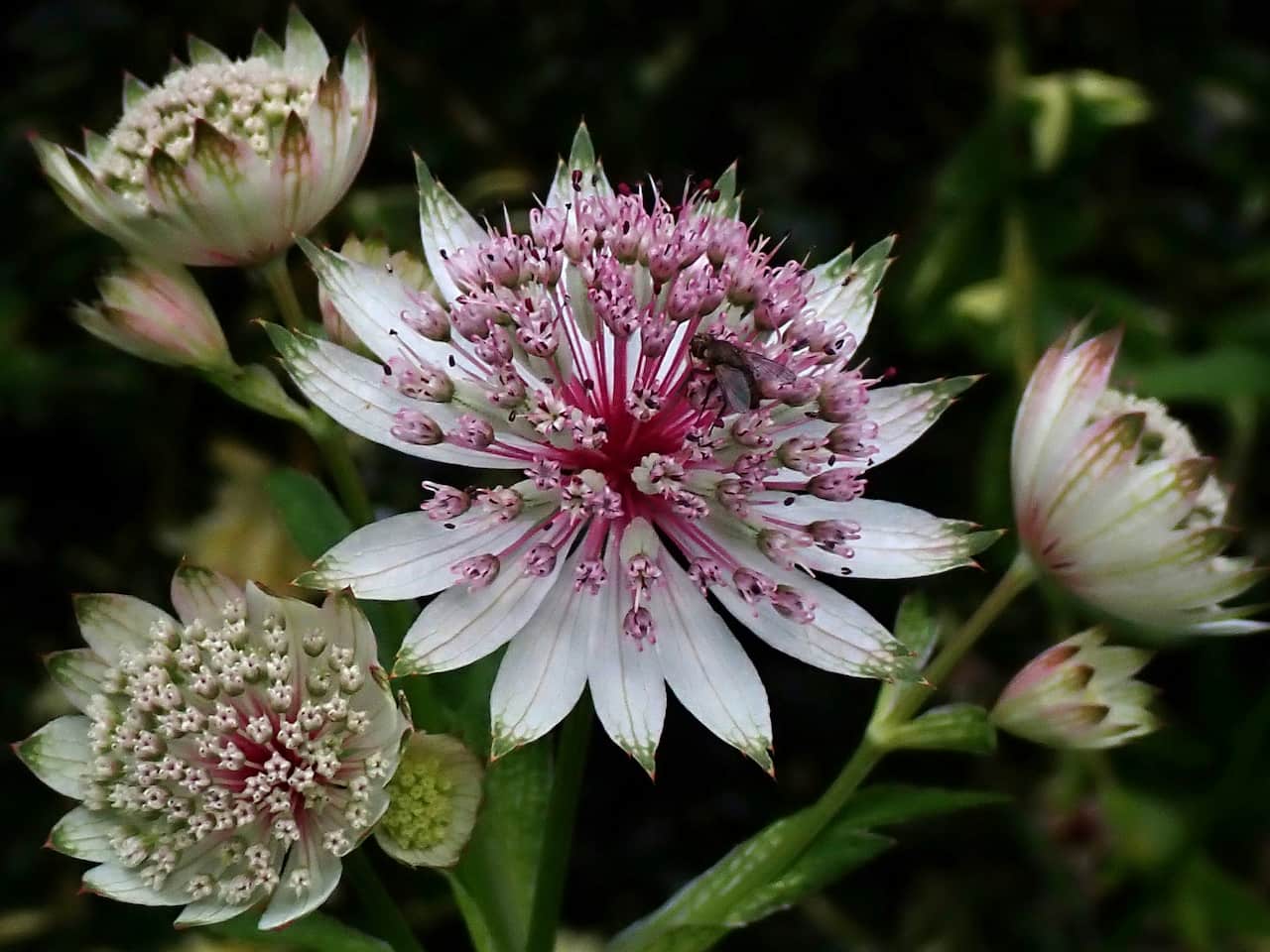
Astrantia – also known as masterwort – is one of the most distinctive cottage garden perennials available to UK gardeners. Its intricate pin-cushion flowers, each surrounded by a collar of papery bracts, bring a detailed, almost architectural quality to borders and cutting gardens from June through to September. The flower heads are unlike those of any other commonly grown perennial – complex, layered and endlessly interesting at close range – and the plant earns its place in a border from multiple angles: as a cut flower, as a pollinator plant, and as a long-season performer in the difficult conditions of partial shade.
Astrantia is fully hardy across the UK and thrives in conditions that suit a traditional cottage or woodland-edge border – moist, humus-rich soil and a position in partial shade, though it copes well in full sun as long as the soil remains consistently moist through summer. This guide covers everything you need to establish and maintain a strong, productive clump of astrantia in your garden.
About astrantia
The species most widely grown in UK gardens is Astrantia major, which is native to central and eastern Europe – from the Alps through to the Caucasus – where it grows in mountain meadows and woodland edges. It forms clumps of lobed, palmate leaves from which slender stems rise to carry the characteristic flower heads. Each flower head is actually a cluster of tiny florets surrounded by a ruff of pointed bracts, which act as a collar of false petals and give the plant its distinctive starry appearance. This structure is what makes astrantia recognisable at a glance and gives it the common name masterwort.
Most named cultivars available in UK garden centres are selected forms or hybrids of A. major, chosen for improved flower colour, size or stem length compared to the wild species. The colour range across cultivars runs from pure white through pale pink, dusky rose, deep red and near-crimson. Plants typically reach 45-90cm in height depending on variety and growing conditions, and spread gradually by rhizomes to form sizeable clumps over several years without becoming invasive.
Planting astrantia
Astrantia grows best in moist, fertile soil well enriched with organic matter. Unlike many border perennials it does not require particularly free-draining soil – in fact it tolerates and appreciates soil that retains moisture, making it an excellent choice for shadier borders, north-facing beds or positions near water features where the ground stays cool and consistently damp through the summer months. Dry soil is the main thing to avoid.
Prepare the planting site by digging in well-rotted garden compost or leaf mould generously. This improves moisture retention in lighter soils and opens up the structure of heavier clay soils, making it easier for the rhizomes to spread and establish. Plant with the crown at soil level and do not bury it deeply. Water in thoroughly and apply a mulch of bark or compost around the base to retain moisture and suppress weeds from the outset.
Shade tolerance. Astrantia is one of the best herbaceous perennials for partial shade in UK gardens. In a dappled woodland border or on the shaded side of a building where many colourful plants struggle to perform, astrantia will flower reliably season after season. Flowering is strongest with 2-3 hours of direct sun daily, but the plant remains useful and attractive in deeper shade where sun is less consistent.
Ongoing care
Once established, astrantia requires relatively little maintenance beyond consistent moisture, deadheading and an annual mulch. The plant is fully hardy across the UK so no winter protection is needed in open ground. The key to getting the most from astrantia is understanding that it is moisture-driven – keep the soil consistently damp and it performs generously; allow it to dry out in summer and it will go dormant early and produce fewer flowers regardless of how well everything else is managed.
Deadheading is the single most effective care task for extending astrantia’s display. Removing spent flower heads promptly as they fade encourages the plant to produce a second flush of blooms from late July through to September. Cut the stem back to a healthy leaf node or a developing side shoot rather than simply snipping the spent head, as cutting lower down encourages stronger replacement growth. If you want to collect seed for propagation, leave a small number of representative heads to set seed and ripen fully at the end of the season.
Division and propagation
Astrantia clumps benefit from division every three to four years. Over time the centre of the clump becomes congested and slightly worn, flower production declines and the plant starts to look less vigorous. Division restores vigour, improves flowering and provides additional plants for other parts of the garden at no cost. The best time to divide is in early autumn after flowering has finished, or in early spring before growth begins – both seasons work well in UK conditions.
Lift the whole clump carefully with a garden fork, preserving as much of the root system as possible. Separate it into sections using two forks inserted back-to-back and levered apart, or cut through dense root masses with a sharp spade. Each division should have several healthy shoots and a good root system attached. Remove and discard the oldest central portions if they are very woody or sparse. Replant the divisions immediately at the original depth, firm in thoroughly and water well. Divisions taken in autumn will establish over the winter months and flower strongly the following summer.
Astrantia also self-seeds freely around established plants. Seedlings appear from late spring onwards and are easy to identify by their distinctive lobed leaves. They will not necessarily come true to colour if the parent is a named cultivar – seedlings from red-flowered varieties often revert towards pink or white – but in a naturalistic border this variation can produce lovely, unexpected drifts of mixed colour. If you prefer to maintain a specific colour scheme, deadhead consistently before seed is dispersed in late summer.
Common problems
Astrantia is generally a trouble-free plant in UK gardens. The problems that do arise are almost always directly related to soil moisture – consistent dampness is what this plant needs to perform at its best, and most issues trace back to the soil drying out at some point in the growing season.
Best varieties
‘Hadspen Blood’ is among the most striking cultivars available, producing deep crimson flowers on stems reaching around 60cm. It provides a completely different effect to the softer pink and white forms and works particularly well in rich, dramatic planting schemes where a strong colour statement is needed. ‘Roma’ is a widely available and reliable deep pink form with large, well-formed flower heads and a long flowering period that makes it one of the most practical choices for a UK border.
Astrantia works brilliantly as a companion for other moisture-loving, shade-tolerant perennials and its long flowering season makes it one of the most useful plants in a woodland-style or cottage border. It combines naturally with hydrangeas in a dappled shade planting, where the astrantia’s delicate pin-cushion flowers provide detailed contrast at a lower level to the larger, bolder hydrangea blooms above. The flowers are visited consistently by a wide range of bees and pollinators throughout the long flowering season, making it a genuinely productive addition to any wildlife-friendly garden border.
Share on socials: