At a glance
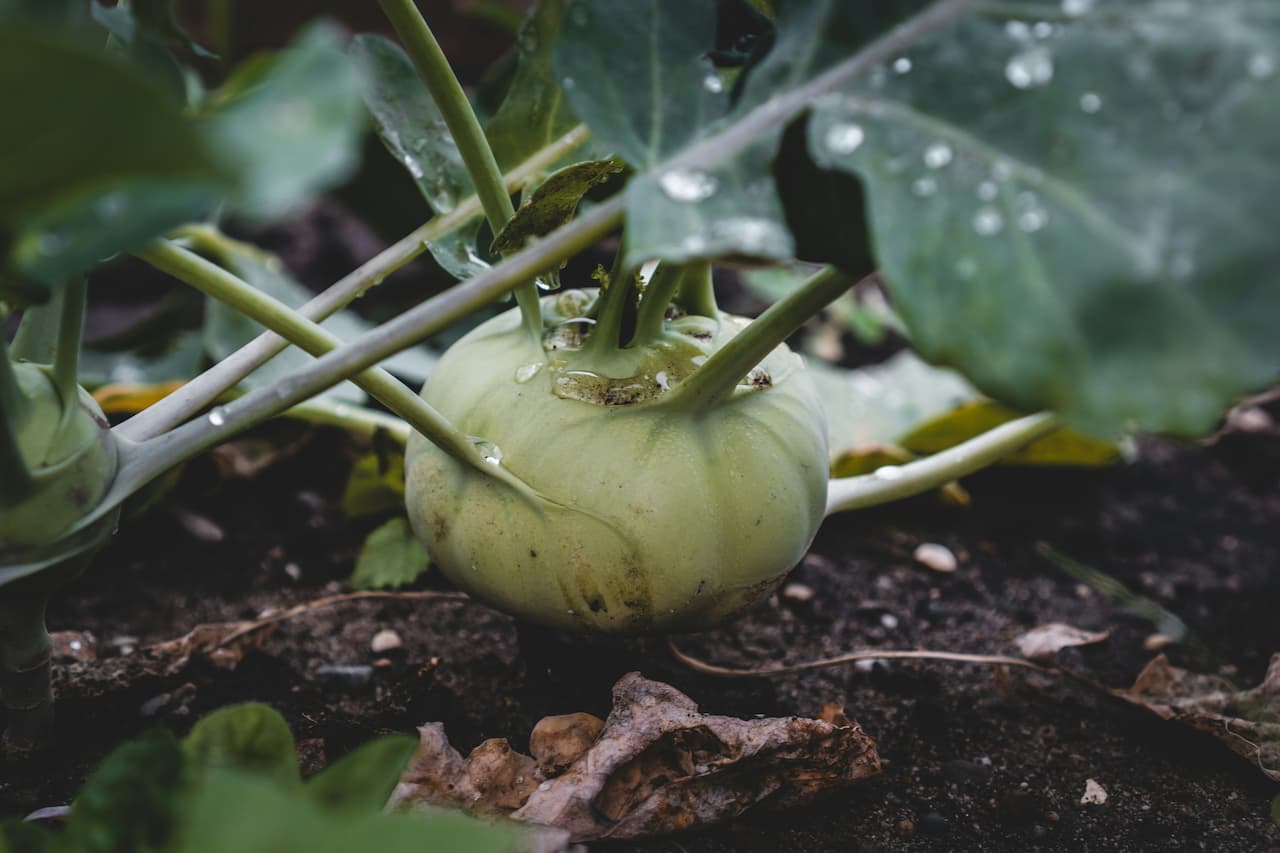
Kohlrabi is one of the most unusual-looking vegetables in the kitchen garden – a swollen stem sitting above the soil on spindly stalks, topped with leaves that shoot out at odd angles. It looks like something from another planet, which probably explains why so many UK gardeners walk past it at the garden centre without a second glance. That is a mistake. Kohlrabi is fast, easy, productive and genuinely delicious when harvested at the right size – and it is ready to eat in as little as six weeks from sowing, making it one of the quickest crops available to the raised bed grower.
Because it stays compact and matures so quickly, kohlrabi is particularly well suited to succession sowing and gap-filling – it can be tucked into spaces between slower crops, harvested before those crops need the room, and replaced with another sowing in the same space within the same season. This guide covers everything you need to grow, harvest and cook kohlrabi well in a UK raised bed.
About kohlrabi
Kohlrabi (Brassica oleracea var. gongylodes) is a member of the cabbage family, making it a relative of broccoli, cauliflower and swede. Unlike most brassicas, the edible part is not a root, a head of leaves or a flower bud – it is the swollen base of the stem, which develops just above ground level rather than underground. The flesh inside is crisp, mild and slightly sweet, with a flavour often described as sitting somewhere between a turnip and an apple when eaten raw, though milder than either.
Kohlrabi comes in two colours – pale green and purple – though both taste identical. The purple varieties tend to be slightly more cold-hardy and bolt-resistant in warm spells, making them the better choice for sowings heading into summer or autumn. Both colours are nutritious, high in vitamin C and dietary fibre, and equally useful in the kitchen. Despite the distinctive appearance that puts some gardeners off, kohlrabi requires no specialist growing knowledge – it responds to the same basic good practice as any other brassica. The leaves are also edible – young leaves can be treated like spring greens or kale, wilted briefly in butter with seasoning, which means almost no part of the plant is wasted at harvest time.
Sowing kohlrabi
Kohlrabi is always sown directly where it is to grow – it does not transplant successfully. Root disturbance at any stage triggers bolting, causing the plant to run to flower before developing a usable swollen stem. Sow from March under cloches or in a cold frame to get the earliest start, or directly outdoors from April once the soil has warmed. Successive sowings every three to four weeks through to August provide a continuous harvest from late spring right through to November.
Sow seeds 1cm deep, thinly in rows 30cm apart. Thin seedlings in two stages – first to 10cm once they are clearly established, then to a final spacing of 20-25cm – rather than removing all the competition in one go, which can disturb the remaining roots more than necessary. The thinnings are fully edible; the young leaves make a welcome early harvest before the swollen stems have even begun to form. Kohlrabi germinates quickly in warm soil, typically within five to seven days, and grows remarkably rapidly once established – which is one of the reasons it rewards regular checking in the final week or two before harvest.
Succession sowing is essential. A single kohlrabi sowing matures all at once, producing more bulbs than most households can use in a short window. Make small sowings of eight to ten plants every three to four weeks rather than one large batch, and you will have a steady, usable harvest throughout the season rather than a glut you cannot keep up with.
Ongoing care
Kohlrabi is low maintenance once germinated and established in the growing bed. The two things that make a meaningful difference to the quality of the final harvest are consistent watering and keeping the mesh in place to exclude flea beetle – everything else is largely incidental if the growing medium was well prepared before sowing.
Harvesting
Harvest kohlrabi when the swollen stem reaches tennis-ball size – roughly 5-7cm in diameter. At this size the texture is crisp, the skin is thin and the flavour is at its mild, slightly sweet best. Left to grow larger the flesh becomes progressively more fibrous, the skin toughens considerably, and the mild sweetness gives way to a harsher, more peppery taste. This is by far the most common mistake with kohlrabi – leaving it in the ground too long while waiting for it to get bigger.
Cut the stem at soil level with a sharp knife rather than pulling or twisting – a clean cut leaves no loose material in the soil that might harbour disease. The plant does not regrow after harvest, so the space is immediately free for another sowing or a different crop. Pull up the roots and compost them. In a raised bed with good succession sowing, the space freed by one kohlrabi harvest can be filled by a fresh sowing within the same growing season – kohlrabi is one of the few crops where the full cycle from sowing to harvest to resowing can happen multiple times in a single bed between April and October, making it an unusually efficient use of limited growing space.
Kohlrabi in the kitchen
Raw kohlrabi is a genuine revelation to anyone who has only ever encountered it cooked. Peeled and sliced thinly, it has a crisp, juicy texture similar to water chestnut and a flavour that sits between apple and mild turnip – refreshing and clean rather than sharp. It works beautifully in slaws, mixed salads and as a crudite for dipping. Grated raw kohlrabi mixed with a grated apple, lemon juice and a little wholegrain mustard makes one of the simplest and most satisfying winter salads available to the kitchen gardener.
Cooked kohlrabi absorbs other flavours well and can be roasted, steamed, stir-fried or added to soups. Roast wedges at 200C for 25-30 minutes until the edges caramelise – it pairs particularly well with garlic and thyme in this form, and the caramelisation brings out a nuttiness that is entirely absent when the bulb is raw. The leaves, which most growers discard, are worth cooking separately – young leaves can be treated exactly like spinach, wilted in a hot pan with butter and a little seasoning, and they have a pleasant, mild brassica flavour that is not as strong as kale or cabbage.
Common problems
As a brassica, kohlrabi shares the standard pest and growing problems of the whole cabbage family. The critical thing to understand is that most of these problems are far easier to prevent than to treat once they have appeared – fine insect mesh applied at sowing time, consistent watering throughout the growing period, and harvesting at the right moment together prevent the vast majority of kohlrabi failures. The four problems below cover the full range of what UK growers are likely to encounter.
Best varieties
‘Kolibri F1’ is the most widely available reliable purple variety in the UK, with good bolt resistance and consistent sizing across a long growing season. ‘Superschmelz’ stands apart from all other kohlrabi varieties in that it can grow to the size of a football without the flesh becoming woody – a genuinely unusual characteristic that makes it the right choice for anyone wanting to store a few bulbs for later use.
Kohlrabi grows particularly well alongside other fast-maturing brassicas in a productive raised bed. It can be tucked into gaps between slower-growing crops and harvested before those crops need the space, then replaced with a new sowing within the same growing season. Combined with succession sowings of turnips, you can keep a single raised bed producing root and stem vegetables from April right through to November with very little downtime between harvests – both crops share the same growing requirements, respond to the same care routine, and mature quickly enough to fit multiple rounds into a single season.
Share on socials: