At a glance
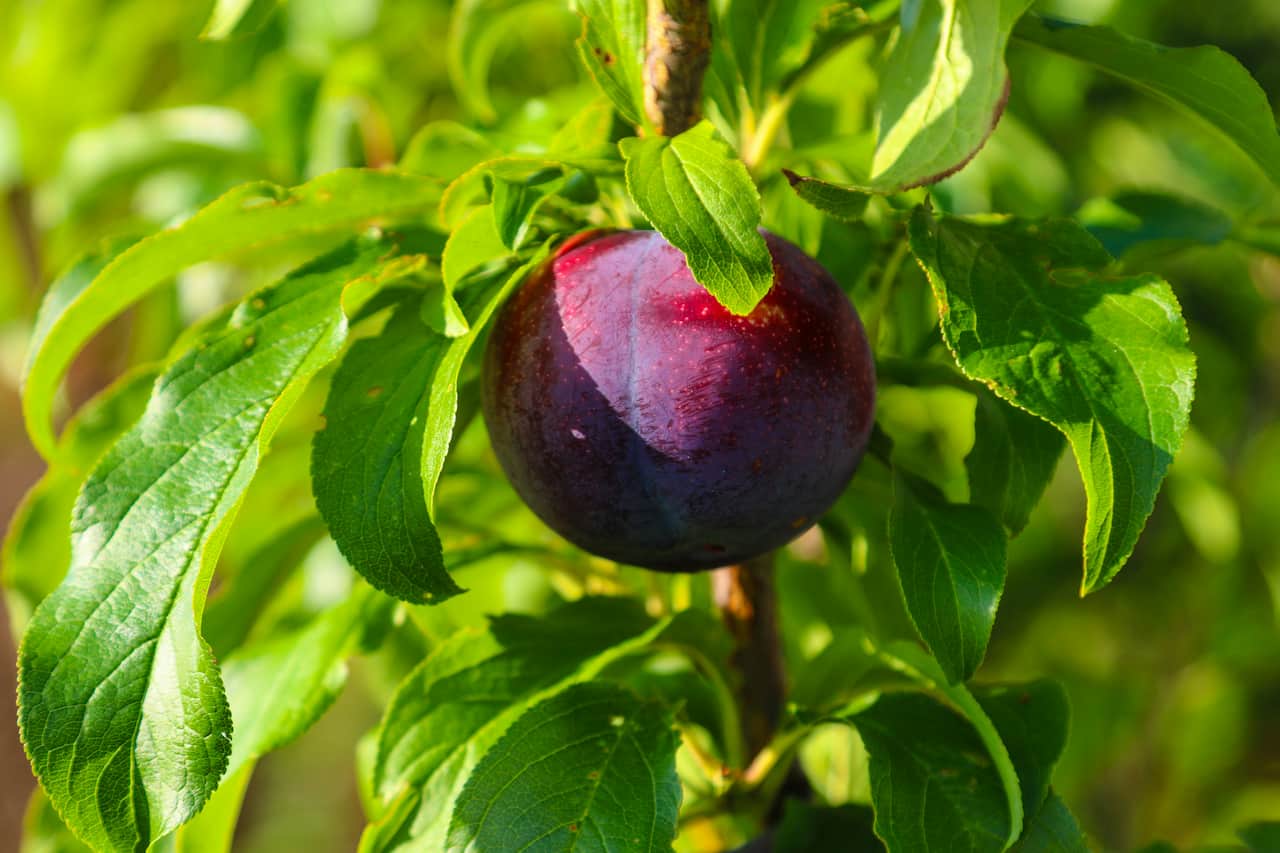
Damsons are among the most reliable and rewarding fruit trees a UK gardener can grow. Closely related to plums but hardier and more compact, they thrive in conditions that would test a plum tree – exposed positions, heavy soils, northern gardens, cold valleys – and still produce generous crops of small, intensely flavoured purple-black fruit with very little attention. A damson tree planted now will still be fruiting in thirty years and will have required less care in that time than almost any other fruit tree in the garden.
The fruit itself is distinct from plums and from the sweet dessert fruits that dominate supermarket shelves. Damsons are sharp and astringent eaten raw – though some people enjoy them fresh when very ripe – but they are exceptional when cooked. Damson jam, damson gin, damson cheese and damson crumble are among the finest uses of any garden fruit, and a single productive damson tree in a good year will provide more fruit than a family can easily use. This generosity of production, combined with minimal maintenance requirements, makes the damson one of the most practical choices for a UK fruit garden.
Why grow damsons?
Compared to other stone fruits, damsons offer several significant practical advantages. They are far hardier than peaches, nectarines or apricots and tolerate a wide range of soils including heavy clay that would cause problems for many other fruit trees. Most varieties are self-fertile, meaning a single tree produces a good crop without a pollinator. They are naturally more compact than standard plum trees and less prone to the silver leaf disease that can devastate plum orchards. They need less pruning than many fruit trees and are generally more disease-resistant.
For wildlife, damson blossom is one of the earliest abundant nectar sources in the garden, opening in March or April and providing important food for bees and other early pollinators emerging from winter. The fruit itself is eaten by blackbirds, thrushes and other birds in autumn, and the tree provides good nesting habitat. A damson tree is genuinely useful to the garden ecosystem in a way that purely ornamental trees are not.
Varieties to choose from
Merryweather is the most widely available damson variety in the UK – a large-fruited, reliable heavy cropper that produces fruit suitable both for cooking and for eating raw when fully ripe. Shropshire Prune (also known as Shropshire Damson) is the classic traditional damson, producing smaller, more intensely flavoured fruit of the kind that was once grown throughout the Lyth Valley in Cumbria for commercial jam production. It is the best variety for damson gin and damson cheese. Farleigh Damson is another traditional variety, very hardy and producing excellent crops of small, richly flavoured fruit. Langley Bullace is often classified separately as a bullace rather than a damson but is closely related and grown in the same way.
Planting and position
One of the great practical advantages of damsons is their tolerance of a wide range of positions and soil types. Unlike peaches or nectarines, which demand a south-facing wall and sheltered conditions, damsons will produce good crops in positions that receive sun for at least half the day, even in exposed north-facing gardens in the north of England. They tolerate heavy clay soils and wetter conditions than most other stone fruits, though they still perform best in a well-drained, reasonably fertile soil.
Plant bare-root damsons between November and March when they are dormant. Container-grown trees can be planted at any time of year, though autumn and winter planting allows the roots to establish before the demands of the growing season begin. Choose a rootstock appropriate to the space available – Pixy is a compact dwarfing rootstock producing a tree of 2-3 metres, suitable for smaller gardens. St Julien A produces a semi-vigorous tree of 4-5 metres. Ferlenain (or Brompton) produces a large standard tree for open orchard planting. Stake firmly for the first two to three years until the root system is fully established.
Pruning and shaping
Damsons require less pruning than most fruit trees and are often grown as open-centred bushes or half-standards with minimal intervention. The basic principle is the same as for plums – prune in summer between May and August to minimise the risk of silver leaf disease, which enters through wounds made in wet winter conditions. Remove any dead, diseased or crossing branches and maintain an open centre that allows light and air into the tree. Beyond this, damsons need surprisingly little attention to produce good crops.
Young trees in their first three years benefit from more systematic training to establish a good framework. Aim for a clear main stem of 60-90cm for a bush tree, or 1.2-1.5 metres for a half-standard, with four to six main lateral branches radiating outward and upward from the top of the clear stem. Once the framework is established, allow the tree to develop naturally, pruning only to remove problem wood and to thin congested growth in the centre of the tree. Damsons can become biennial in bearing if not thinned when they carry a heavy crop – thin fruit in June to one per 5cm to reduce the alternate-year effect.
Year 1 – establish the main stem
Plant the tree and remove any crossing or weak lateral shoots. Allow three to four well-spaced shoots to develop from the top of the clear stem. Prune only in May-August.
Year 2 – build the framework
Shorten the main laterals by about a third to encourage branching. Remove any shoots growing toward the centre of the tree. Aim for an open, goblet-shaped crown.
Year 3 onward – maintenance only
Remove dead, diseased or crossing branches in summer. Thin congested growth in the centre. No routine hard pruning needed – damsons fruit on old wood and respond badly to heavy cutting.
Heavy crop years – thin in June
Thin fruit to one per 5cm to prevent biennial bearing. Remove the smallest and any damaged fruit. This produces a better crop this year and prevents the tree exhausting itself.
Care and feeding
Established damsons are remarkably self-sufficient. They do not require regular feeding in fertile soils – in fact, overfeeding with nitrogen produces lush, disease-prone growth and reduces fruiting. A general fertiliser applied in early spring every two to three years is sufficient for most established trees in reasonable soil. In very poor or sandy soils, an annual spring feed is beneficial. Mulch around the base of the tree in spring with well-rotted compost, keeping the mulch away from the main stem, to conserve moisture and gradually improve the soil.
Water young trees in the first two seasons during dry spells. Once established, damsons rarely need supplementary watering in the UK climate and are more tolerant of both drought and waterlogging than most stone fruits. Watch for suckers growing from the base of the tree or from the roots – these should be pulled away (not cut) as close to their point of origin as possible. If left, they will grow vigorously and compete with the main tree, and on grafted trees they will be from the rootstock rather than the fruiting variety.
Harvesting and using damsons
Damsons ripen from August to October depending on the variety and the season. Merryweather and Farleigh ripen in August and September; Shropshire Prune typically ripens in late September to October and benefits from the first light frosts, which intensify its flavour. The fruit is ready to harvest when it comes away easily from the tree with a slight twist. In a good year a mature damson tree will produce more fruit than the household can easily use – pick in batches as the fruit ripens and process promptly.
Damsons freeze exceptionally well – wash, dry and freeze in a single layer on a tray before decanting into bags. Frozen damsons go directly into jam pans or puddings without defrosting. Damson jam requires little added pectin as the fruit is naturally high in it. Damson gin is made by filling a jar with damsons and sugar, topping with gin and leaving for three months – the result is one of the finest fruit liqueurs that can be produced from a UK garden. Damson cheese – a dense, sliceable preserve traditionally eaten with cold meats and strong cheddar – is made by simmering the fruit until soft, pushing through a sieve to remove stones and skins, then boiling with sugar to a very stiff set.
Share on socials: