At a glance
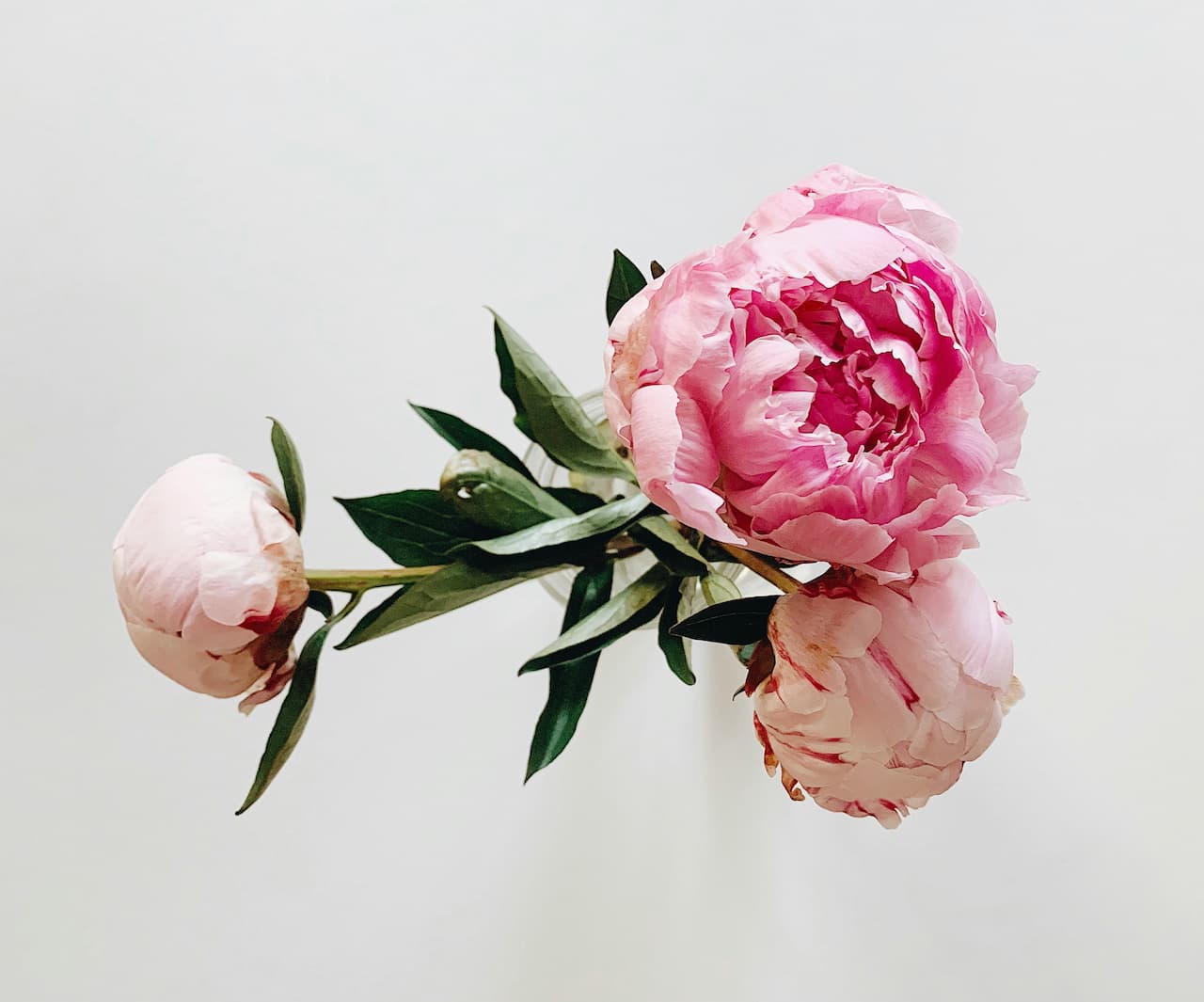
Few garden plants produce a display to match a peony in full bloom. The flowers are large, often intensely fragrant, and come in a colour range from pure white through every shade of pink to deep crimson and near-black burgundy. Herbaceous peonies die back completely to the ground each autumn and return each spring with striking vigour, producing their peak display in May and June before remaining as attractive leafy plants through summer. A correctly planted peony will live and bloom reliably for decades, frequently outlasting the gardener who planted it.
The most common reason peonies fail to flower is being planted too deep. The eyes of a herbaceous peony tuber – the reddish-pink buds that become the emerging shoots – must sit no more than 2-5cm below the soil surface. Plant them deeper and the plant will produce healthy foliage year after year while refusing to flower. This single detail is the most important thing to understand before putting a peony in the ground, and getting it wrong is easily done when the soil settles after planting or when well-meaning mulching builds up over the crown across several seasons.
Types of peony
Herbaceous peonies are by far the most widely grown type in UK gardens and the right choice for most gardeners. They die back completely to the ground in autumn, with the root system remaining dormant underground through winter, and push reddish shoots up in spring that lengthen quickly into tall leafy stems. The flowering peak is late May and June. After flowering, the foliage remains ornamental through summer before browning and dying back in autumn. Established clumps can remain undisturbed and productive for fifty years or more without any need for division.
Tree peonies are a different plant entirely – woody shrubs that retain a permanent above-ground framework through winter and do not die back. They flower earlier than herbaceous types, typically in April and May, and can reach 1.5 to 2 metres in height over time. The flowers are extraordinary, often reaching 25-30cm across in favourable conditions. Tree peonies are more expensive to buy, slower to establish and need a more sheltered position – they suit a warm, protected garden where they can build permanent structure over many years. They are propagated by grafting rather than division and the graft union should be planted 10-15cm below the soil surface, which is the opposite of herbaceous types where the eyes must be near the surface.
Itoh or intersectional peonies are a cross between herbaceous and tree peonies, first developed by Japanese breeder Toichi Itoh in the 1940s. They inherit the herbaceous die-back habit alongside the larger, more varied flower forms associated with tree peonies, and offer colours not found in standard herbaceous types – particularly yellow and cream shades. They are newer to the market, more expensive and less widely available than herbaceous peonies, but increasingly accessible as more cultivars reach mainstream suppliers. Being more compact than herbaceous types – typically 60-90cm – they also suit smaller gardens and container growing better than the full-sized herbaceous varieties.
Choosing a variety
The choice of peony variety turns primarily on flower form and colour. The main forms are single, semi-double, double and anemone. Single-flowered varieties have one ring of petals around a visible golden centre, are the most elegant in a mixed border, and have stronger stems that rarely need support. Semi-double varieties carry two or more rows of petals still showing stamens at the centre. Double varieties produce the most spectacular globe-shaped flowers and are often the most heavily scented, but the large blooms can flop in rain or wind and usually benefit from staking. Anemone-form varieties have a ring of outer petals surrounding a dense centre of shorter modified petals and sit between singles and doubles in terms of stem strength. The choice of form affects not just appearance but also the amount of maintenance required and how the plant performs in different weather conditions – singles and semi-doubles come through a wet spring far better than the heavy doubles.
For fragrance, the established double varieties are generally the most powerful. Sarah Bernhardt is one of the best known peonies in cultivation – a soft apple-blossom pink, double, with a strong rose-like scent and reliable performance over many decades. Duchesse de Nemours is white with a cream centre, double, and intensely fragrant. Felix Crousse is a deep crimson double with strong scent and one of the most reliably fragrant reds available. Bowl of Beauty produces pink outer petals around a cream anemone centre and is frequently grown for cutting. Karl Rosenfield is a dark red double with stronger stems than many doubles, making it a good choice for exposed positions or cut flower growing. Coral Charm is notable for its unusual coral-orange colour that deepens to rich peach as the flower opens, with stronger stems than most doubles, though its fragrance is light compared to the older varieties.
When selecting varieties for a specific purpose, the flowering period within the overall May-June window is worth considering. Early, mid-season and late varieties can be combined to extend the display across six weeks or more rather than concentrating everything into a single fortnight. For cut flower use, Bowl of Beauty and Karl Rosenfield hold well in a vase; for the most powerful garden fragrance, Duchesse de Nemours and Felix Crousse are the benchmark. For a border that looks good from a distance, the large single-flowered varieties often have more visual impact than the heavy doubles whose complexity is best appreciated up close.
Soil and site
Peonies need a well-drained, fertile soil and a position that receives at least four to six hours of direct sunlight daily. Full sun produces the most flowers and the sturdiest stems. They will tolerate light partial shade but flowering will be reduced and stems weaker. A position sheltered from strong wind helps prevent stem damage and flower knock-off during the flowering season, which matters most with the large double varieties whose heavy blooms are easily damaged by rain and wind together.
The choice of position is more permanent than with most garden plants because peonies dislike being moved once established. Taking time to choose the right spot before planting – sun, drainage, shelter, soil preparation – avoids years of suboptimal performance or the disruption of moving an established plant. A peony in the right place with good soil will ask for very little in return.
Drainage is essential – peonies will not tolerate waterlogged soil. Heavy clay soils should be improved with generous quantities of horticultural grit and well-rotted organic matter before planting. On very light sandy soils, extra organic matter helps retain moisture and provide nutrients through the growing season. A raised bed guarantees good drainage on heavy sites and is worth considering where the garden naturally holds water. Peonies on poor drainage will develop root rot, often showing as sudden unexplained collapse or poor vigour years after planting when the root system finally reaches the waterlogged zone below the improved surface layer.
Peonies prefer a neutral to slightly alkaline soil – roughly pH 6.5 to 7.5. They do not perform well on strongly acid soils. On acidic sites, incorporating ground limestone at soil preparation stage and applying it periodically as a top dressing helps maintain the correct range over time. A simple soil pH test before planting gives a useful baseline. Peonies also respond poorly to planting in the root zones of large trees – the competition for moisture and nutrients, combined with the shade, generally produces poor results regardless of how well the soil is prepared.
Planting
Bare-root peonies are available from late autumn to early spring while dormant. The ideal planting window is October to November, giving the root system several months to establish before the first growing season. Container-grown peonies can be planted at any time of year. Once established, peonies strongly resent being moved – division or transplanting may mean missing flowers for two or three seasons while the plant recovers, and some gardeners advocate never moving them at all.
Where division is necessary – typically because a clump has grown too large or a plant needs moving – carry it out in early autumn while the soil is still warm. Lift the entire clump carefully with a fork, wash the soil from the roots, and divide with a clean sharp spade or knife into sections each containing at least three to five eyes and a reasonable portion of root. Small divisions with fewer than three eyes may take several seasons to flower. Replant divisions immediately at the correct depth, water in thoroughly and mulch around but not over the crown. Do not attempt to divide a peony that is less than five years old – it needs that time to build a root system capable of supporting vigorous re-establishment.
Do not expect flowers in the first year. Peonies planted as bare-root tubers rarely flower in their first season and often produce only a few small blooms in year two. Year three is typically the first proper display, and performance improves each year thereafter. The patience required is repaid by a plant that can then bloom reliably for fifty years with minimal intervention.
Ongoing care through the seasons
In spring as new growth appears, apply a balanced general fertiliser around the base of each plant and water it in. When buds are developing in late April and May, switch to a fortnightly liquid feed with a high-potassium fertiliser to encourage larger, better-coloured flowers. A tomato feed works well and is widely available. Avoid overfeeding with nitrogen at any point during the season, which pushes leafy growth at the expense of flowers.
Support tall and double-flowered varieties early – when shoots are 20-25cm tall is the right moment. Peony rings or link stakes placed before the plant reaches flowering height allow the stems to grow through naturally. Stakes added when the plant is already in growth are difficult to fit without damaging stems. Single and semi-double varieties usually support themselves without assistance.
Water during dry spells in spring and early summer while the plant is actively growing. Established peonies are deep-rooted and once past their first year generally do not need routine watering unless the season is particularly dry. Once flowering finishes, deadhead spent blooms promptly to prevent seed production drawing energy from the roots. Leave the foliage entirely intact through summer – it is photosynthesising and building the reserves that fuel next year’s flowering. Cutting back the foliage before it has died back naturally is one of the most common mistakes and directly reduces the following year’s flowers.
Common problems and solutions
Peonies are robust and long-lived plants with few serious problems when sited and planted correctly. The issues that do arise are almost always predictable and manageable once their cause is understood.
Phytoplasma, which causes peonies to produce distorted, leaf-like petals or fasciated stems rather than normal flowers, is occasionally encountered. Affected plants should be dug up and destroyed as there is no treatment. Symptoms are quite distinct from the more common problems – the flower structure itself is abnormal rather than simply failing to open or collapsing at the stem. It is unusual enough that most gardeners will never encounter it.
Peony blotch, caused by Cladosporium paeoniae, creates purple-brown spotting on the upper leaf surfaces and corresponding lighter spots below. It is unsightly but does not significantly affect plant health and does not require treatment. Removing affected foliage to improve appearance and disposing of it in autumn reduces the carry-over of spores to the following season. Good air circulation around plants keeps this and other fungal problems at manageable levels. The consistent message across most peony disease management is that cultural practice – correct spacing, thorough autumn cleanup, avoiding excess moisture – does more to prevent problems than any spray programme. A well-grown peony in the right position with good soil and careful autumn hygiene rarely encounters serious disease. The investment in getting the basics right at planting pays dividends for the lifetime of the plant, which – with herbaceous peonies in particular – can comfortably span a gardener’s entire lifetime. Few garden plants offer that kind of long-term return on a single well-made planting decision, and that is precisely what makes peonies such a compelling choice for any UK garden with the right conditions.
Share on socials: