At a glance
May is the month when the focus of the UK growing year shifts decisively from sowing to planting out. Indoor-raised plants from February, March and April are now hardened off and ready to go into their final positions, the last frost date passes in most of the country by late May, and the soil is warm enough for direct sowing of virtually every vegetable and herb grown in UK gardens. It is also the last realistic month for several indoor sowings – French and runner beans, sweetcorn, cucumbers and outdoor tomatoes can still be started in early May if not already done, but delay much beyond mid-May and there will not be enough season left for them to crop meaningfully.
The main risk in May is impatience – the urge to plant everything outside as quickly as possible the moment it feels warm. A cold spell in mid-May can still produce ground frosts, particularly in northern England, Scotland and gardens at altitude, and a single cold night can kill tender plants that took weeks to raise. The rule is simple: check the forecast, wait for the last frost date for your area, and harden off properly before planting out. Two weeks of patience in May saves weeks of recovery time or complete replanting later.
Direct sowing outdoors
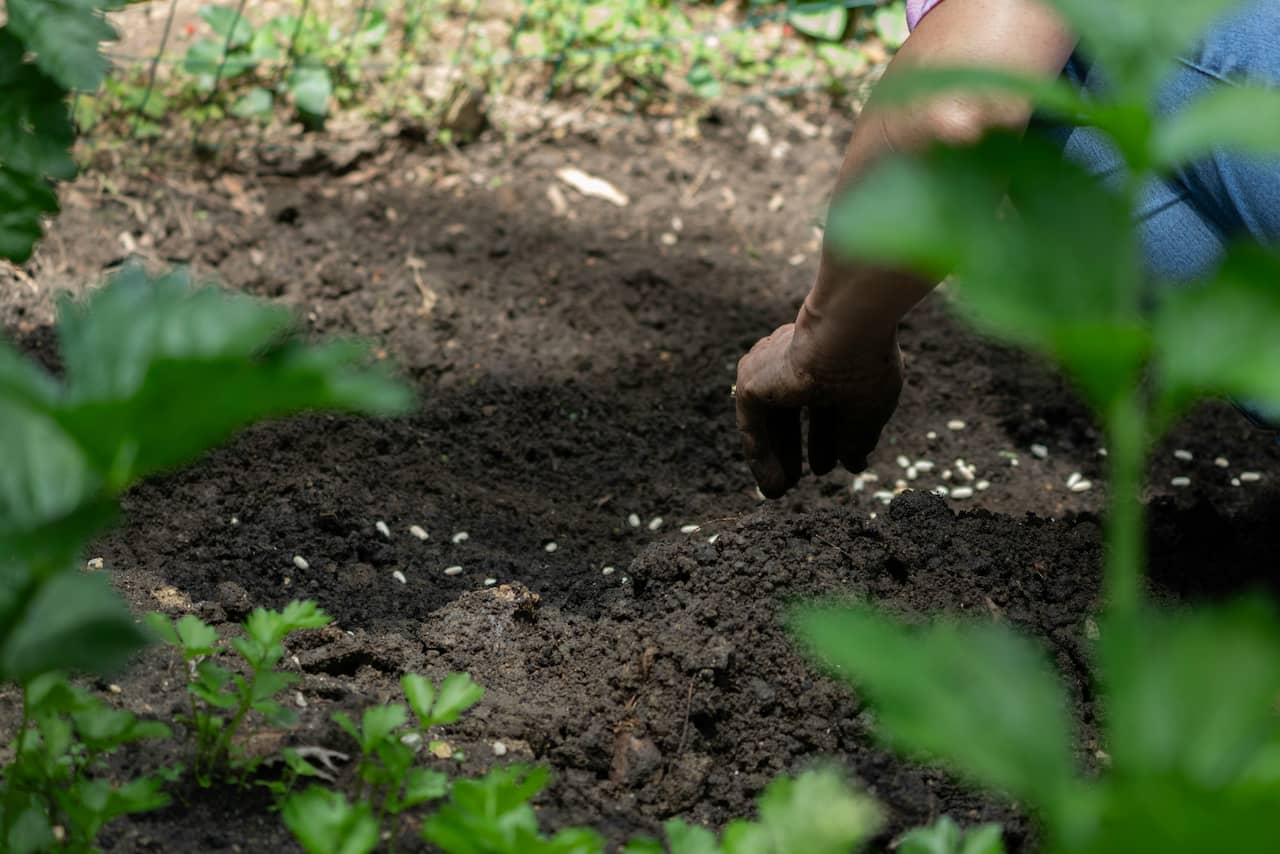
French and runner beans sown directly outside in late May – after the last frost date – will catch up with April-sown indoor plants by mid-June and produce just as heavy a crop. The soil in late May is warm and these crops establish rapidly. There is no particular advantage to starting them indoors in April if you are happy to sow outdoors in May – they simply do not need the extended indoor period that tomatoes and peppers require. Sow French beans 5cm deep and 15cm apart. Runner beans need a supporting structure of at least 2 metres in place before or at sowing time.
Sweetcorn direct sown in late May – once soil temperature is reliably above 10°C – establishes as well as indoor-raised plants and avoids the root disturbance of transplanting. Sow 2.5cm deep in a grid pattern, 45cm apart each way, and thin to the strongest seedling. The block pattern is essential for sweetcorn as it relies on wind pollination between neighbouring plants – long narrow rows pollinate poorly and produce gappy cobs. Minimum block size for reliable pollination is 16 plants.
Last indoor sowings of the season
Planting out after frost
Herbs and flowers in May
Brassicas sown in March and now ready to plant out in May require netting immediately at transplanting. Cabbage white butterflies are active from May onwards and will lay eggs on unprotected brassica plants within days of planting. The caterpillars that hatch can strip a plant completely within a week. Fine mesh insect netting supported on hoops provides complete protection and is far more effective than inspecting leaves for eggs and picking off caterpillars by hand, which is both time-consuming and easy to miss. Net before the butterflies find the plants rather than reactively after the first damage appears. The same netting also prevents cabbage root fly, which lays eggs at soil level around brassica stems – a worthwhile additional benefit.
Runner beans planted out in late May in a prepared position with a solid support structure already in place will be producing pods by late July. The support structure needs to be in place before planting – trying to install canes around established plants is awkward and risks damaging roots. Traditional wigwam or A-frame structures using 2.4m canes are standard, but a simple horizontal wire system attached to posts works equally well and can support a longer row. Runner beans need consistent watering once they begin to flower – irregular watering at flowering stage causes flower and pod drop, which is one of the most common causes of disappointing yields. Mulching around the base after planting reduces moisture loss significantly and suppresses weeds that compete for the same resources.
Plant tomatoes deep – deeper than they came in the pot. Unlike most plants, tomatoes can develop roots from their stems. Burying the plant up to its lowest set of leaves when planting out produces a much more extensive root system, which means better drought tolerance, more efficient nutrient uptake and stronger plants overall. Remove the lower leaves, dig a deep hole and plant the stem rather than just the root ball. It is one of the simplest and most effective things you can do for tomato performance.
Share on socials: