At a glance
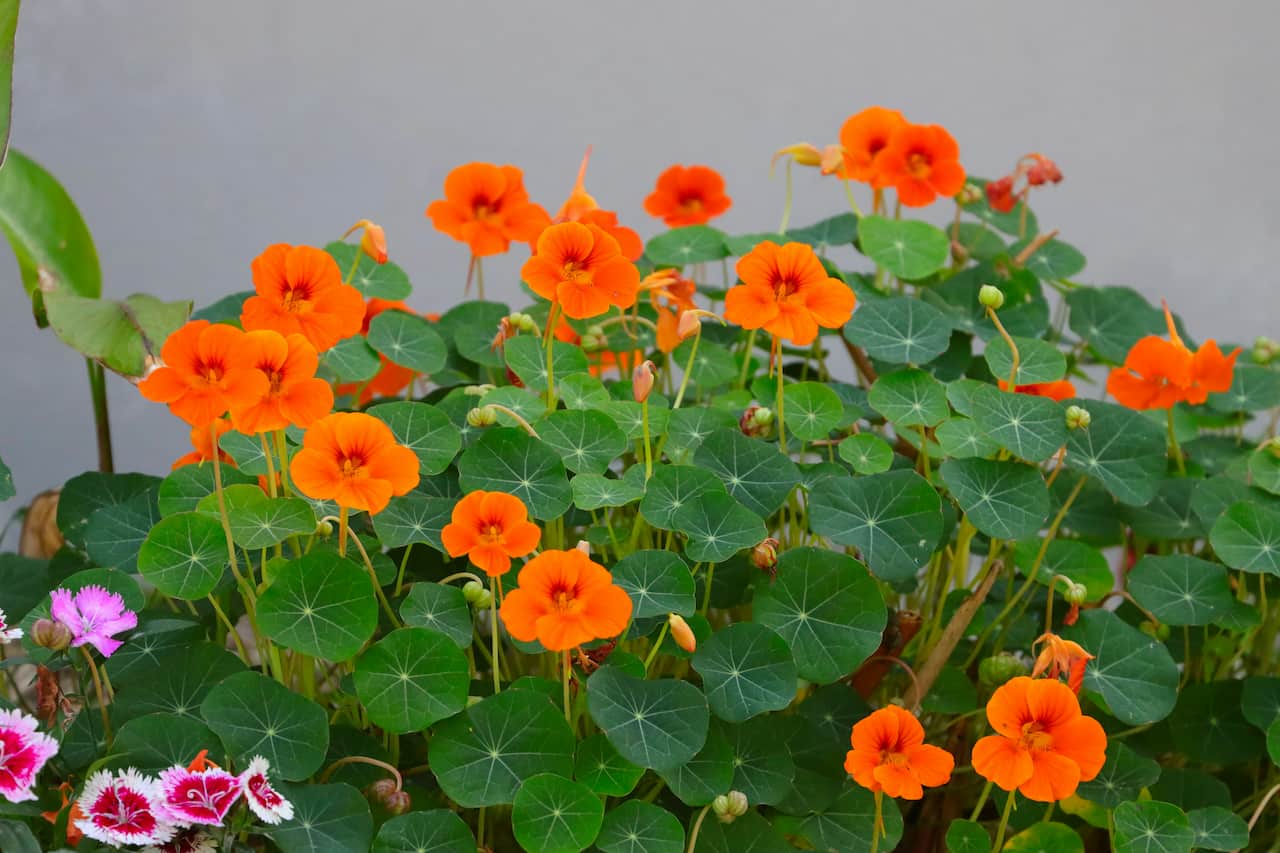
Tropaeolum is one of the hardest-working genera in UK gardening. Most people know the common nasturtium and grow it without realising it belongs to a family that also includes the delicate canary creeper, the vivid climbing flame flower and several other species well worth growing in British conditions. All share the same basic requirements – a warm spot, reasonably free-draining soil and plenty of sun – but they bring very different characters to the garden, from the sprawling ground cover of trailing nasturtiums filling gaps between brassicas to the elegant yellow bells of Tropaeolum peregrinum threading up through a fence. The genus rewards a little exploration beyond the familiar: gardeners who have only ever grown a mixed packet of trailing nasturtiums from the supermarket often discover that the canary creeper or flame flower opens up entirely new possibilities for vertical interest and late-season colour.
The nasturtium in particular has a reputation as a beginner plant and rightly so, but that reputation has led some gardeners to overlook it as too easy or too common. A well-grown nasturtium on a productive plot does several useful jobs simultaneously: it covers bare soil, feeds pollinators, acts as a trap crop for blackfly, provides edible flowers and leaves for the kitchen, and self-seeds reliably to return year after year with almost no effort. Growing tropaeolum well is simply a matter of giving each type the conditions it actually wants – and in the case of the common nasturtium, the conditions it wants are considerably less generous than most gardeners assume.
Types of tropaeolum
The genus Tropaeolum contains around 80 species, of which a handful are commonly grown in UK gardens. Each has distinct characteristics and uses, and choosing the right type for the right situation makes a meaningful difference to results. The annual species are the easiest entry point; the perennial climbing species are more rewarding for established gardens where they can be given a permanent position.
Sowing and growing
Annual tropaeolum species are direct-sown into the ground or into containers from March onwards, once the soil has warmed. Nasturtium seeds are large enough to handle easily and can be pushed into the soil to a depth of around 1cm, spacing them 20-30cm apart for trailing varieties and closer for compact bush types. Germination is typically fast – within seven to fourteen days in warm conditions – and seedlings grow rapidly once established. Starting indoors is possible but not advisable: nasturtiums dislike root disturbance and transplanting from modules often sets them back more than it gains.
Canary creeper needs a head start. Unlike nasturtiums, Tropaeolum peregrinum benefits from sowing indoors in March in individual modules, then planting out in May after hardening off. It grows quickly once established but needs a few weeks indoors to get ahead of slugs and cold nights that can check growth in a cold spring.
Care and maintenance
The most important thing to understand about growing nasturtiums is that poor soil produces better flowers. In rich, fertile soil the plant puts its energy into leaves – large, lush and beautiful but at the expense of flowers. On a lean, free-draining soil with no added fertiliser, the same plant flowers abundantly from summer through to the first frost. This counterintuitive rule catches out gardeners who assume that the same feeding regime that benefits tomatoes will help their nasturtiums. It will not – and heavy nitrogen feeding is the fastest way to a leafy, flowerless plant. The same principle applies in containers: use a lean compost rather than a rich growing medium, and resist the urge to add slow-release fertiliser granules to the mix.
Watering requirements depend on position and type. Ground-grown nasturtiums in reasonable soil need very little supplementary watering once established and will tolerate dry spells well. Container-grown plants are a different matter – the restricted compost volume dries out quickly in warm weather and consistent moisture is needed to keep them performing. In containers, water when the top inch dries out but do not allow the plant to sit in waterlogged compost, which promotes root rot and stem collapse. Canary creeper and the climbing perennial species need regular moisture more than the annual nasturtiums, and T. speciosum in particular performs best in cool, moist conditions – the west of Scotland suits it better than a dry south-facing London garden. Deadheading spent flowers extends the display significantly for all annual types. Simply snap off finished blooms before they set seed and the plant will continue producing new flowers. If you want the plant to self-seed for the following year, stop deadheading in September and allow seed heads to develop and fall.
Best varieties for UK gardens
The variety choice within Tropaeolum majus alone is considerable. The differences between cultivars cover habit (trailing, climbing or compact), flower colour, leaf variegation and whether the plant is single or double-flowered. For most garden purposes a mixed pack of trailing nasturtiums covers the bases, but the specific varieties below are worth seeking out for particular applications.
Pests, problems and uses
The nasturtium’s relationship with blackfly is one of the most useful dynamics in the productive garden. Blackfly are strongly attracted to nasturtiums, which makes the plant an effective sacrificial trap crop to draw aphids away from beans and other vulnerable crops nearby. The trap crop strategy works best when nasturtiums are planted at the edges of the growing area rather than interplanted directly. Once the nasturtiums are infested, remove and compost the affected stems to reduce the overall blackfly population on the plot.
Caterpillars of the large and small white butterfly also feed on nasturtium leaves, which again makes the plant a useful decoy crop alongside brassicas. The edible qualities of nasturtiums extend beyond the flowers: the leaves have a peppery, watercress-like flavour and work well in salads, the unripe seeds can be pickled as a substitute for capers, and the flowers make a vivid garnish. Few plants deliver as much practical value per square metre of growing space. On a productive plot growing a range of vegetables, having a patch of nasturtiums at the border is simply good practice – they support pollinators, protect neighbouring crops, provide edible material and self-seed freely to return without any effort the following year. Paired with companion plants like borage or planted alongside crops that benefit from pollinator support such as courgettes and climbing beans, nasturtiums earn their place every season.
Share on socials: