At a glance
Lawn diseases in the UK are more common than most gardeners realise, and they are consistently misdiagnosed. The pinkish-red patches that appear after wet summers are almost always red thread – a fungal disease that looks alarming but rarely kills grass permanently and responds well to feeding. The white cottony growth that appears in autumn is almost always fusarium patch, which is more damaging and harder to reverse. Fairy rings, dollar spot, snow mould and leaf spot all present differently and require different responses. Applying the wrong treatment – including any fungicide applied to the wrong disease – is a waste of money and time.
The most important thing to understand about lawn disease in a UK garden context is that the primary driver is almost always cultural rather than environmental. A well-fed, well-drained, properly aerated lawn rarely suffers serious disease. A lawn that is underfed, compacted, poorly draining, cut too short, or watered at the wrong time of day will be repeatedly affected by disease regardless of what fungicide is applied. Treating the underlying cultural problem is the only durable solution. Fungicide treatment manages an active outbreak but does nothing to prevent recurrence.
Identifying Lawn Disease vs Other Problems
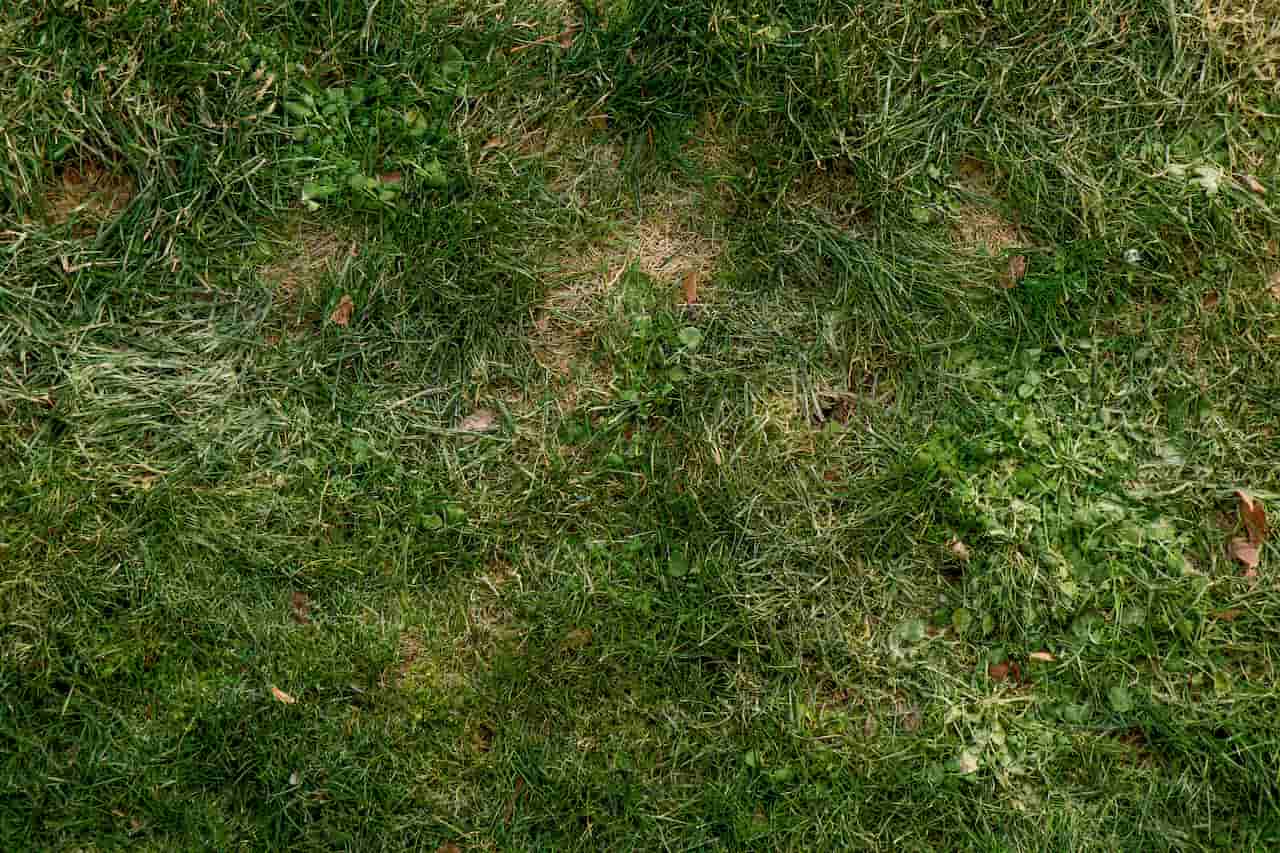
The single most common misidentification is lawn disease being confused with drought stress, pest damage or shade-induced dieback. The key differentiator is the appearance of the grass itself within the affected patch. Disease-affected patches typically show discolouration that starts at the tips of the leaves and works down, or mycelium (visible fungal growth, which may be white, pink or red) at the edges of the patch. Drought-stressed grass yellows evenly from the tips without any fungal growth. Pest-damaged turf lifts away from the soil with no root resistance. Shade-induced dieback is gradual and concentrated under canopy coverage.
Red Thread
Red thread (Laetisaria fuciformis) is the most frequently seen lawn disease in UK gardens. It appears as irregular patches of pinkish-buff discolouration, typically between 5cm and 30cm across, most visible from late summer through to autumn when humid conditions and low nitrogen levels combine to create ideal conditions for the fungus. The diagnostic feature is the characteristic red or pink thread-like mycelium strands (sclerotia) visible at the tip of affected grass leaves – these are visible to the naked eye and confirm red thread as opposed to any other possible cause.
Red thread does not kill grass. It infects the leaves and kills the plant tissue above ground but leaves the roots and growing points intact. A lawn affected by red thread will recover naturally if feeding is improved, though this may take several weeks. The fungus thrives specifically on nitrogen-deficient turf, which is why a lawn that looked healthy through summer but was never fed in spring is highly susceptible in late summer when grass growth slows and any stored nitrogen is exhausted. The treatment is straightforward: apply a high-nitrogen autumn lawn feed and the disease will clear within 4-6 weeks in most cases without any fungicide.
Never apply a fungicide to red thread without first applying a nitrogen feed. The fungus thrives on nutrient-stressed grass. Fungicide suppresses the active outbreak but if the nitrogen deficiency is not corrected, the disease will return within weeks. Feed first, wait two weeks, then apply fungicide only if the patches are failing to clear. In most cases the feed alone resolves red thread completely.
Fusarium Patch
Fusarium patch (Microdochium nivale, also known as snow mould) is a more serious disease than red thread because it actively kills the grass rather than just infecting the leaves. It typically appears in autumn through to early spring when temperatures are cool and wet, presenting initially as small water-soaked patches that rapidly expand and turn a buff to tan colour. In very wet conditions, white or pink mycelium is visible at the edges of active patches. A badly affected lawn can lose significant areas of turf within days if the outbreak coincides with warm wet weather and the grass is stressed.
Unlike red thread, fusarium patch requires a fungicide response for any serious outbreak. The most effective amateur products in the UK contain tebuconazole or iprodione, though product availability changes and labels must be checked before use. Improving drainage and aeration reduces the likelihood of recurrence significantly, as fusarium is heavily linked to poorly draining, compacted lawns where moisture sits on the surface overnight. Avoiding high-nitrogen autumn feeds – which produce soft, lush growth that is highly susceptible – is a key preventative measure.
Fairy Rings, Dollar Spot and Other Diseases
Fairy rings are caused by fungi that colonise soil organic matter beneath the lawn rather than the grass itself. They appear as circles or arcs of either lush dark-green grass (where the fungus is breaking down organic matter and releasing nitrogen) or as dead patches (where the fungal mycelium has become so dense that it waterproofs the soil and prevents moisture reaching the grass roots). Some fairy rings produce toadstools along their margin. Fairy rings are extremely difficult to eradicate because the fungal mycelium extends deep into the soil. The most practical approach for most gardeners is to mask their appearance with nitrogen feeding that reduces the contrast between the lush ring grass and the rest of the lawn, combined with aeration within the ring to break the waterproofing effect.
Treatment and Fungicides
The fungicide options available to amateur gardeners in the UK have been substantially reduced by regulatory changes in recent years. Products that were previously widely available for turf disease are no longer approved for amateur use, and the range of active ingredients now permitted is narrower than it was five years ago. Current products available in garden retail typically contain tebuconazole, trifloxystrobin or azoxystrobin, and availability changes – always check the current label before purchasing. Fungicide should be seen as a last resort rather than a first response, applied only when cultural management has been optimised and the disease is still causing unacceptable damage.
Prevention and Long-Term Management
The cultural conditions that predispose a lawn to disease are well established and almost entirely within a gardener’s control. Underfed turf, compaction, poor drainage, leaving grass wet overnight, cutting too short, and excessive thatch all increase disease susceptibility significantly. A lawn management programme that addresses all of these systematically will rarely suffer serious disease even in seasons that are climatically favourable to fungal development.
Do not apply high-nitrogen autumn feeds to lawns that regularly suffer from fusarium patch. Fusarium thrives on the soft, lush growth promoted by high-nitrogen feeding in autumn. For disease-prone lawns, switch to a potassium-rich autumn/winter feed which hardens cell walls and improves frost resistance without promoting the soft growth that fusarium attacks most aggressively.
Share on socials: