At a glance
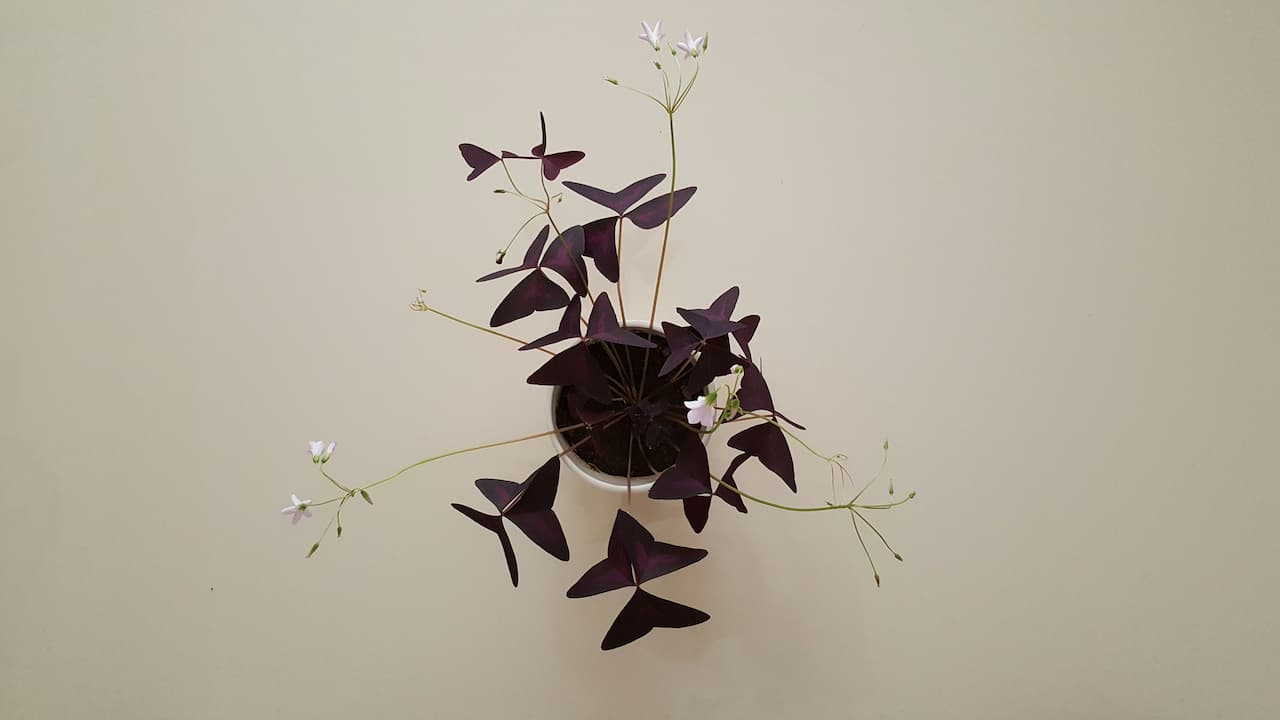
Oxalis triangularis – commonly called the purple shamrock or false shamrock – is a South American bulb plant that has become one of the most popular and eye-catching houseplants available in the UK. Its deep purple, triangular leaflets fold closed at night and in low light, and when the sun catches them in the morning they open in a single slow movement that is genuinely satisfying to watch. Small pale pink or white flowers appear throughout spring and summer when conditions are right, held delicately above the foliage on slender stems.
Despite being widely sold in the UK, Oxalis triangularis has a habit that catches many owners by surprise – it goes dormant, usually once or twice a year, collapsing entirely to the soil surface as its foliage dies back. This is normal and the plant is not dead, but it looks so convincingly dead that many people throw it away before it has the chance to regrow. Understanding the dormancy cycle is the most important thing to know about this plant, and with that knowledge it is genuinely easy to keep and enjoy for many years.
Plant Profile
Oxalis triangularis is toxic to cats and dogs. It contains soluble oxalate crystals which cause oral irritation, drooling, vomiting and in large quantities can affect kidney function. Keep out of reach of pets or choose an alternative plant if you have cats or dogs that regularly chew on houseplants.
Light, Temperature and Humidity
Light is the most important variable for the purple shamrock and the one that most affects foliage colour. In bright indirect light the deep purple pigmentation develops fully and the leaflets hold their rich colour throughout the growing season. In lower light the leaves become paler – almost brownish-green rather than deep purple – and the plant produces much thinner, weaker stems that can droop rather than holding an upright mounding shape. Moving the plant to a brighter position will restore the colour within two to three weeks as new growth emerges under improved conditions.
Watering and Feeding
Oxalis triangularis is moderately drought-tolerant and significantly more likely to be killed by overwatering than by underwatering. The key is allowing the top 2-3cm of compost to dry out between waterings during the active growing season. Because the plant grows from small bulbils rather than a true root system, waterlogged compost causes the bulbils to rot quickly – often before any above-ground signs of distress are visible. If the leaves are wilting despite moist compost, root rot from overwatering is the most likely cause.
Water with room-temperature water whenever possible. Cold tap water in winter can shock the root system and causes some leaf drop even in actively growing plants. Rainwater is ideal as it is naturally soft and at ambient temperature. During active growth, a monthly application of a balanced liquid fertiliser at half the recommended rate is sufficient – Oxalis is not a heavy feeder and excess nitrogen encourages lush leaf growth at the expense of the compact, mounding shape that makes it attractive. Stop feeding entirely when dormancy begins, typically signalled by leaves yellowing and stems collapsing over a period of one to two weeks.
Repotting is needed roughly every two to three years, or when the pot is clearly full of bulbils with little remaining compost. The ideal time is spring, as the plant returns from dormancy and before active growth resumes. Use a well-draining compost – standard peat-free houseplant compost mixed with a third perlite or grit works well. Oxalis triangularis does not need a large pot and actually performs better in a slightly constrained container where the bulbils fill the space reasonably quickly. A pot that is too large holds excess moisture and increases the risk of root rot. When repotting, separate any surplus bulbils and pot them individually to produce new plants – each bulbil will grow into a full plant within a few weeks of repotting.
Dormancy – What to Do When It Collapses
Dormancy is the feature of Oxalis triangularis that most surprises UK owners and that is responsible for most of the plants that are unnecessarily discarded. The plant enters dormancy in response to heat stress, drought or reduced light – or sometimes simply as part of its natural annual cycle. In UK homes, dormancy most commonly occurs in summer during hot spells, or in winter when light levels drop significantly. Some plants go dormant once a year, others twice. The foliage yellows and collapses entirely over a few days and the pot is left looking completely empty.
When new shoots appear at soil level – typically tiny, folded purple triangles pushing up through the compost surface – the dormancy period is over. Move the plant back to its bright position, begin watering normally, and resume feeding after two weeks. The return from dormancy is usually rapid and within three to four weeks the plant will be back to full size and producing new flowers.
Growing Through the Year
Common Problems
Leaves folding closed during the day does not mean the plant is stressed. Oxalis triangularis closes its leaves in response to darkness or low light – it is a normal behaviour called nyctinasty, not a sign of disease or distress. If leaves close during a cloudy UK afternoon and reopen the next morning in better light, the plant is functioning perfectly normally.
The most common problems with Oxalis triangularis in UK homes are overwatering during dormancy (which rots the bulbils), insufficient light (which causes pale, leggy growth), and misidentifying normal dormancy as plant death. Spider mites occasionally affect the plant in warm dry conditions near radiators – increase humidity and treat by wiping leaves with a damp cloth. Fungus gnats are attracted by moist compost; allowing the compost to dry more thoroughly between waterings eliminates the conditions they need to breed.
If the foliage is healthy and deep purple but flowers are absent, the two most likely causes are insufficient light and root-bound conditions. A plant that has not been repotted in several years and whose pot is densely packed with bulbils may divert all its energy into bulbil production rather than flowering. Repotting in fresh compost and dividing the bulbils resets the plant’s energy balance and usually restores flowering within the same growing season. Scale insects and mealybugs occasionally appear on the stems – check the plant regularly, particularly at leaf joints, and treat promptly with a cotton bud dipped in diluted rubbing alcohol on any you find.
Frequently Asked Questions
Share on socials: