At a glance
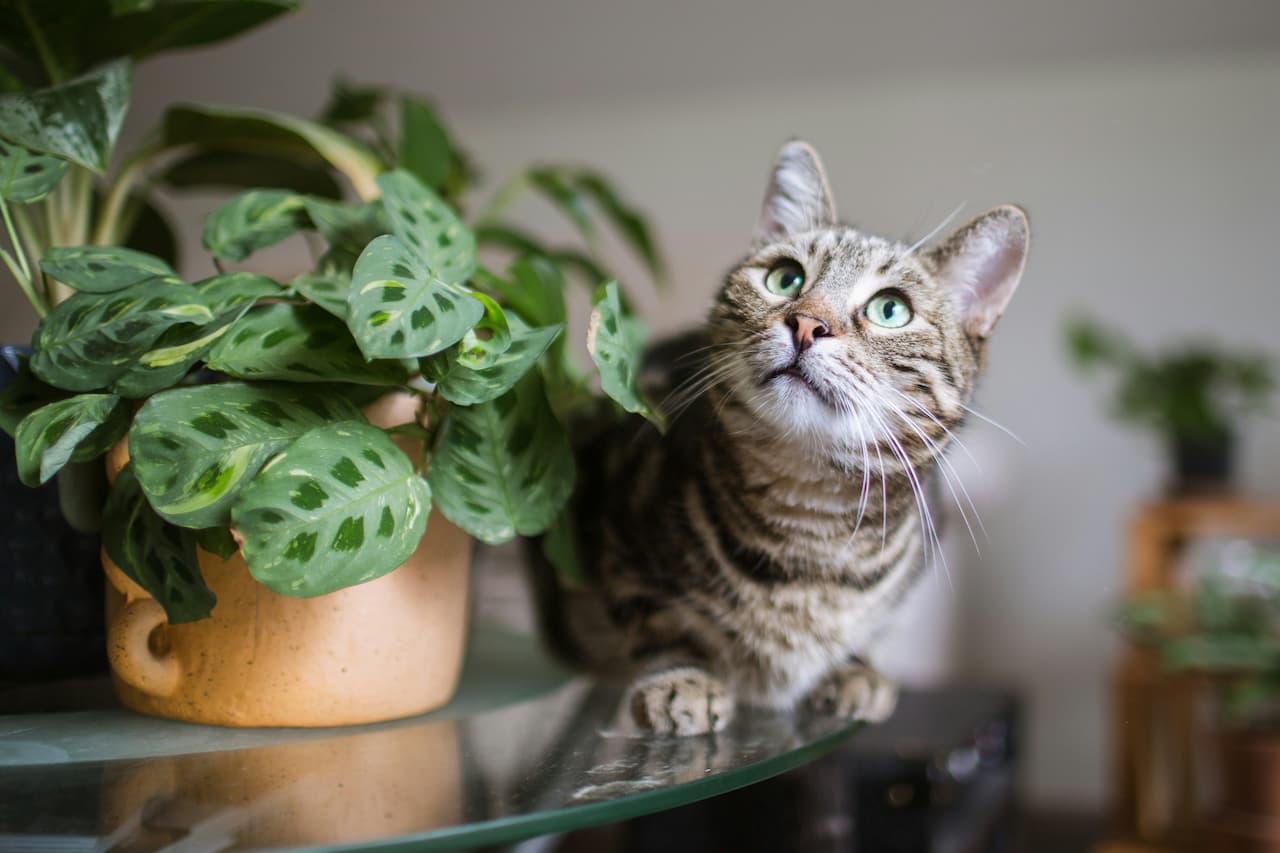
Maranta leuconeura – the prayer plant – is one of the most distinctive houseplants available in the UK, and one of the most communicative. Its patterned leaves fold upward at night in a movement called nyctinasty, resembling hands pressed together in prayer, then flatten and open again with morning light. The pattern of veins and markings varies significantly between the common varieties, but all share the same upright folding movement and the same fundamental care requirements. In good conditions a Maranta is a genuinely striking plant; in poor conditions it tells you immediately through curling, browning or fading leaves what needs to change.
The prayer plant is well-suited to UK homes because it thrives in lower light than many tropical houseplants and does not require the intense heat of a south-facing windowsill. What it does require, and what most UK homes struggle to provide naturally, is consistent humidity. Central heating dries the air significantly through winter, and this is the main reason Maranta leaves develop brown tips and edges in British homes from October through to March. Understanding how to manage humidity – and why it matters more than almost any other care variable for this plant – is the most important thing a UK owner can learn about their Maranta.
About the Prayer Plant
Maranta leuconeura is native to the tropical rainforests of Brazil, where it grows as a low-level ground plant under the forest canopy. This origin explains almost everything about its care requirements: it is adapted to dappled rather than direct light, to consistently moist and humid conditions, to warmth without extremes, and to a rich but fast-draining growing medium. In the wild it rarely grows in a single position all year – the forest floor shifts around it as leaves fall and plants grow – which means it is reasonably tolerant of being moved compared with more light-sensitive species.
Light and Position
Maranta leuconeura is one of the few houseplants that actively performs better away from a window. It thrives in bright indirect light but tolerates medium and even lower light levels that would cause many tropical plants to deteriorate. Direct sunlight – particularly the afternoon sun through a south or west-facing window – scorches and bleaches the patterned leaves within days, destroying the markings that make the plant attractive. A position 1-3 metres from a north or east-facing window, or further back in a room with good ambient light, suits it well throughout the year.
The nyctinastic leaf movement is light-dependent – the leaves fold upward in darkness and reopen as light returns. In very low light positions the leaves may remain partially folded even during the day as the plant fails to detect sufficient light to trigger full opening. If the leaves are opening only halfway or the patterning is becoming less vivid and the colours are fading to a duller green, the plant needs slightly more light. Moving it 30-40cm closer to a window is usually sufficient to restore colour and full leaf movement within two to three weeks.
Watering and Humidity
The prayer plant likes consistently moist compost during the growing season – not wet, not dry, but damp throughout. Allow the surface centimetre of compost to dry before watering again, then water thoroughly until it drains from the bottom of the pot. The critical thing to avoid is allowing the compost to dry out completely, which causes the leaf edges to curl inward and turn brown at the tips. Once this drying damage has occurred, the affected leaf edges do not recover – new growth will be healthy if conditions improve, but the damaged leaves retain their brown tips permanently. In winter, reduce watering frequency significantly – the plant is growing slowly and the cooler temperatures mean compost takes longer to dry out, so what worked as a twice-weekly watering schedule in summer may only be needed every ten to fourteen days from November through February.
Humidity is the most challenging care variable in the UK. The prayer plant prefers relative humidity of 50-70% and the average UK home runs at 30-40% in winter with central heating active – well below the minimum for comfortable Maranta growth. The practical solutions are grouping the plant with other moisture-loving plants to create a humid microclimate, placing the pot on a tray of damp pebbles so evaporation rises around the foliage, or running a small humidifier nearby. Misting the leaves has only a short-term effect and if done in low light or cool conditions can encourage fungal issues on the leaf surface – it is the least reliable of the available humidity solutions.
The bathroom is often the best room for a Maranta in a UK home. Steam from showers raises humidity naturally and consistently, the light levels are typically diffuse rather than direct, and the room temperature is stable. As long as there is a window or adequate indirect light, a north or east-facing bathroom is one of the most suitable positions in any British house for this plant.
Varieties – Erythrophylla vs Kerchoveana
The two Maranta varieties most commonly sold in the UK have subtly different care requirements that match their slightly different origins. Maranta erythrophylla – the herringbone plant, with its striking red veins and deep purple undersides – is slightly more demanding of warmth and humidity than kerchoveana. It is more susceptible to cold draughts and more likely to respond poorly to tap water high in fluoride and chlorine. Maranta kerchoveana – the rabbit’s tracks variety with its distinctive dark oval markings on a paler leaf – is marginally more tolerant of UK conditions and a slightly better choice for beginners or for rooms where humidity control is difficult.
Care Through the Year
Maranta care follows a clear seasonal pattern in UK homes. Spring and summer are the active growing period – the plant produces new leaves rapidly from March onward when light levels increase, and this is the time to feed monthly with a balanced liquid fertiliser at half the recommended dose, to repot if roots are escaping the drainage holes, and to propagate by stem cutting if you want additional plants. Autumn and winter require a shift in approach: watering frequency drops as growth slows, feeding stops entirely, and the primary challenge shifts from supporting growth to managing humidity through the heating season.
Common Problems and Fixes
Share on socials: