At a glance
Living without a garden does not mean living without growing things. The majority of UK homes classified as flats or apartments have some access to natural light, and many have a balcony, a communal garden or at minimum a south-facing windowsill. These spaces, properly understood and used, are capable of producing meaningful quantities of herbs, salad leaves, tomatoes, chillies, strawberries and flowering plants throughout the growing season. The limitations of no-garden growing are real – you cannot grow brassicas, root vegetables or large fruit trees in the same way that a garden allows – but the range of crops and plants that can be grown in containers is wider than most people expect, and the productivity per square metre of a well-managed balcony is higher than most open-ground vegetable plots.
The critical variable that determines what you can grow is light rather than space. A north-facing balcony in permanent shade is genuinely limited to ferns, hostas and other shade-tolerant ornamentals. A south-facing window with four or more hours of direct sun per day can produce a continuous supply of herbs and cut-and-come-again salad leaves throughout the spring, summer and autumn seasons. The first step in planning any no-garden growing setup is to assess the light realistically – not the light the space has on its best summer day, but the average light it receives through April, May and September when the growing season is at its most productive. This assessment determines what is worth attempting and prevents disappointment from crops that fail for lack of light rather than any fault in the grower. A simple way to check is to observe the space at midday on a clear day in March or October and note how much of it is in direct sun – this gives a reliable indication of productive growing capacity through the shoulder months of the season.
Your Growing Options Compared
Windowsill Growing
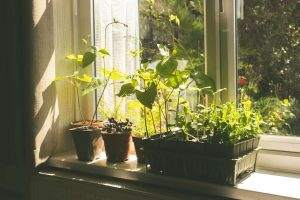
A south or west-facing windowsill is capable of producing a continuous supply of herbs and cut-and-come-again salad leaves throughout the growing season with nothing more than a few pots, good compost and regular watering. The key crops for windowsill growing are those that tolerate shallow root depth, regrow after cutting and produce harvests over a long period rather than requiring a single large harvest event. Basil, coriander, mint, parsley, chives and thyme all grow well in 15-20cm deep containers. Cut-and-come-again salad leaves – loose-leaf lettuce, rocket, spinach and mizuna – can be sown in a long window box and harvested repeatedly by cutting to 3cm above compost level, from which they regrow in 2-3 weeks through the cooler spring and autumn months.
Indoor windowsill growing in winter is more challenging. The combination of lower light levels and central heating creates conditions that dry compost out rapidly and stress plants that prefer cool, moist growing conditions. Herbs that originate from Mediterranean climates – thyme, rosemary, oregano – tolerate these conditions better than coriander or basil, which struggle in heated indoor air without supplementary humidity. A small tray of pebbles filled with water placed under the pots raises local humidity slightly and slows compost drying. Moving plants as close to the window glass as possible in winter maximises light, but check that the windowsill does not fall below 5°C on cold nights – glass conducts cold readily and windowsills can be significantly colder than the rest of the room.
Microgreens are the most space-efficient and fastest-return crop available for indoor growing. Sown densely in a shallow tray of compost or growing medium, they are ready to cut at just 5-8cm tall – typically 7-14 days after germination – and require nothing more than a windowsill, a spray bottle of water and a seed packet. Pea shoots, sunflower shoots, radish, coriander and mustard microgreens all produce flavourful results in very limited light. They are an excellent starting point for anyone new to indoor growing, as the short cycle from sowing to harvest provides rapid feedback and makes it easy to build growing confidence before investing in more demanding crops.
Balcony and Outdoor Spaces
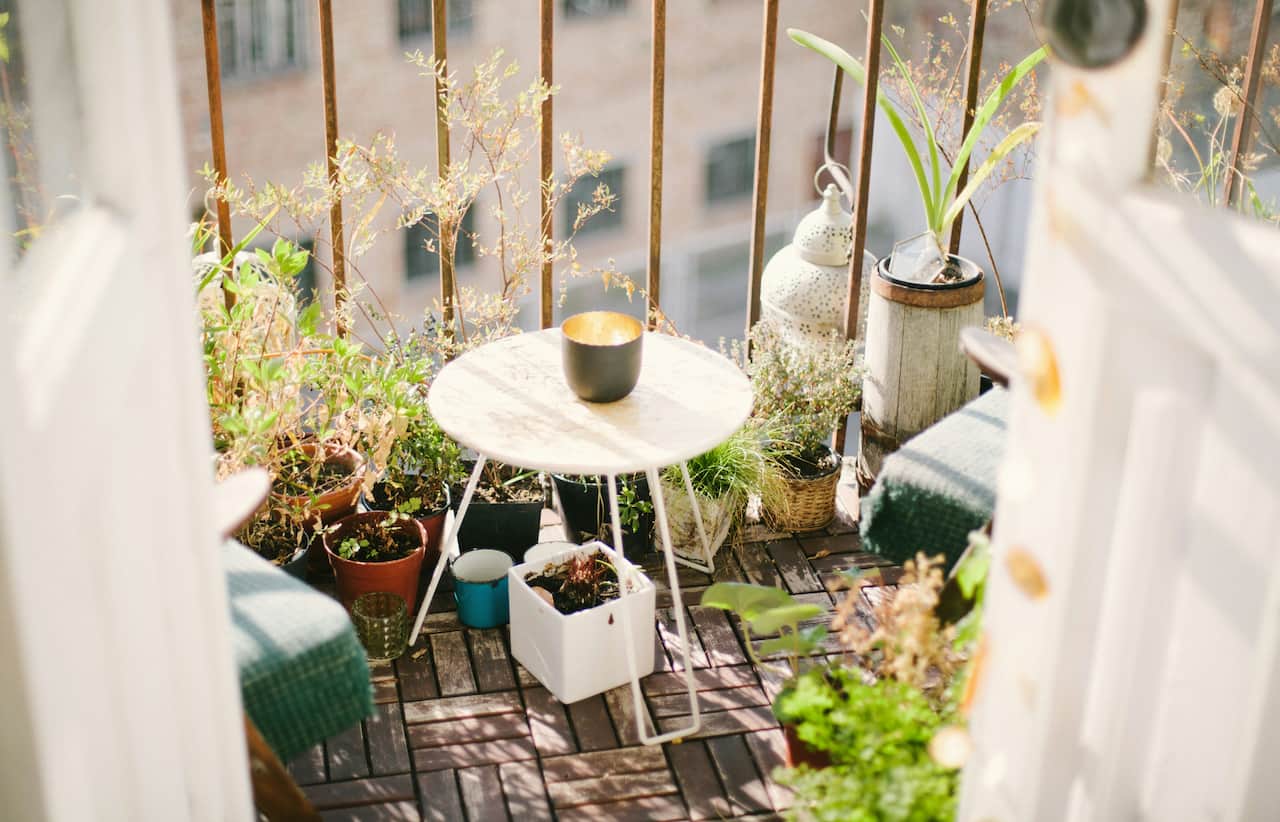
A balcony – even a small one of 2-3 square metres – transforms the growing possibilities substantially. In containers and grow bags, a south or west-facing balcony can support a full summer growing programme that includes tomatoes, courgettes, French beans, chillies, strawberries, herbs and a range of flowering plants. The principal constraints are weight (balconies have structural load limits – check with your building manager if in doubt), wind exposure (high-rise balconies can cause significant wind damage to tall plants) and watering frequency (containers in full sun on a south-facing balcony in summer may need watering daily in hot weather).
Grow bags are the most productive option for balcony food growing. A standard grow bag supports two tomato plants, three to four courgette or cucumber plants, or a dense planting of salad leaves. The compost is specifically formulated for heavy-feeding crops and provides nutrients through the first half of the season; additional liquid feeding from July onwards maintains productivity. Position grow bags where the structural load is supported by joists rather than in the middle of the balcony floor. Vertical growing using wall-mounted pocket planters, rail-mounted planters and tiered plant stands multiplies the effective growing area of a small balcony significantly and is particularly effective for herbs, strawberries and trailing plants.
Self-watering containers are transformative for balcony growing. Standard pots on a sunny balcony in summer can dry out completely within 24 hours and require daily watering which is impractical for most people. Self-watering containers with a water reservoir at the base extend the interval between watering to 3-5 days, dramatically reducing the risk of plants failing during a hot week when watering is missed. The investment is small relative to the difference in crop success rates.
Allotments and Community Growing
For anyone who wants to grow food seriously without a garden, an allotment is the most productive option available. A standard full plot of 10 rods (approximately 250 square metres) provides enough space to grow the full range of vegetables, fruit and cut flowers that a family needs through the growing season and into winter storage. Half plots and quarter plots are increasingly available and represent a more manageable commitment for first-time allotment holders. Waiting lists for allotments vary enormously by location – in some urban areas waits of 5-10 years are common, while in others plots are available immediately. If you are on a waiting list, it is worth contacting the site directly as well as the council – plots become available at short notice when existing holders give up mid-season, and sites often prefer to offer these to people who have made direct contact rather than working down a list.
Community gardens are a lower-barrier alternative to the allotment system, offering shared growing space without the individual plot responsibility. The quality, size and management arrangements of community gardens vary widely – some offer dedicated growing beds to individuals, others operate as collective projects where all volunteers share the work and the harvest. Many community gardens have no waiting list and welcome new volunteers. Finding them is straightforward through community noticeboards, council websites or the Federation of City Farms and Community Gardens, which maintains a searchable directory of community growing spaces across the UK.
Common Problems and Fixes
Share on socials: