At a glance
The average UK household spends around £1,500-2,000 per year on energy bills, and a significant proportion of that cost goes on heating space and water that would not be needed if the home were properly insulated and efficiently heated. The good news is that the most effective energy efficiency improvements are also among the cheapest – loft insulation, draught-proofing and hot water cylinder insulation all pay back their installation costs within 1-3 years in most homes and continue saving money for decades. The challenge for most homeowners is not motivation but prioritisation – knowing where to start and how to sequence limited budgets across the wide range of available improvements to get the best return in the shortest time.
The principle that should guide any energy efficiency programme is fabric first. Before upgrading heating systems or installing renewable technology, it is important to ensure the building fabric – walls, roof, floors, windows and doors – retains heat as efficiently as possible. Heating a poorly insulated home with a highly efficient heat pump is significantly less cost-effective than heating a well-insulated home with a standard condensing boiler. Insulation reduces the demand for heat; heating system upgrades reduce the cost of meeting that demand more efficiently. Both are important, but insulation always comes first.
Improvements Ranked by Payback
Insulation – The Foundation
Insulation is the highest-priority energy efficiency investment for the vast majority of UK homes because it directly reduces heat loss – meaning less energy is needed to maintain comfortable temperatures regardless of what heating system is used. The three most impactful insulation measures for typical UK homes are loft insulation, cavity wall insulation and floor insulation, in approximately that order of cost-effectiveness. Together, a fully insulated loft and cavity walls can reduce heating bills by around £580 per year for a typical semi-detached home – a saving that continues for the life of the building without any further action. The upfront cost of both measures combined is typically £600-2,000 for a property not eligible for grants, but can be zero for households qualifying for ECO4 or the Great British Insulation Scheme.
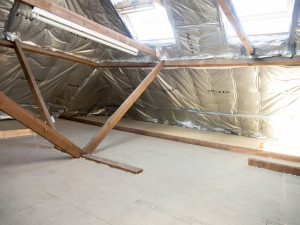
Loft insulation is the single most cost-effective improvement available to homes with an accessible loft. The recommended depth is 270mm of mineral wool, laid in two cross-hatched layers of 100mm and 170mm between and over the joists. A fully insulated loft in a semi-detached home saves approximately £220 per year on heating bills compared to an uninsulated loft, and partial top-ups of existing thin insulation (50mm or less) deliver most of this saving at lower cost. Installation costs range from £300-600 for a typical property, giving a payback period of 1-3 years even without grant support. Government grant schemes including ECO4 and the Great British Insulation Scheme cover the full cost of loft insulation for eligible households – those on certain benefits or with a low EPC rating. The Energy Saving Trust eligibility checker at energysavingtrust.org.uk is the quickest way to establish whether a household qualifies and which scheme applies.
Cavity wall insulation is suitable for properties built after approximately 1920 that have an unfilled cavity between the inner and outer leaves of the external wall. A specialist installer drills small holes in the external masonry, injects insulating material (typically mineral wool beads or EPS beads) and fills the holes. The process takes half a day and is non-disruptive. Savings of approximately £360 per year are typical for a semi-detached house. Cavity wall insulation is also frequently available under grant schemes for eligible households and is worth checking before paying privately. Before proceeding, ask the installer to check that the cavity is suitable – properties in very exposed locations or with a history of damp may not be appropriate for cavity fill without additional investigation.
Solid wall insulation applies to homes built before approximately 1920, which typically have solid brick or stone walls without a cavity. These walls lose significantly more heat than cavities and are more expensive to insulate – either internally (dry lining) or externally (rendering or cladding). Internal wall insulation reduces room size slightly but is less expensive and disruptive than external. External wall insulation preserves internal space and improves the building’s appearance but costs significantly more and requires planning consent in some areas. Both forms attract significant grant funding under the ECO4 scheme for eligible households and can make a dramatic difference to heating costs in older properties.
Check your EPC before booking any work. Your home’s Energy Performance Certificate shows the current energy efficiency rating and lists the recommended improvements in order of impact. An EPC is available free from the government’s EPC register if one was issued in the last 10 years. A new EPC costs around £60-100 from an accredited assessor. The recommendations section is the most useful part – it tells you exactly what would improve your rating and by how much.
Heating System Upgrades
Annual Savings by Improvement
These two improvements together address the majority of avoidable heat loss in a typical UK semi-detached home. Both are eligible for grant funding under ECO4 and the Great British Insulation Scheme for qualifying households. If only one improvement is possible, cavity wall insulation saves slightly more but loft insulation is less disruptive and more universally applicable.
DIY draught-proofing of external doors, letterboxes, keyholes and accessible window frames costs very little in materials and saves consistently every year thereafter. Self-adhesive foam or brush strips on door frames and sash window brush seals are the most effective products. A typical draughty home can lose 15-20% of its heat through gaps that could be sealed for under £50 in materials.
A smart thermostat that learns occupancy patterns and adjusts the heating schedule accordingly typically saves 10-15% on annual heating bills. The saving is larger in homes where heating has previously been left on for long periods when the property was empty. Compatible with most modern combi and system boilers and takes around an hour to install by a competent DIYer.
Suspended timber ground floors are a significant source of heat loss in older UK homes. Insulating between the joists from below (if accessible via a crawl space) or above (if floors can be lifted) saves meaningful amounts. In homes with solid concrete floors, insulation is more disruptive as it requires raising the floor level, making it less cost-effective unless combined with other renovation work.
The most important thing to understand about energy efficiency improvements is that the highest-profile, most expensive options are rarely the best starting point. A heat pump installed in a poorly insulated home will not perform well and will disappoint on running costs. Solar panels on a home with an old G-rated boiler are generating electricity that is partially wasted heating the house inefficiently. The correct sequence – fabric first, then heating controls, then heating system upgrades, then renewable generation – gives the best return at each stage and makes every subsequent improvement more effective. This sequence is not just best practice; it is also the order in which most grant schemes require improvements to be made, so following it naturally aligns with eligibility for available funding.
For most UK homeowners, the practical starting point is a free or low-cost home energy assessment – either from an energy supplier, a local council scheme or an independent assessor – that establishes the current state of insulation and heating efficiency and identifies the most impactful improvements. Many local authorities also run free insulation programmes or can signpost to approved installers under national schemes. The combination of available grants, the consistent upward trajectory of rising energy prices and the long operating lives of insulation measures makes energy efficiency improvements one of the most financially sound and reliable home investments available in the current UK market.
Share on socials: