At a glance
Chillies are arguably the best crop you can grow in a pot in the UK. They are compact enough for a balcony or windowsill, produce prolifically over a long season, and a single plant can provide more chillies than most households can use in a year. Unlike tomatoes which need significant outdoor space and sunshine to perform well, chillies thrive in containers and can be brought inside at the end of the season – keeping a healthy chilli plant alive over winter and producing fruit the following year with a head start that results in an even bigger crop.
The UK’s climate is warm enough for chillies to produce well outdoors from June to October, but the growing season is too short to get the best from slower-maturing varieties without starting them very early indoors.
Best chilli varieties for UK pot growing
| Variety | Heat level | Plant size | Season | Verdict |
|---|---|---|---|---|
| Apache F1 | Medium-hot | Compact 40cm | Short – good for UK | Best overall for pots |
| Prairie Fire | Very hot | Very compact 30cm | Short | Best compact variety |
| Hungarian Hot Wax | Mild-medium | Medium 60cm | Medium | Good for cooking |
| Cayenne | Hot | Medium 60cm | Medium | Classic cooking chilli |
| Habanero | Very hot | Medium 60cm | Long – needs early start | For experienced growers |
Apache F1 is the best chilli for most UK pot growers. It is compact, prolific and has a shorter maturation time than many varieties – important given the UK’s limited warm season. A single Apache plant in a 10L pot on a south-facing windowsill or patio will produce dozens of medium-hot red chillies from July onwards. For beginners it is the safest and most rewarding choice.
Sowing – start earlier than you think
Chillies need a long growing season – typically 16-20 weeks from sowing to first ripe fruit for most varieties. In the UK this means sowing in January or February at the latest to ensure plants are producing well before the summer ends.
- 1Sow from January to March indoorsSow 2-3 seeds per small pot or module, 5mm deep. Chilli seeds need warmth to germinate – soil temperature of 20-25°C is ideal. A heated propagator makes a significant difference to germination speed and rate.
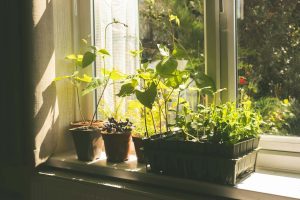
- 2Keep warm until germinationGermination takes 7-14 days in warm conditions, 3-4 weeks at room temperature without heat. Place on the warmest windowsill available or use a heated propagator set to 22°C.
- 3Thin to one seedling per potOnce seedlings are established with their first true leaves, remove the weaker seedlings leaving one per pot. Don’t pull – snip with scissors to avoid disturbing the roots of the one you are keeping.
Growing on and potting up
Chilli plants grow slowly at first – don’t be impatient in February and March when progress seems minimal. Once the weather warms in April and May, growth accelerates noticeably.
- Pot up from seed tray or small module into a 9cm pot when roots start showing at the drainage holes
- Move into a 15cm pot when the plant is established in the 9cm pot
- Final pot for most varieties is 25-30cm (10-15 litres) – larger is better
- Use a good quality multipurpose compost with added perlite for drainage
- Keep plants on the warmest, brightest windowsill available until outdoor conditions are right
Moving outdoors
Chillies are frost-tender and cannot be moved outdoors until all risk of frost has passed – typically late May in the south and early to mid-June in northern England and Scotland. Harden off over 10-14 days by gradually increasing outdoor exposure before leaving plants outside permanently.
Position pots against a south-facing wall for maximum warmth. The reflected heat from a brick or stone wall can add 2-3°C to the microclimate around the pots – a significant benefit in the UK’s marginal chilli-growing climate. A greenhouse or polytunnel produces significantly better results than outdoor growing in most UK regions.
Watering and feeding
- Water consistently but not excessively – chillies in pots prefer to dry out slightly between waterings. Overwatering is a more common problem than underwatering and causes root rot. Check the top 2cm of compost – water when it’s dry.
- Feed with high-potash fertiliser from flowering – once the first flowers appear, switch from a balanced feed to a high-potash tomato fertiliser like Tomorite every 7-10 days
- Avoid high-nitrogen feed once established – nitrogen encourages leaf growth. Once plants are large enough, high-nitrogen feed delays fruiting.
- Mist flowers gently in dry conditions – this aids pollination and helps fruit set, particularly for plants grown under cover
Harvesting and overwintering
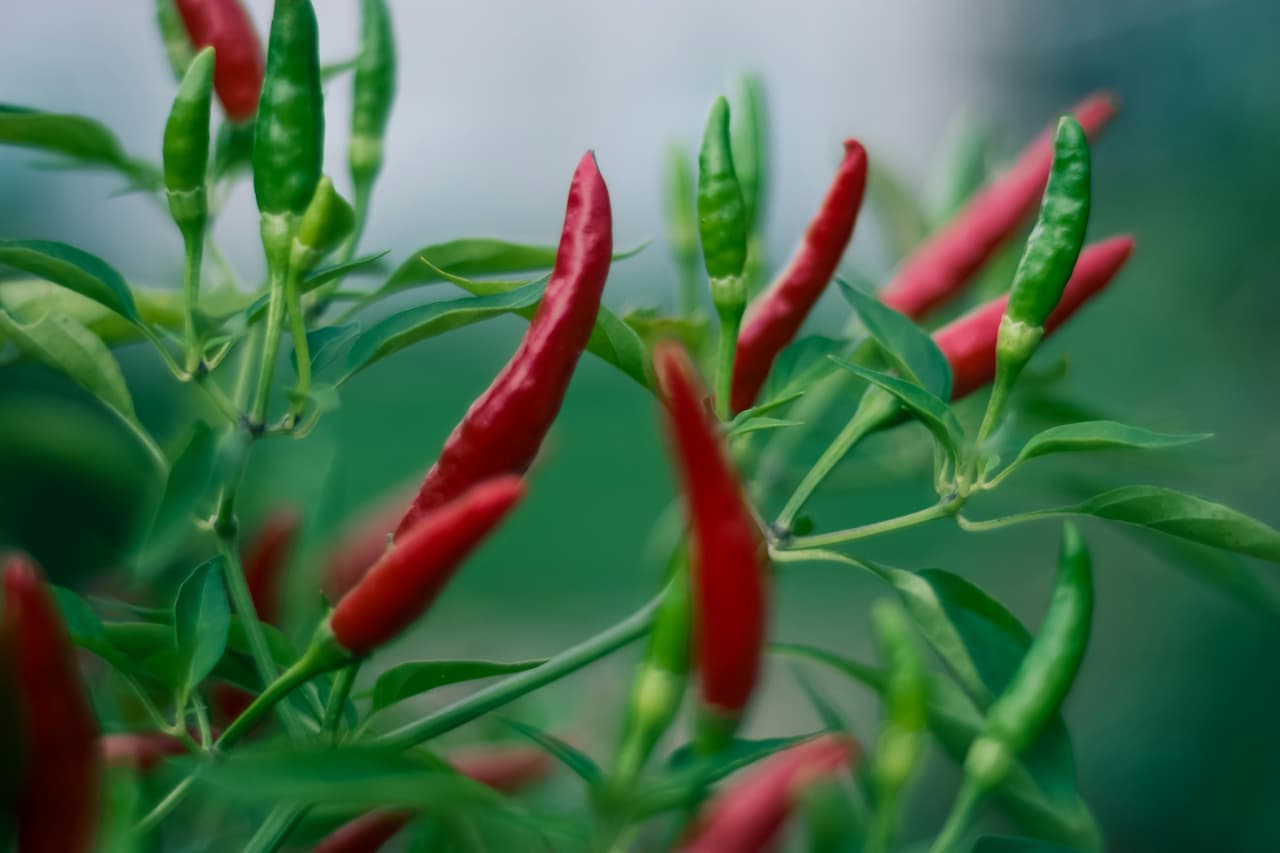
Chillies can be harvested green or left to ripen to red (or yellow, orange, purple depending on variety). Red chillies are generally hotter and sweeter than green ones from the same plant. Pick regularly to encourage the plant to continue producing.
One of the great advantages of pot-grown chillies is overwintering. Before the first frost in October, bring pots indoors to a cool, bright windowsill. Cut plants back by about half, reduce watering significantly and allow them to rest through winter. In February, move to a warmer position and begin watering more regularly. Overwintered plants produce fruit much earlier than seedlings and often produce significantly larger crops in their second year.
| Problem | Cause | Solution |
|---|---|---|
| Flowers dropping without setting fruit | Too hot, too cold or insufficient pollination | Mist flowers, ensure 15-30°C during flowering |
| Yellow leaves | Overwatering or nutrient deficiency | Reduce watering, feed with balanced fertiliser |
| Aphids on young growth | Common on soft new growth | Blast off with water, encourage ladybirds |
| Slow to ripen | Insufficient heat or light | Move to warmer position, consider grow light |
As an Amazon Associate I earn from qualifying purchases. Prices correct at time of publishing.
Chillies in pots are one of the most rewarding container crops in the UK. Start early, keep them warm, feed regularly from flowering and bring them indoors in October to overwinter. A well-managed chilli plant in its second or third year is a genuinely productive plant that will supply a household with chillies for the entire year. For more on container growing read our guide on the best vegetables to grow in containers UK.
As an Amazon Associate I earn from qualifying purchases. Prices correct at time of publishing.
Share on socials: