At a glance
The blackbird is one of the most familiar and most rewarding garden birds in the UK. The male’s rich, fluting song – delivered from a high perch from late February through to July – is the soundtrack of the British garden spring, and once a pair of blackbirds has established territory in your garden they tend to stay, returning season after season to raise multiple broods through the summer. Few garden birds are as consistently entertaining, as vocally impressive or as easy to attract with the right approach.
Blackbirds are ground feeders and primarily insectivorous, which means the key to attracting them is less about what you put in a feeder and more about how you manage your garden at ground level. A lawn they can hunt across, shrubs they can shelter beneath, some leaf litter where invertebrates accumulate, and a reliable water source are worth more to a blackbird than any amount of seed in a hanging feeder. This guide covers every aspect of making your garden genuinely attractive to blackbirds year-round.
Understanding blackbirds
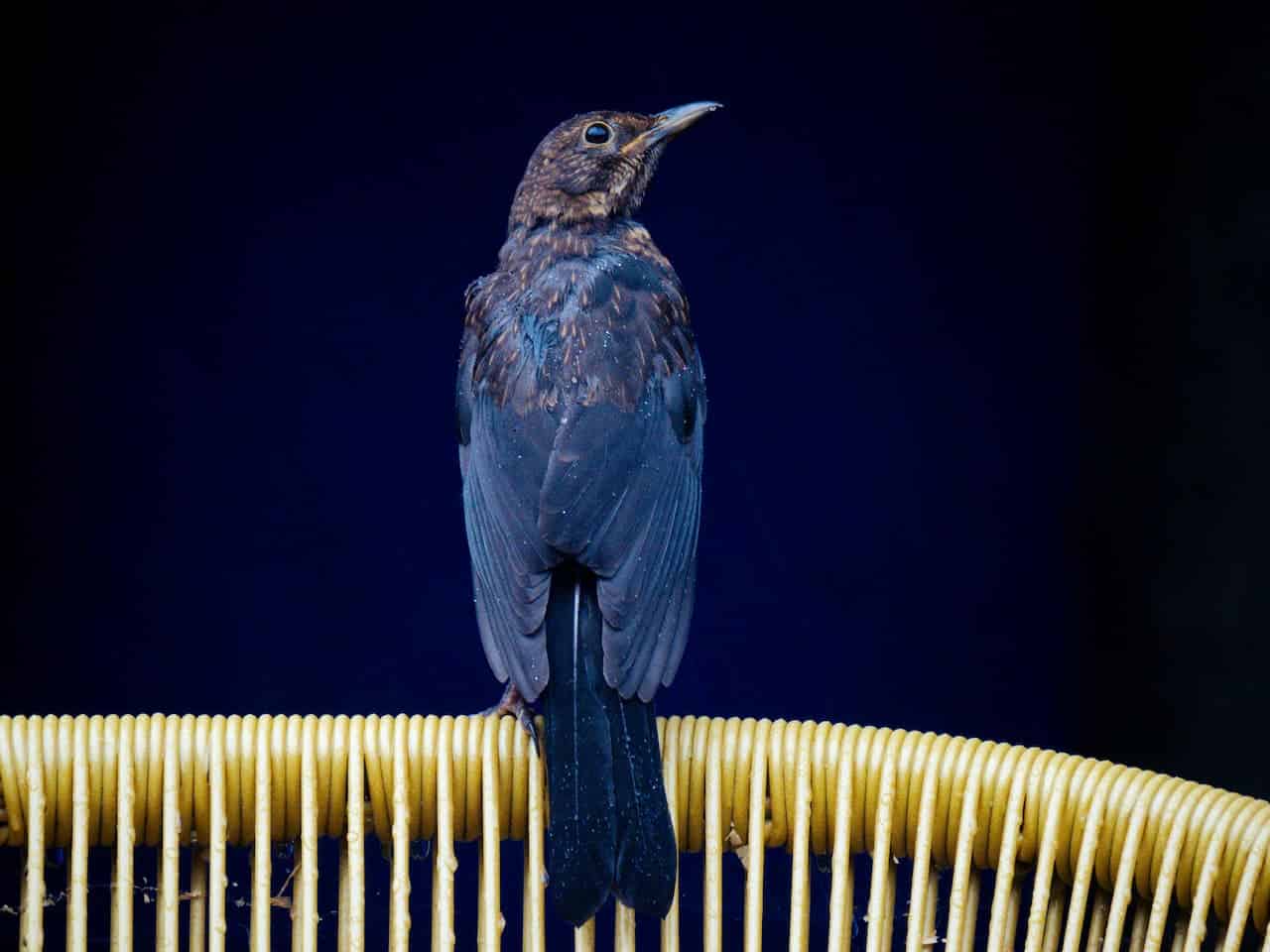
The common blackbird (Turdus merula) is one of the UK’s most abundant birds, with an estimated population of around five million breeding pairs. Males are unmistakable – jet black plumage with a bright orange-yellow bill and eye ring. Females and juveniles are brown, often with a mottled or streaked breast that causes them to be mistaken for thrushes by new observers. Young males in their first autumn show a mix of brown and black feathers as they moult into adult plumage.
Blackbirds are highly territorial. A resident male will defend his garden territory vigorously against rival males, which is why you frequently see them chasing each other along fence tops in spring. This territorial behaviour is a good sign – it means a blackbird considers your garden worth defending. Once a pair has settled, they often return to the same territory year after year. The same individual blackbird may be singing from your apple tree for several consecutive springs.
What to feed blackbirds
Blackbirds are primarily insectivores and frugivores – they eat earthworms, beetles, caterpillars, leatherjackets and other soil invertebrates, supplemented by soft fruit and berries through summer and autumn. They do not readily use hanging feeders and rarely eat dry seed. The most effective way to supplement their natural diet is to put food on the ground or on a low, flat feeding station where they can forage comfortably.
Soaking dried mealworms and sultanas before putting them out makes a significant difference. Dry mealworms are less appealing and harder to digest, especially for nestlings. Soak dried mealworms in warm water for 20 minutes before putting them on a flat feeder. Similarly, dry sultanas and raisins should be soaked until plump – hard dried fruit can cause digestive problems in birds and is less attractive to blackbirds in its dry state.
The most reliable food source for blackbirds is not supplementary feeding at all – it is a healthy population of earthworms in your lawn and borders. A lawn that is regularly dug over by blackbirds, with the characteristic head-tilting posture they use to detect worm movement, is a lawn with good soil biology. Avoiding pesticides and chemical lawn treatments preserves the invertebrate population that blackbirds depend on year-round. A single blackbird can eat 5 to 6 metres of earthworm per day during the breeding season.
Creating the right habitat
Blackbirds need four things from a garden: somewhere to forage, somewhere to shelter and roost, somewhere to nest, and access to water. All four can be provided in even a moderately sized urban garden with the right approach to planting and management.
A lawn – even a small one – is the single most important habitat feature for blackbirds. They hunt earthworms and leatherjackets by walking slowly across the surface, cocking their head to one side to listen for movement below, then stabbing rapidly into the soil. Keeping at least some lawn area unmowed or only lightly treated means the soil invertebrate population stays healthy. Avoid using pesticides, slug pellets or chemical lawn treatments in areas where blackbirds regularly forage – these reduce the invertebrate prey and can cause secondary poisoning.
Dense, low shrubs are essential for shelter and nesting. Blackbirds build cup nests in thick vegetation – hawthorn, ivy, pyracantha, cotoneaster and dense hedging are all used regularly. The taller and denser the shrub, the better the protection from cats and sparrowhawks. Ivy on fences or walls is particularly valuable as it provides both dense nesting cover and a berry crop in autumn and winter. Leaving a section of hedge or shrub border uncut through the breeding season – March to July – reduces disturbance to nesting birds significantly.
Leaf litter piles and undisturbed areas beneath shrubs are where blackbirds spend a great deal of their foraging time. The combination of moisture, decomposing material and protected soil beneath a leaf pile supports high concentrations of the beetles, centipedes and worms that blackbirds target. Resist the urge to clear borders completely – a tidy garden is a poor garden for blackbirds. Leave leaves where they fall under shrubs, or sweep them into corners where they can decompose undisturbed through winter.
Nesting and breeding
Blackbirds are early nesters. The first eggs can be laid in late February or early March in mild years, with the main breeding season running through to July. A successful pair will typically raise three to four broods in a season, with each clutch containing three to five eggs that take around two weeks to hatch. The young are fed in the nest for a further two weeks before fledging. This intensive breeding schedule means blackbirds are particularly sensitive to disturbance between March and July.
Do not cut hedges, trim ivy or disturb dense shrubs between March and the end of July. Active nests are protected by law under the Wildlife and Countryside Act 1981. Disturbing a nest with eggs or young birds is an offence. Always check for active nests before any cutting or pruning during the breeding season. A quick visual check from a distance before starting work takes seconds and avoids both legal issues and the loss of a brood.
Blackbirds build cup nests from grasses, leaves, moss and twigs, with a smooth inner lining of mud that sets hard. They site nests in dense vegetation – thick hedging, ivy-covered walls, climbing roses, pyracantha and hawthorn are all favoured sites. The nest is usually positioned 1 to 3 metres above the ground, tucked into a fork or against a supporting structure. Blackbirds rarely use nest boxes – they are not cavity nesters – but they do sometimes use open-fronted nest boxes positioned in sheltered spots within dense vegetation.
Seasonal care through the year
Blackbirds are resident year-round but their needs and behaviours shift significantly through the seasons. The garden management actions that support them in winter are different from those in spring and summer.
Common questions and problems
A few recurring questions come up from UK gardeners trying to attract or support blackbirds. The diagnostic below covers the most common situations.
A garden that supports blackbirds consistently – with lawn for foraging, dense shrubs for nesting and shelter, berried plants for autumn and winter food, and a reliable water source year-round – will hold resident blackbirds indefinitely. The male’s song from February through to midsummer is one of the finest rewards UK gardening offers, and it costs nothing more than a willingness to manage the garden with wildlife in mind.
Share on socials: