At a glance
Hardy annuals are the flowers that gardening books describe as foolproof. Direct sow, water in, done. And then you sow them in May, water them in, and get a handful of scraggly plants that flop over in July and die by August. The books were not lying exactly. Hardy annuals really are easy. But easy has conditions, and the most important condition is timing that runs counter to what most beginners assume.
Hardy annuals are plants that complete their entire life cycle in a single season, surviving frost in their early stages and growing to flowering size without heated propagation or indoor protection. The frost-hardiness is the key. It means you can sow them earlier than most people do, sometimes far earlier, and that earlier sowing is precisely what produces the best plants.
What makes a hardy annual
The category covers a wide range of flowers, but they share several traits worth understanding before you start. They grow from seed to flower to seed in a single season, then die. They are adapted to cold soil conditions and benefit from a period of cold, which encourages strong root development before the plant puts on rapid top growth in spring. This is why autumn sowing, which seems counterintuitive, often produces better results than spring sowing in the UK.
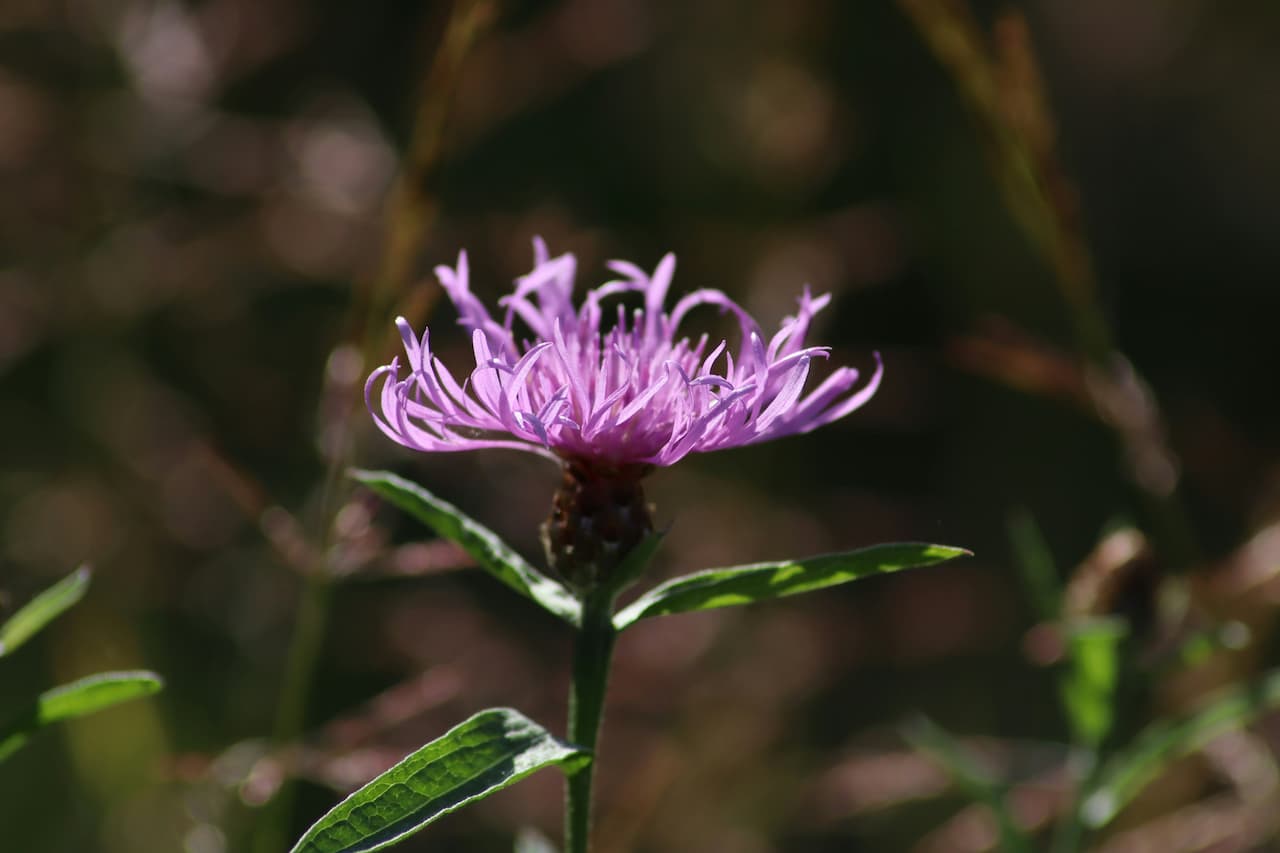
Common hardy annuals include cornflowers, nigella, calendula, larkspur, ammi, scabious, clarkia, godetia, gypsophila, eschscholzia, phacelia, and sweet peas. Sweet peas occupy a slightly special place: technically they are hardy but they do best with some cosseting in their first weeks, so they are often treated differently to the rest of the group.
Autumn sowing: the approach that transforms results
Sowing hardy annuals in autumn, between late September and October, produces plants that are significantly stronger than spring-sown equivalents. The seeds germinate, establish a small rosette of leaves, and then pause during the coldest months. When spring arrives and temperatures rise, those plants already have a developed root system. They grow away fast, flower earlier than spring-sown plants, and produce more flowers over a longer period.
Not every hardy annual suits autumn sowing equally well. Cornflowers, nigella, larkspur, ammi, and calendula are all excellent candidates. Sweet peas are best sown in October or November in deep pots and overwintered in a cold frame or unheated greenhouse before planting out in March. The one thing that kills autumn-sown seedlings is waterlogged ground over winter. If your soil holds water, the seedlings will rot at the base. Improving drainage in the beds you intend to use is worthwhile, or alternatively sowing into raised beds that drain freely.
Spring sowing: getting the timing right
For those sowing in spring, the most common mistake is waiting too long. Hardy annuals can be sown outside from late February or March in many parts of the UK, as soon as the soil is workable and not frozen. The cool soil of early spring suits them well. Seeds sown in March into cool ground will often germinate more evenly and produce stronger seedlings than seeds sown in May into warm soil, because the warmer conditions trigger rapid germination followed by stress as the young plants compete with weeds and cope with drying out.
The other common mistake is sowing into modules or trays indoors. Hardy annuals do not transplant well as a general rule. Their roots are sensitive to disturbance, and transplanted seedlings often check their growth, producing smaller plants with fewer flowers than those that have grown undisturbed from germination. Direct sowing into the bed where they will flower is almost always preferable. Mark the sown area so you know where you have sown, water in well, and thin to the correct spacing once seedlings are large enough to identify.
Soil preparation and siting
Hardy annuals are not demanding plants, but they perform best in reasonably fertile, free-draining soil in a sunny position. They do not need rich conditions. Overfed soil, particularly high-nitrogen ground, produces lush leafy plants that flower poorly. A light forking over to break up any surface capping, raking to a fine tilth, and perhaps a light dressing of a low-nitrogen fertiliser is all the preparation needed.
Shade is the main enemy. Most hardy annuals produce their best flowers in full sun or close to it. An east-facing border that gets morning sun but is shaded by afternoon will work passably for calendula and nigella, but cornflowers, larkspur, and ammi will be significantly reduced. Weed control before sowing saves considerable effort later. A bed that has been allowed to grow a flush of weeds and then hoed off before sowing will have reduced the weed seed bank at the surface, giving your seedlings a fighting chance. Because hardy annuals are direct sown, being able to distinguish your seedlings from weed seedlings in the early weeks matters. Sowing in identifiable rows or marked patches makes this much easier.
How to sow
Scatter sowing and drill sowing both work. For a naturalistic, mixed-patch effect, scatter sowing with several species mixed together gives a cottage-garden result. For cutting gardens or where you want to weed efficiently, thin drills across the bed work better and make identification of seedlings straightforward. Sowing depth is usually shallow: most hardy annual seeds are sown at a depth of roughly twice their own diameter, which means very fine seeds like ammi and nigella barely need covering at all. Large seeds like sweet peas go in at around two to three centimetres. Watering in after sowing is essential. If the surface dries out before germination is complete, seedlings that have started to emerge can die quickly. Covering the sown area with a sheet of permeable horticultural fleece for the first few weeks retains moisture and warmth, significantly improving germination rates in cooler spring conditions.
Thinning
Thinning is the step most beginners skip or do half-heartedly, and it is the step that makes the biggest difference to the quality of the finished plants. Hardy annuals sown broadcast will come up far too thick. Left unthinned, they compete fiercely for light and nutrients, producing tall, spindly stems that flop and flowers that are small and sparse.
The correct approach is to thin in two stages. A first thinning when seedlings are a few centimetres tall removes the obvious excess, leaving plants spaced at around half the final recommended distance. A second thinning a few weeks later brings the plants to their final spacing. Most hardy annuals perform best at fifteen to thirty centimetres apart depending on their ultimate size. Ammi and larkspur need more space than calendula or nigella. Remove thinnings by nipping them off at ground level rather than pulling, to avoid disturbing the roots of the plants you are keeping.
Watering and feeding
Hardy annuals are not thirsty plants in normal conditions, but they need consistent moisture during germination and establishment, and again when they come into flower in summer. Extended dry spells at flowering time cause plants to set seed prematurely, cutting short the display. A thorough watering once or twice a week in dry conditions, applied to the base of the plants rather than overhead, extends the flowering period considerably.
Feeding is rarely necessary if the soil was reasonably prepared beforehand. An occasional liquid feed with a high-potassium fertiliser in midsummer can extend flowering in beds where the soil is particularly poor, but for most garden soils it is not needed. High-nitrogen feeding actively reduces flower production by directing energy into leaves instead.
Supporting taller varieties
Tall hardy annuals including larkspur, ammi, sweet peas, and tall cornflower varieties need support before they need it, not after. Once stems have flopped in wind or rain they rarely recover their shape, and the damage to stem tissue often introduces disease. The best approach is to push pea sticks or hazel branches into the ground around the young plants while they are still short enough to grow up through the support naturally. A ring of canes and string also works. Support put in place when plants are around twenty to thirty centimetres tall is invisible by the time they flower.
Deadheading and extending the season
Deadheading once flowering begins is something all hardy annuals benefit from. Removing spent flowers before they set seed tells the plant that its job of reproduction is not yet complete, triggering more flowers. A bed of cornflowers or calendulas that is deadheaded every few days will continue flowering for months. The same bed left to seed will be mostly finished within weeks.
For those wanting seed for following years, leave a few plants to run to seed in late summer. Hardy annuals set seed prolifically and reliably, and a small amount of self-seeding in an undisturbed bed means seedlings often appear in autumn without any deliberate effort.
Cut flowers extend the season too. Regular cutting performs the same function as deadheading. A bed of cornflowers or larkspur that you pick from every few days will keep producing far longer than one left to develop fully on the plant. Cutting and deadheading together can easily double the productive life of the display.
Common problems
Hardy annuals are generally tough, but a handful of issues are worth knowing before they catch you out. Most are preventable rather than curable, so the time to act is before the problem appears rather than after.
Cutting and bringing in
Hardy annuals are among the best cutting flowers for home use, and regular cutting actually extends the flowering period by preventing seed set. Cut in the morning when stems are fully turgid, using clean sharp scissors or secateurs, and place straight into water. Remove any leaves that would sit below the water line to prevent rotting.
Some varieties are better cut at specific stages. Larkspur benefits from cutting when roughly half the flowers on the spike are open; cut earlier and the display in the vase lasts longer. Ammi should be cut just as the flowerheads are fully formed but before individual flowers open fully. Cornflowers and calendulas can be cut at any stage and last well in water.
Varieties worth growing
The range of hardy annuals available from seed is extensive, and variety selection makes a real difference. Among cornflowers, the classic blue is beautiful but darker varieties like ‘Black Ball’ and burgundy mixes add depth. For nigella, ‘Miss Jekyll’ is the standard for good reason: reliable, early, and genuinely beautiful. Ammi majus is preferable to ammi visnaga for most gardens: similar appearance but more refined. For larkspur, the Giant Imperial series produces the tallest, most branched plants with the most impressive flower spikes.
Self-seeding and naturalising
Several hardy annuals self-seed reliably in favourable conditions, building up a self-sustaining colony over time. Nigella, calendula, larkspur, eschscholzia, phacelia, and some cornflower varieties all behave this way in undisturbed, free-draining soil. The results are often looser and more naturalistic than planned sowings, with seedlings appearing where conditions suit them rather than where you put them.
If this appeals, allow at least some plants to set seed each year and disturb the ground as little as possible in autumn. Cultivating the seed bed removes the seedlings along with the weeds. Over three or four years, self-seeding annuals in an undisturbed patch develop into something genuinely beautiful, with different varieties jostling for space and the balance shifting gently from year to year.
Share on socials: