At a glance
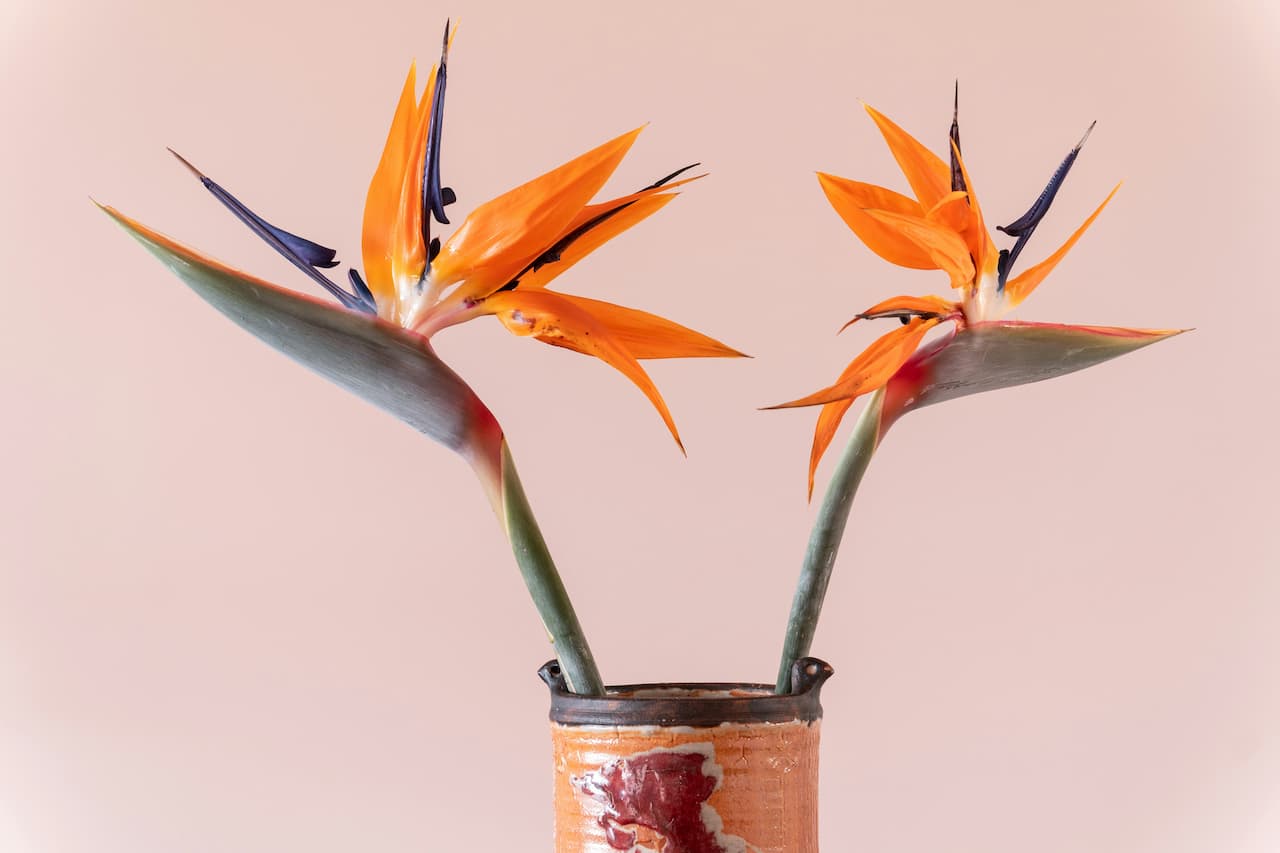
The Bird of Paradise (Strelitzia reginae or Strelitzia nicolai) is one of the most dramatic houseplants available in the UK – a genuinely architectural plant that can reach ceiling height indoors and produces paddle-shaped leaves with a presence no other common houseplant matches. It is not the easiest plant to keep well, and the UK climate presents specific challenges around light and humidity that need to be understood and managed. But for anyone with the right spot and a willingness to meet its requirements, it is exceptionally rewarding.
Both species have the same core care requirements, but the choice between them matters for UK growing. If you enjoy dramatic indoor foliage plants, our guide to caring for a Monstera is also worth reading – both occupy a similar role as large statement foliage plants but have meaningfully different light and humidity requirements.
Overview and Varieties
Both Strelitzia species are native to South Africa, where they grow in coastal scrub and forest margins with high light levels, good drainage and warm temperatures year-round. That origin tells you most of what you need to know about indoor care: this is a plant that wants as much light as possible, does not tolerate waterlogged roots, and prefers consistent warmth over cold draughts. Understanding that background makes every care decision more intuitive.
In the UK the most significant challenge is light. Our winter days are short and often overcast, and even a south-facing window in January provides a fraction of the light intensity a Bird of Paradise receives in its natural habitat. This is why UK specimens rarely flower indoors – the light levels are simply insufficient for most of the year to trigger flowering in Strelitzia reginae. Buying one primarily for the flowers is likely to lead to disappointment; buying one for the foliage and the architectural presence of the plant is a much more reliable proposition.
Bird of Paradise is toxic to dogs, cats and horses if ingested. Keep it out of reach of pets and children. The toxicity causes nausea and vomiting rather than serious poisoning, but it is worth positioning the plant accordingly – particularly if you have curious cats who like to chew foliage.
Light Requirements
Light is the single most important factor in Bird of Paradise care and the area where most UK growers fall short. This plant wants bright, direct light for as much of the day as possible. A south-facing windowsill or a position directly in front of a south-facing window is the ideal location. East or west-facing windows can work in summer when the sun is higher and days are longer, but through autumn and winter the light from these aspects is often insufficient to keep the plant growing well. Signs of insufficient light include slow or stopped growth, pale yellowish-green leaves, and stems that lean significantly toward the window.
If your available window positions are not ideal, a grow light placed close to the plant for 12-14 hours per day through winter can make a significant difference. This is not essential for keeping the plant alive but it does maintain growth rate and deep leaf colour through the darker months. Position the grow light so it supplements natural light rather than substituting for it entirely.
Watering and Humidity
Bird of Paradise has thick, fleshy roots that store water, which means it tolerates drought better than many tropical houseplants but is susceptible to root rot if kept consistently wet. The correct approach in the UK is to water thoroughly, allow the top two to three centimetres of compost to dry out, then water again. In summer this may mean watering every 7-10 days; in winter, every 14-21 days or longer depending on temperature and light levels. Always water at the base rather than over the leaves and ensure the pot has adequate drainage so water does not sit around the roots.
Humidity is helpful but not as critical as with some tropical plants. The Bird of Paradise tolerates average UK home humidity well, though it will show brown leaf tips if the air is very dry – a common issue during winter when central heating is running. Misting helps minimally and briefly. A humidity tray (a shallow tray of water and pebbles placed under the pot) provides more sustained improvement. Brown tips can be trimmed neatly with clean scissors without harming the plant – new growth will be unaffected.
Feeding and Soil
During the active growing season from April through September, feed monthly with a balanced liquid fertiliser diluted to half strength. A high-nitrogen feed encourages the large, deep-green leaves that make the plant so visually striking. Do not feed in winter when growth has slowed or stopped – feeding a dormant plant encourages salt build-up in the compost without being used by the plant, which can damage roots over time.
Bird of Paradise performs best in a well-draining, nutrient-rich compost. A mixture of peat-free multipurpose compost with added perlite (approximately 70% compost to 30% perlite) provides the drainage and aeration the roots need while retaining enough moisture and nutrition. Avoid heavy, moisture-retentive composts – these hold far too much water for Bird of Paradise roots and significantly increase the risk of rot. Terracotta pots are worth considering specifically for this plant as they allow moisture to evaporate through the pot walls, helping prevent the root zone staying wet for too long.
Repotting
Bird of Paradise grows slowly but does have substantial roots that eventually fill its pot. Repot when you can see roots growing through the drainage hole or circling the bottom of the pot. The best time to repot is spring, at the start of the growing season, when the plant has the whole summer to establish in its new container. Choose a pot only one size larger than the current one – typically an additional 5cm in diameter. Bird of Paradise actually performs better and is more likely to flower when slightly root-bound, so resist moving it into a much larger pot.
Moving your Bird of Paradise outdoors in summer is the single best thing you can do for it. A sheltered, sunny patio or balcony position from June through to September gives the plant the light levels it would receive in its native South Africa. The improvement in leaf quality, growth rate and overall vigour after a summer outdoors is dramatic. Bring it back inside before night temperatures drop below 10°C, typically by early October in most of the UK.
Common Problems
Most Bird of Paradise problems in the UK trace back to one of three causes: insufficient light, overwatering, or cold draughts. Understanding which is affecting your plant makes diagnosis and correction straightforward.
Is It Right for You?
The Bird of Paradise is the right plant for someone with a genuinely bright, sunny indoor position – ideally a south-facing room with a large window – who wants a dramatic, statement foliage plant and is prepared to manage its requirements through the UK winter. In the right position it is not a difficult plant, but it is unforgiving of the wrong one. A Bird of Paradise in a north-facing room or away from a window will decline slowly but persistently regardless of how well everything else is managed.
If light is your limiting factor, plants like the ZZ Plant or Rubber Plant tolerate lower light considerably better while still providing a bold, architectural presence. If you have the light but want something with a similar tropical feel at smaller scale, a Strelitzia reginae rather than nicolai gives you the added possibility of those spectacular orange flowers in a more manageable plant size. Choose based on your specific conditions rather than aesthetics alone – the wrong plant in the wrong position is never rewarding regardless of how striking it looks in the shop.
A spectacular statement plant for bright, sunny rooms. Light is non-negotiable – get the position right and it is one of the most rewarding large houseplants you can grow in the UK. Get it wrong and no amount of care will compensate. Score: 4.2 / 5 for UK growing.
Share on socials: