At a glance
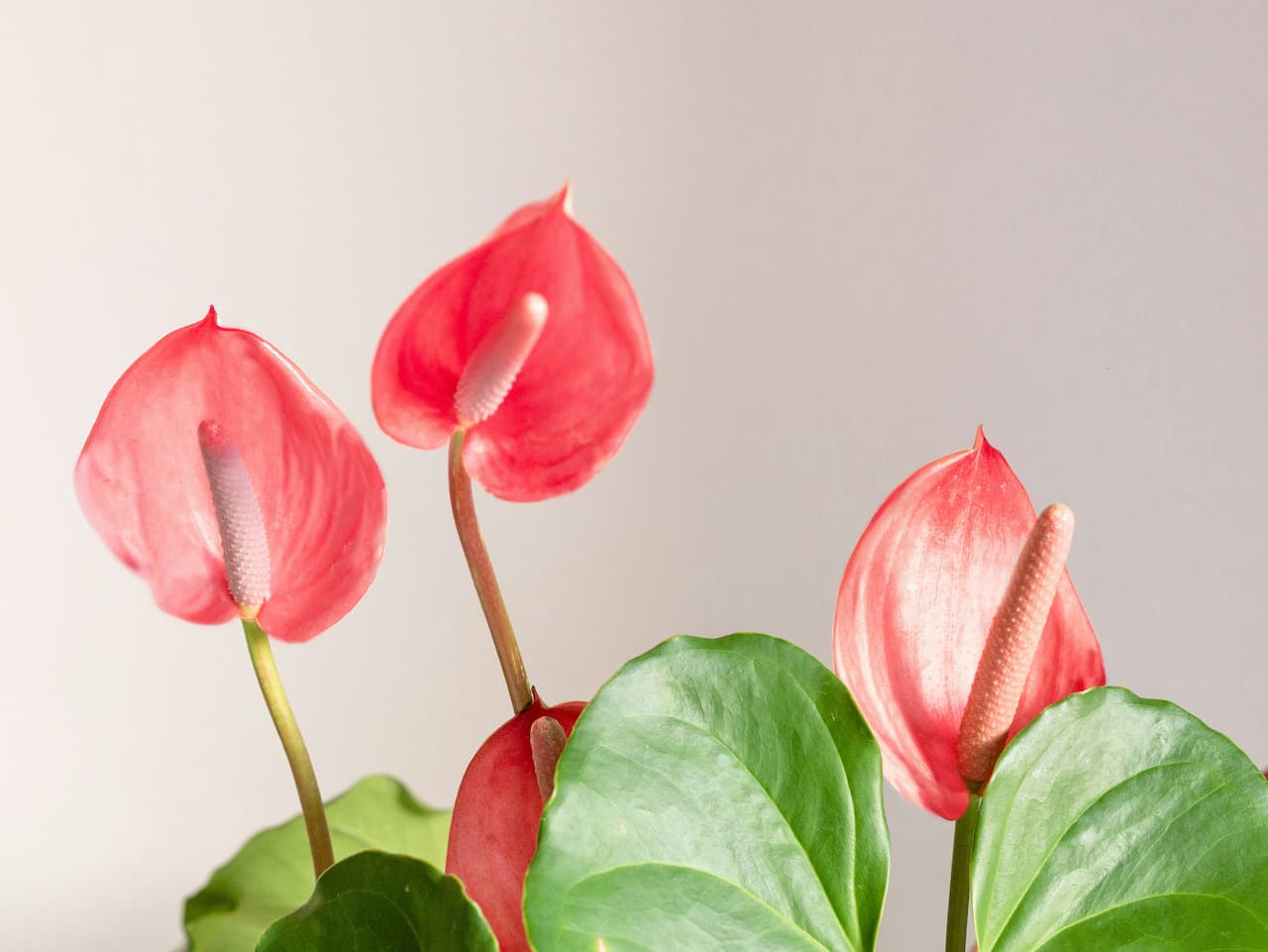
Anthurium andraeanum – the flamingo flower – is one of the most recognisable houseplants in the UK. Its glossy, waxy spathes in red, pink, white, or coral make it stand out from green foliage plants, and when it is flowering well it does so almost continuously rather than in a single seasonal flush. That combination of unusual appearance and long flowering period makes it a popular choice for homes, offices, and as a gift plant.
The challenge with anthurium in UK conditions is that it wants warmth and humidity that our centrally heated, often draughty homes do not naturally provide. Understanding what the plant actually needs – and making a few practical adjustments – is the difference between an anthurium that flowers for years and one that slowly declines after the initial blooms fade. This guide covers the care approach that works in British homes, with particular attention to the humidity and light conditions that determine whether your anthurium thrives or struggles. It is worth reading alongside our guide to caring for a peace lily, another popular flowering tropical that has similar needs in UK conditions.
Light requirements
Bright indirect light is the anthurium’s preference and it is non-negotiable if you want the plant to flower reliably. In its natural tropical habitat it grows beneath the forest canopy – shielded from direct sun but in good light overall. In UK homes, a position a metre or so back from a south or west-facing window, or directly beside an east or north-facing window, provides the right kind of light through most of the year.
The relationship between light and flowering is direct. An anthurium in good bright indirect light will produce new spathes regularly throughout the year. An anthurium in a dim corner may survive but will rarely if ever flower, and will grow slowly with smaller leaves. If your anthurium is not producing new flowers after the initial blooms, insufficient light is the most likely cause after overwatering.
Direct sun scorches the spathes and leaves quickly. The waxy spathes that are the main attraction of an anthurium are particularly vulnerable to direct sun through glass, which leaves pale or bleached patches that do not recover. Keep the plant away from windowsills that receive direct sunlight, even in winter when the sun is lower and less intense.
Watering
Anthurium roots are susceptible to rot if kept in continuously wet soil, but the plant also dislikes drying out completely. The correct approach is to water when the top inch of compost is dry to the touch, then water thoroughly and allow to drain. Empty the drip tray after watering – anthuriums sitting in standing water will develop root rot within a few weeks.
In a typical UK home this means watering every 7-10 days in summer and every 14 days in winter. The timing will vary depending on pot size, room temperature, and light levels – a plant in a warm bright room in July will need water more frequently than the same plant in a cool north-facing room in January. Checking the soil regularly rather than following a fixed schedule is always the more reliable approach.
Use room temperature water and avoid hard tap water if possible. Anthurium is sensitive to the calcium and minerals in very hard water, which can cause leaf spotting and brown tips over time. Leaving tap water to stand overnight helps, and using collected rainwater is ideal if you have access to it. If you are in a hard water area and struggling with leaf spotting, this is usually the cause.
Humidity and temperature
Humidity is where most UK anthurium growers fall short, and it is directly responsible for the most common problems the plant experiences in British homes. Anthurium is a tropical plant that naturally grows in humid forest environments – ideally it wants 60% relative humidity or above. Most UK homes in winter, with central heating running, are closer to 30-40% humidity, and this gap is significant.
The practical solutions are a pebble tray filled with water beneath the pot (which raises local humidity as the water evaporates), grouping the anthurium with other plants to create a humid microclimate, or using a small humidifier in the room. Misting helps temporarily but does not sustain humidity levels and can encourage fungal problems on the spathe if water sits on the surface for long periods. Of the options, a pebble tray or humidifier gives the most consistent improvement. A simple pebble tray costs nothing beyond the tray and some gravel, and providing the pot sits above the water level rather than in it, there is no waterlogging risk – just a consistent source of evaporating moisture directly beneath the plant where it is most needed.
Temperature should stay between 18 and 25 degrees Celsius for best results. Anthurium will tolerate brief dips to 15 degrees but should not be kept in cool rooms long-term or positioned near exterior doors or draughty windows in winter. Cold draughts are a particularly quick way to cause leaf drop and spathe damage. Radiators are an equally common problem – a plant placed on a windowsill directly above a radiator will experience warm air rising past the leaves and rapid compost drying, even if the room temperature appears suitable. Position the plant where it receives consistent warmth rather than fluctuating heat from a nearby heat source.
Feeding and soil
To encourage flowering, feed anthurium with a fertiliser that is relatively high in phosphorus – the middle number in the NPK ratio on the label. Orchid fertilisers work well as they are formulated for flowering tropical plants with similar nutritional needs. Feed monthly from March through September at half the recommended strength, and stop feeding entirely through winter.
Anthurium grows best in a very free-draining, coarse potting mix. Standard houseplant compost is often too dense and moisture-retentive for anthuriums, which need excellent drainage and air circulation around the roots. A mix of two parts peat-free houseplant compost, one part perlite, and one part orchid bark is ideal. This mimics the loose, airy conditions of the tropical forest floor where anthurium roots naturally grow.
Repotting should happen every two to three years or when the roots are visibly circling the bottom of the pot and emerging from the drainage holes. Spring is the best time – move up only one pot size at a time, as a pot that is too large holds excess moisture that the roots cannot use, increasing the risk of rot. After repotting, hold off feeding for six to eight weeks to give the roots time to settle into the fresh compost.
Getting your anthurium to flower again
The most common disappointment with anthurium is a plant that flowered when purchased but has not produced a new spathe since. This is almost always a care issue rather than a fault with the plant, and it can be resolved by addressing the most likely causes in order.
First, check light levels. An anthurium that is not getting enough bright indirect light will not flower, regardless of how well the other conditions are met. Move it closer to a suitable window and allow 6-8 weeks to see a response. Second, address humidity. Low humidity is a significant barrier to flowering in UK winter conditions – implement a pebble tray or humidifier and maintain it consistently. Third, review feeding. If you have not been feeding the plant through the growing season, start a regular monthly feed with a phosphorus-rich fertiliser.
If all three conditions are met and the plant is otherwise healthy, a short cooler period in winter – allowing temperatures to drop slightly to around 15-16 degrees for 6-8 weeks – can trigger a new flush of flowering when warmer conditions return in spring. This mimics the seasonal variation the plant experiences in its natural habitat.
It is also worth checking whether any spent spathes or flower stalks are still attached to the plant. Old flower stems that have completely faded should be cut off cleanly at the base – leaving them draws energy from the plant and can slow new growth. Use clean scissors or a knife and cut the stem as low as possible without damaging nearby leaves. After removing old stems, a healthy, well-lit anthurium with adequate humidity will typically produce its next spathe within four to eight weeks.
Common problems and fixes
Anthurium is more demanding than many popular houseplants in the UK, particularly around humidity, but the effort is rewarded with one of the most striking and long-lasting flowering displays of any indoor plant. Get the light and humidity right and the rest of the care routine follows naturally. Many UK growers find a bathroom with a window is the ideal location for this plant – the regular steam from showers provides the humidity it craves and the indirect light from a window suits it well. If a bathroom is not possible, a kitchen windowsill away from direct sun and near the sink can work equally well, providing both humidity from cooking and proximity to water for the pebble tray. The key is consistency – anthurium rewards growers who maintain conditions steadily rather than those who correct and then neglect.
Share on socials: