At a glance
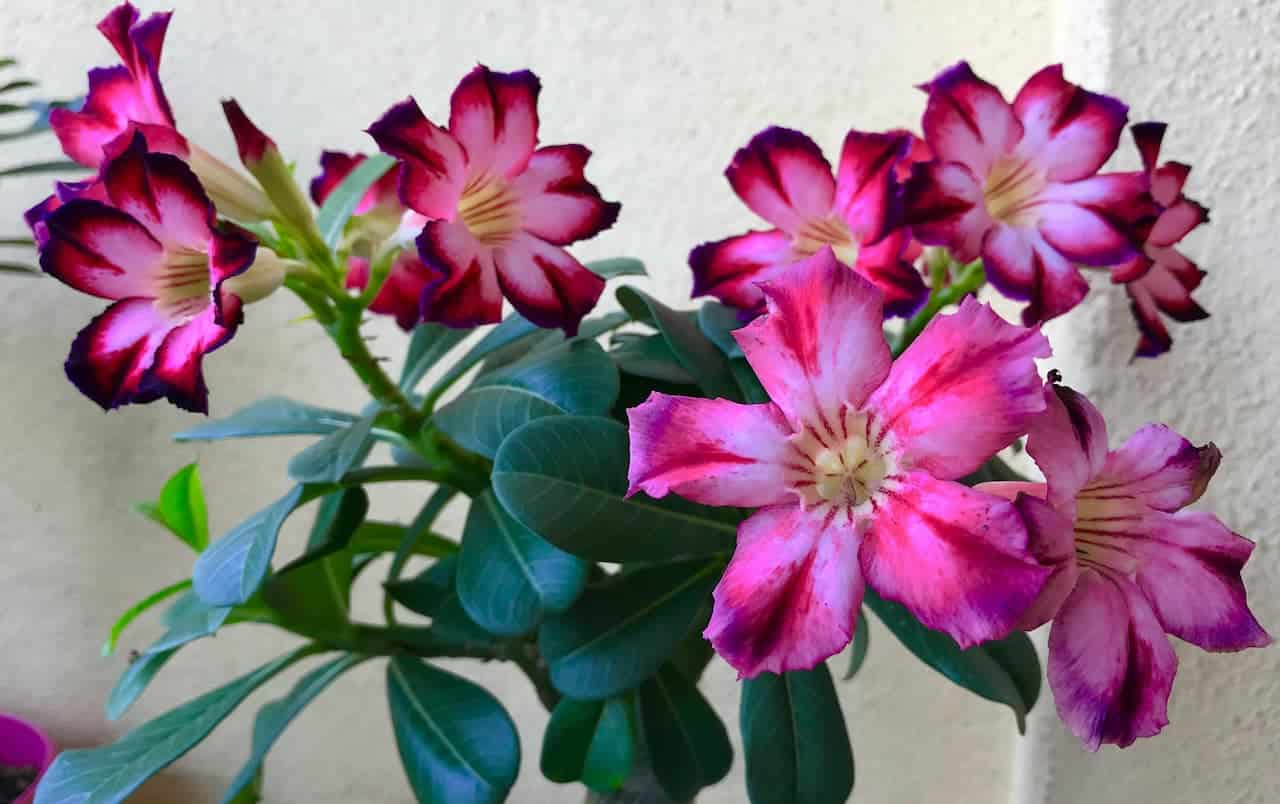
Adenium, commonly called desert rose, is a succulent shrub native to the arid regions of sub-Saharan Africa and the Arabian Peninsula. In the UK it is grown as a houseplant, valued for its spectacular trumpet-shaped flowers in shades of pink, red, white and bicolour combinations, and for the dramatic swollen base of the trunk called the caudex, which stores water and gives the plant a sculptural, bonsai-like quality even in a small pot.
The species most commonly grown is Adenium obesum, though named hybrids and cultivars are widely available and often produce more varied or double flowers. All share the same care requirements, so cultivar choice affects appearance rather than method. Adenium is not suited to outdoor growing in the UK year-round and is kept as a houseplant, brought outside briefly in summer only when temperatures are reliably warm.
What is adenium
Adenium is a member of the Apocynaceae family, closely related to oleander and frangipani. It grows in habitat on rocky slopes and in dry sandy soils across a broad band of Africa and into the Arabian Peninsula, surviving through extreme drought by storing water in the swollen caudex and shedding leaves during the dry season. The caudex, which is the enlarged stem base, becomes progressively more dramatic over years of cultivation, and mature specimens with a broad, gnarled base are highly sought after by collectors.
In UK conditions, adenium grows actively from spring through summer and enters a slower or dormant phase in autumn and winter as temperatures and light levels fall. Understanding this natural rhythm is the foundation of correct care. The plant’s needs in summer are completely different to its needs in winter, and treating it the same year-round is the most common cause of failure.
Light
Adenium needs more direct sun than almost any other indoor plant. It should sit on the sunniest south-facing windowsill available, receiving at least four to six hours of direct sun each day. A bright indirect position is not sufficient and will result in weak, leggy growth, reluctance to flower, and a caudex that fails to develop its characteristic swollen form.
In summer, moving the plant outdoors to a sheltered sunny spot significantly improves performance. Full sun outdoors from May to September, with protection from rain, produces faster growth, harder stems, and better flowering than a windowsill can achieve. Bring the plant back inside before temperatures drop below 10 degrees Celsius in autumn. If the plant is not receiving enough light, the stems will stretch toward the source and the internodes will lengthen visibly. Moving to stronger light stops this but the stretched growth will not revert, so prevention is better than correction.
Watering
Watering is the area where most adeniums are killed. The caudex and root system store a substantial amount of water, and the plant is far more tolerant of drought than of overwatering. Root rot in wet soil sets in quickly and is usually fatal before the gardener realises anything is wrong.
The caudex will wrinkle slightly during dry periods, which is normal during the growing season and signals it is time to water. A wrinkling caudex in winter during dormancy is less concerning. What is never normal is a soft, mushy or discoloured caudex, which indicates root rot rather than drought.
Never leave adenium sitting in a saucer of water. Root rot develops quickly in wet conditions and is very difficult to reverse once it reaches the caudex. Drain the saucer after every watering without exception.
Soil and potting
Adenium must be grown in free-draining compost that dries out relatively quickly after watering. Standard multipurpose compost is too moisture-retentive and will cause problems over time. A proprietary cactus and succulent compost with extra perlite added is a good starting point. A mix of roughly sixty percent cactus compost and forty percent perlite drains well enough for most situations. Some growers use an even more inorganic mix with only a small amount of organic material.
Terracotta pots are preferable to plastic because they breathe and dry out faster. Drainage holes are essential. When repotting in spring, use a pot only slightly larger than the current root ball. Exposing progressively more of the caudex above the soil surface each time you repot produces the dramatic sculptural form that makes mature plants so striking. Repot when the plant has clearly outgrown its pot or when the compost becomes very compacted, typically every two to three years.
Temperature
Adenium is not frost-hardy and cannot tolerate temperatures below 10 degrees Celsius without damage. It grows actively at temperatures between 20 and 35 degrees Celsius. At temperatures below 15 degrees, growth slows significantly and the plant may drop its leaves. Below 10 degrees, cold damage to stems and the caudex becomes likely and can be irreversible.
In UK conditions, adenium should be treated as an indoor plant year-round, brought outside only from late May when night temperatures are reliably above 12 degrees, and returned indoors by early October. A windowsill position that becomes cold at night when windows are left open can cause leaf drop and should be avoided in autumn and winter.
Feeding
Feed during the active growing season from April to September. A balanced fertiliser with a roughly equal NPK ratio, or one formulated for cacti and succulents, is appropriate. Apply at half the recommended dose every two to three weeks during the growing season. Fertilisers with a very high nitrogen content encourage excessive leafy growth at the expense of flowers and caudex development, so avoid general-purpose houseplant fertilisers with a disproportionately high nitrogen level.
Stop feeding entirely in autumn and do not feed at all in winter. The plant is not actively growing during this period and feeding will not benefit it. Excess fertiliser salts can build up in the compost over the dormant period and damage the roots when the plant wakes in spring. If you suspect salt build-up, flush the pot thoroughly with water in spring before resuming feeding.
Flowers
Adenium produces flowers at the tips of new growth, so encouraging vigorous new stem tips increases flowering potential. Plants grown in strong light and warm conditions typically flower from May to October in UK conditions, though some plants bloom at other times if conditions are right. Flowers are long-lasting and the plant will rebloom repeatedly through the season with good care. A plant that has been in the same location for some time without flowering is usually suffering from insufficient light, or has been root-bound for too long without repotting. Pruning the stem tips after the flowers finish encourages branching and more growing tips, which means more flowers in the following season.
Pruning
Pruning is beneficial rather than essential. Cut back the stem tips after flowering or in early spring before new growth begins. Cuts should be made cleanly with a sharp blade just above a node. Each cut produces two or more new branches from the cut point, increasing the branching structure and the number of future flowering tips over time.
Major pruning is best done at the start of the growing season in spring rather than in autumn. Cuts heal slowly in cool conditions, and an open wound going into a cold winter is a route for disease entry. In spring, the plant heals quickly as growth resumes.
Always wear gloves when pruning adenium. The milky latex sap that flows from any cut is toxic and can penetrate through the skin as well as cause surface irritation. Wash hands and tools thoroughly after any contact with the sap, and keep it away from eyes entirely.
Toxicity
All parts of adenium are toxic if ingested. The sap and all plant tissues contain cardiac glycosides, which are serious cardiac toxins affecting humans, dogs, cats, and horses. The toxicity is serious: in cats and small animals, even a small quantity of sap can be potentially fatal. Keep the plant completely out of reach of any pets or children who might chew on leaves or stems, and do not grow it in a home where pets have unsupervised access to it.
The milky latex sap released from any cut or wound is a skin irritant and can penetrate through the skin, causing systemic effects in addition to surface irritation. Always wear gloves when handling or pruning. Wash hands immediately and thoroughly after any skin contact with sap. Do not touch the eyes after handling the plant. If a child or pet has ingested any part of the plant, seek veterinary or medical advice immediately rather than waiting to see if symptoms develop.
Propagation
Adenium is propagated by seed or stem cuttings. Seed-grown plants are prized because they develop the full swollen caudex from an early stage. Cuttings tend to produce plants with a more slender base that never quite achieves the same dramatic form, though they flower at the same age.
Dormancy and leaf drop
Leaf drop is normal and expected in adenium, particularly in autumn and winter as temperatures fall and light levels reduce. A plant that drops some or all of its leaves from October onwards is not dying. It is responding normally to the change in conditions. New leaves will emerge in spring as warmth and light return.
The key distinction is between healthy dormancy and stress-related leaf drop. Healthy dormancy involves gradual leaf yellowing and drop over several weeks, a firm caudex, and no other symptoms. Stress-related drop is more sudden, can happen at any time of year, and is often accompanied by a soft or discoloured caudex or other visible damage. The most common causes of sudden unseasonal leaf drop are overwatering and root rot, cold damage, or a dramatic change in light conditions such as moving the plant to a much darker spot.
Do not increase watering in response to leaf drop in autumn. This is the single most common fatal mistake with a dormant adenium. The plant has less need for water when not growing, and watering a dormant plant at summer rates is a direct route to root rot.
Common problems
Share on socials: