At a glance
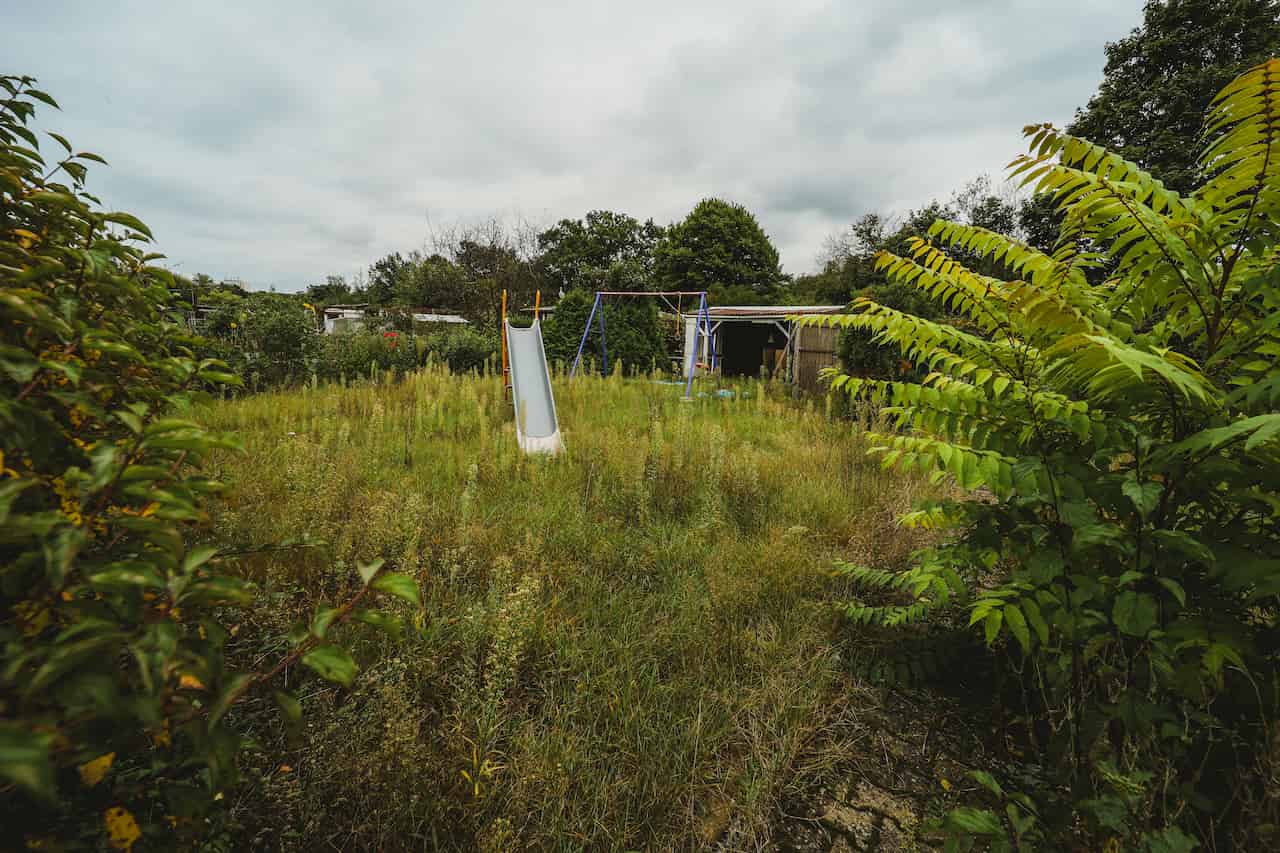
Nobody warns you how much work a weedy allotment actually is. You see the plot, you think “I can sort that out in a weekend,” and then you get into the couch grass and discover it has been there for three years and the rhizomes run under everything in every direction. Two weekends later you have cleared a quarter of it and you are genuinely wondering whether you made a mistake accepting the tenancy.
You did not make a mistake. But you probably did make the most common one: starting without a plan. A weedy allotment is not hard to clear if you approach it in the right order. It is very hard to clear if you do not. This guide covers what that order looks like, which methods work for which weeds, and how to be growing something useful before the end of your first season even if the plot is a proper mess.
Walk it before you do anything
The instinct when you see a weedy plot is to start ripping things out. Resist it. An hour walking the plot properly before you touch a thing tells you something crucial about what you are dealing with, and that knowledge changes everything about what you do next.
You are looking for three things. First, which weeds are you actually dealing with? The difference between a plot that is mostly annual weeds and rough grass versus one with established couch grass, bindweed, or horsetail is the difference between a job that takes a few weekends and one that will take a season or two. Get that wrong at the start and you will spend those weekends fighting back rather than making progress. Second, is there anything worth keeping? Fruit trees, currant bushes, rhubarb crowns, and perennial herbs are often buried in the weeds of a neglected plot. A gnarled, overgrown gooseberry bush covered in grass is still a gooseberry bush, and it will produce fruit within a season if freed and fed. Mark anything with potential before you clear. Third, what are the site conditions? Where the sun falls, where shade creates difficult growing, where the ground looks waterlogged. The first clearance and the first layout decisions happen together, and changing your mind about paths and beds later is expensive in time.
Do not rotavate a weedy plot
Before anything else: do not hire a rotavator and churn the whole plot. This is the single most common and most damaging mistake new plot holders make, and the results are spectacular in the worst way. I have seen it happen twice on plots near mine. Couch grass is chopped into hundreds of fragments by rotavator blades. Every fragment longer than a few centimetres has enough stored energy in the root to regenerate. Three weeks after a well-meaning rotavation, you have not cleared the couch grass. You have planted it in evenly-spaced rows across your entire plot.
A rotavator is useful once the ground is genuinely clear. Before it is clear, on ground with perennial weeds, it turns a manageable problem into an infestation. Patience and the right method come before machinery.
Know your weeds
Before you get started: know the difference between horsetail and couch grass, because people confuse them and they need completely different responses. Couch grass leaves are flat and narrow, the plant produces visible above-ground stems and leaves, and the underground rhizomes are white and fleshy. Horsetail looks like a miniature fir tree or green bottlebrush, with jointed stems and whorls of needle-like shoots. Nothing else looks like it. If you have it, you will know.
Not all weeds require the same response, and treating them all the same is how you end up working hard and not getting anywhere.
The three clearing methods
For any overgrown plot there are three routes, and the right choice depends on which weeds you have, whether you want to use chemicals, and how quickly you need the ground producing. On the worst plots, a combination of all three at different stages is the most practical approach.
Manual digging is the right choice for plots with predominantly annual weeds, grass, and manageable perennials like nettles and docks. Start by strimming everything to 15 to 20 centimetres. Trying to fork through knee-high weeds is exhausting and inefficient. Work in sections, fork the ground thoroughly, and remove root systems as you go. The realistic pace on a standard half-plot depends heavily on what you have. Mostly grass and annual weeds clears in several dedicated weekends. Heavy couch grass is half a season or more of systematic work.
Covering with black polythene excludes light and kills plants without physical effort or chemicals. Annual weeds and grass die in four to eight weeks in summer. Perennial weeds with substantial root systems take six to twelve months to exhaust. You can plant through polythene while it is down by cutting X-shaped slits and inserting transplants through the holes. This lets you grow a useful crop while the covering continues to clear the ground underneath, which is one of the better tricks available in year one. Cardboard works well for areas with annual weeds and grass and can be used as the base for no-dig beds. For heavy couch grass or bindweed, use polythene rather than cardboard, since cardboard decomposes before the perennial roots are exhausted.
Glyphosate is the honest choice for plots with heavy couch grass or bindweed where you want the ground producing within a season rather than two. Check your tenancy agreement first. Some allotment associations prohibit chemical use, and if yours does you need the covering or digging approach regardless. Where it is permitted: strim the weeds, then wait two to three weeks for active green regrowth to appear. Spray that regrowth thoroughly. Glyphosate is a systemic weedkiller that travels through green tissue into the root system, which is why it has to be applied to actively growing leaves. Spraying a strimmed stub surface achieves almost nothing. A single application is rarely enough for established perennials. Wait for regrowth and spray again. Glyphosate leaves no soil residue and the ground is safe to plant as soon as the dead material is cleared.
Grow while you clear
One of the things that knocks new plot holders sideways is spending the whole first season clearing and never growing anything. By the time the plot looks right it is September, the growing season is effectively over, and there is nothing to show for it. The way to avoid this is the half-and-half approach: clear one section first and properly, plant that section in year one, and cover the rest while you work on it in stages.
The choice of what to grow on newly cleared ground matters. Potatoes are ideal for first-year cleared ground: they break up compacted soil, their leafy canopy suppresses remaining weed seedlings, and the earthing-up process buries any emerging weeds. Squash and courgettes are nearly as good. They cover bare ground rapidly and their big leaves shade out weeds for the whole summer. What to avoid on newly cleared ground with any residual weed problem: root vegetables need clean, loose soil to grow straight and unobstructed. Anything needing a fine seed bed is also vulnerable in the first year, because the weed seed germination is at its worst. Get the easy wins first and do the fine work once the soil is under control.
Year one weed flushes
Even on well-cleared ground, the first season produces waves of annual weed seedlings from the seed bank. This is not a sign you have failed or left something behind. It is simply what happens when soil that has been undisturbed for years is finally opened up. The seed bank in a long-neglected plot can hold viable seeds from 20 or 30 years of seeding weeds.
The approach that works is the stale seedbed technique: clear the ground, wait two weeks, and hoe off the resulting seedling flush before planting. This depletes the near-surface seed bank before your crops go in. After hoeing, plant or sow immediately into the disturbed soil rather than leaving it exposed for more seeds to germinate. A hoe used on a dry day is more effective than any amount of hand-weeding. The seedlings are cut off at soil level, left to wither in the sun, and die without having a chance to seed again. Keep on top of it through the first season. One dock plant that seeds adds thousands of viable seeds back into that plot for future years. The discipline in year one pays off considerably in years two and three.
Compost, waste and what to do with it all
The amount of material a very weedy allotment generates when you clear it properly is genuinely surprising. A half-plot of waist-high weeds, cut down, raked up, and composted, is a substantial volume. Having a plan for it before you start makes the job much cleaner. Set up a compost heap on day one, before you start clearing. One corner of the plot, accessible by wheelbarrow.
When to clear and why timing matters
Autumn is the best time to start clearing a new plot. Plants are going dormant, which means there is no active growth racing ahead of you while you work. The ground is usually workable from rain. Any soil you expose will not immediately fill with annual weed seedlings because temperatures are dropping. Covering in October puts you in a strong position by the following spring, with eight to nine months of light exclusion under your belt for the most difficult areas.
Share on socials: