At a glance
Energy bills in UK homes break down into three main categories: space heating, hot water, and everything else – appliances, lighting, and general electrical use. For most households, space heating accounts for around 60% of total energy consumption and hot water for a further 15-20%. This means that the majority of saving potential sits in a relatively narrow set of measures: how you heat your home, how well your home retains that heat, and how efficiently you use hot water. Everything else combined – switching to LEDs, turning off standby devices, running appliances efficiently – matters but adds up to a fraction of what heating improvements can achieve.
Understanding this breakdown is important because it determines where to focus effort. Many households spend time optimising the small stuff while leaving the large opportunities untouched. A programmable heating schedule, a degree of thermostat reduction, and basic draught proofing will collectively save more than all the LED bulbs and standby switches in the house combined. This guide works through the measures in order of impact and explains what each actually delivers in practice.
Heating – the biggest opportunity
Heating your home is by far the largest single energy cost for most UK households, and it is also where the most accessible savings sit. Three changes in particular deliver significant results without any capital investment: reducing the thermostat temperature, programming the heating to run only when needed, and optimising the hot water cylinder temperature if your home has one.
Lowering the room thermostat by just 1°C reduces heating energy consumption by around 10% – a saving of roughly £100-150 per year for a typical semi-detached home on average UK energy prices. Most households heat to 20-21°C as a default; 18-19°C is comfortable for most people when properly dressed and the saving compounds across the entire heating season. The thermostat controls when the boiler fires and how long it runs – it is the single most powerful control in the house for managing heating energy use.
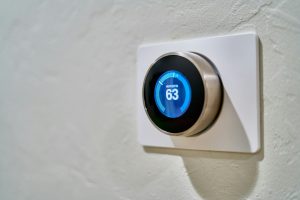
Programming the heating to run only during occupied periods is equally impactful. A boiler running on a simple on/off timer set to heat the home from 6am to 11pm is wasting energy heating an empty house during the working day. A properly programmed schedule – heat before waking, off when the house empties, back on before people return home, off when the last person goes to bed – can cut heating run time by 30-50% in a typical household without any reduction in comfort. A smart thermostat automates this scheduling, adds presence detection and remote control, and typically saves £100-200 per year over a poorly controlled heating system.
Radiator thermostatic valves (TRVs) allow individual room temperatures to be set independently of the central thermostat. Fitting TRVs to every radiator except one in the main living room – the room where the main thermostat is located – means that bedrooms and rarely used rooms can be kept at a lower temperature without affecting the living spaces. A bedroom at 16°C rather than 20°C draws significantly less heat from the boiler over the course of a winter.
Draught proofing
Draughts are one of the most cost-effective problems to fix in a UK home. Cold air infiltrating through gaps around doors, windows, floorboards, letterboxes and chimneys directly displaces warm air that the heating system has already paid to produce – it is pure energy waste with a simple, cheap remedy. A thorough whole-house draught proofing exercise typically costs £50-150 in materials and delivers annual savings of £50-150 – a payback period of one year or less.
The highest-impact areas are doors and windows, which account for the majority of uncontrolled air infiltration in most homes. Self-adhesive foam draught strip or brush strip fitted around door and window frames seals the gaps where cold air enters. Letterboxes benefit from a brush seal on the inner face. Keyholes can be covered with a small rotating cover plate. Floorboards in older homes often have significant gaps between boards – filling these with flexible sealant or covering with rugs and underlay reduces heat loss through the floor noticeably. Open fireplaces and unused chimneys can lose substantial amounts of heat through the chimney stack when not in use – fitting a chimney draught excluder or balloon is one of the most impactful single draught proofing actions in a home with open fireplaces.
Hot water and appliances
Hot water heating typically accounts for 15-20% of total energy use. The most impactful changes here are straightforward. If your home has a hot water cylinder, check the thermostat setting – it should be set to 60°C, which is hot enough to prevent legionella growth while not wasting energy overheating water that then cools unused in the cylinder. Many older cylinders are set higher than necessary. Insulating the cylinder itself with a cylinder jacket reduces standing heat losses significantly if the existing jacket is thin or absent.
Shower rather than bath where possible – a short shower uses around a third of the water and energy of a full bath. Reducing average shower time from 8 minutes to 4 minutes halves the hot water used per shower. Fixing dripping taps – both hot and cold – eliminates a source of continuous waste that adds up substantially over a year. Fitting an aerating shower head, which mixes air with water to maintain pressure while using less water, reduces hot water consumption without any perceptible change in shower experience. Full guidance on reducing hot water costs is covered in our guide to reducing hot water bills.
Savings by measure – cost vs impact
No-cost quick wins
Check whether you are eligible for a government grant. The UK government’s Great British Insulation Scheme and the Energy Company Obligation (ECO4) provide free or heavily subsidised insulation improvements – loft insulation, cavity wall insulation and sometimes solid wall insulation – to qualifying households. Eligibility is based on household income, benefit status and property EPC rating. If your home is poorly insulated, checking eligibility before spending your own money on improvements is always worth doing first.
Common mistakes to avoid
Share on socials: