At a glance
Heat pumps are the UK government’s primary technology for decarbonising home heating as gas boiler sales are phased out over the coming years. They work by extracting heat from outside air or the ground and concentrating it for use in the home – a process that delivers significantly more heat energy than the electrical energy consumed to run it. The Boiler Upgrade Scheme (BUS) currently offers a substantial grant toward the cost of an air source heat pump, making this a genuinely accessible upgrade for many UK homeowners. Heat pumps are not suitable for every home, however, and fitting one without addressing building fabric first is a common and costly mistake.
A heat pump works at lower flow temperatures than a gas boiler – typically 35-55°C compared to 70-80°C for a conventional gas boiler – which means it works best when heat loss from the building is minimised and when the heat distribution system uses larger radiators or underfloor heating that can deliver comfortable warmth at those lower temperatures. Understanding whether your home is a good candidate before proceeding is the single most important step in the whole process, and the one most commonly rushed. This guide covers every aspect of that decision and what happens once you have made it.
Types of heat pump
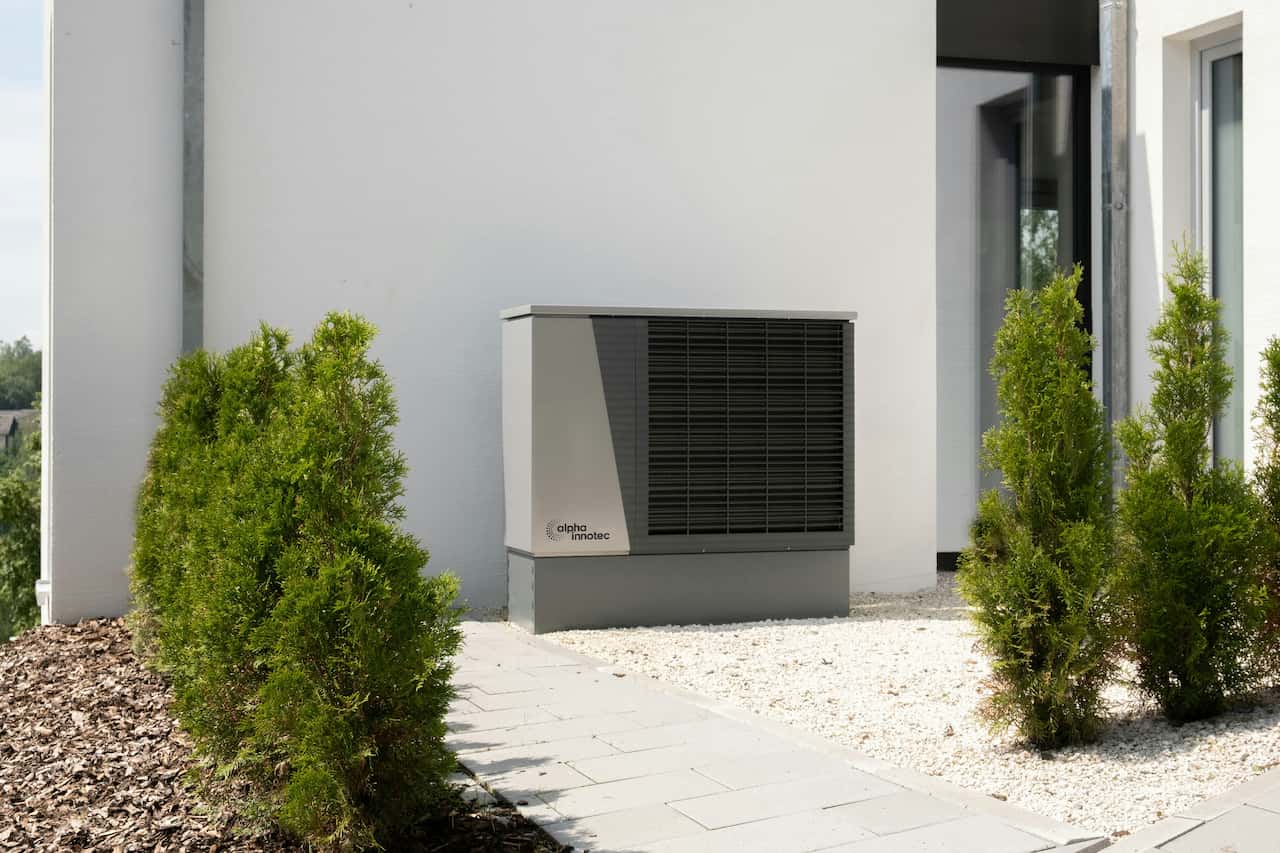
Air source heat pumps (ASHPs) are by far the most common installation in UK homes and the type supported by the Boiler Upgrade Scheme grant. They consist of an outdoor unit roughly the size of an air conditioning unit that extracts heat from the outside air, and an indoor unit containing the heat exchanger, controls and often a hot water cylinder. Modern ASHPs operate effectively down to around -20°C, though efficiency falls as outside temperatures drop. A well-designed UK system is sized for the coldest expected conditions rather than average conditions.
Ground source heat pumps (GSHPs) extract heat via pipes buried either horizontally in trenches across the garden or vertically in boreholes. Ground temperature is more stable than air temperature, so GSHPs are slightly more efficient than ASHPs, but installation cost is significantly higher and garden disruption from horizontal ground loops can be substantial. For most UK homeowners, an air source heat pump is the practical choice unless the property has specific characteristics – large grounds, off-gas-grid rural location, high heating loads – that make ground source worth the additional investment.
A hybrid heat pump system combines an air source heat pump with an existing or new gas boiler. The heat pump handles the majority of the heating load throughout the year, with the boiler taking over during the coldest periods. Hybrid systems suit older homes where a full heat pump installation would require extensive radiator and insulation upgrades. They deliver meaningful running cost savings in the right property while requiring less whole-house fabric work upfront.
Is your home suitable?
The most important factor in heat pump suitability is the building’s heat loss. A heat pump runs at lower flow temperatures than a gas boiler and needs to run for longer continuous periods to compensate. This works well in a well-insulated building but in a poorly insulated home the system struggles to maintain comfortable temperatures without running constantly and consuming more electricity than intended. As a general guide, homes with an EPC rating of C or above are usually good candidates. Homes rated D or below should consider insulation improvements first – not as a grant prerequisite, but because a heat pump in a poorly insulated building is genuinely less efficient and less comfortable to live with.
Cavity wall insulation, loft insulation and double glazing are the most impactful improvements and often the most cost-effective. Off-gas-grid homes currently on oil, LPG or electric storage heaters are typically excellent candidates because the running cost savings from switching to a heat pump are most significant when moving away from expensive fuels. If your home is on oil heating, the case for a heat pump is financially strong in most cases regardless of the grant.
Solid-walled properties present a more nuanced picture. Solid walls lose heat faster than cavity walls and cannot be retrofitted with cavity wall insulation. External wall insulation or internal wall insulation can address this but both involve significant disruption and cost. A heat pump can still work in a solid-walled property if it is correctly sized for the higher heat loss, but the running costs will be higher than in a better-insulated building and the economics are correspondingly less compelling. A thorough heat loss survey will give an honest assessment of whether the property is a good candidate and what fabric improvements would make the most difference before or alongside installation.
The existing heat distribution system matters as much as the building fabric. Conventional gas boiler systems often use smaller radiators designed to work at 70-80°C flow temperatures. When a heat pump replaces the boiler, those radiators may be too small to deliver sufficient heat at the lower 35-55°C flow temperatures the heat pump operates at. A proper heat loss survey before installation identifies which radiators need upgrading and gives an accurate picture of total cost. Underfloor heating is ideal for heat pumps because it distributes heat over a large surface area at very low temperatures – if underfloor heating is already fitted, a heat pump is almost always the right pairing.
The outdoor unit requires suitable space – for an air source heat pump this means a wall-mounted or ground-mounted position with adequate airflow, minimum clearances from boundaries, and ideally not directly below a bedroom window due to noise. Modern ASHPs are considerably quieter than older models, but checking the noise specification when comparing quotes is sensible. Planning permission is not normally required for air source heat pumps on houses in England, Scotland or Wales under permitted development rights, with exceptions for flats, listed buildings and conservation areas. Your installer confirms the planning position during the survey.
Get a heat loss calculation before accepting any quote. A reputable installer carries out a room-by-room heat loss calculation to determine the correct system size and confirm which radiators need upgrading. Any installer who quotes without doing this is not sizing the system correctly and should be avoided. It is a fundamental requirement under MCS installation standards.
The Boiler Upgrade Scheme
The Boiler Upgrade Scheme is the main government financial support for domestic heat pump installation in England and Wales. It provides a grant deducted directly from the installation invoice – you pay the balance after the grant has been applied. The installer handles all grant administration and paperwork; you do not need to apply separately. The scheme is funded until at least March 2028 under current policy, and grant levels have been updated at several points since the scheme launched in 2022 – always confirm the current amount with an installer rather than relying on figures published some time ago.
To be eligible for the BUS grant, the property must be in England or Wales, you must own it, you must be replacing a fossil fuel or direct electric heating system, and the installation must be carried out by an MCS-certified installer using MCS-certified equipment. A valid EPC is required in most cases. Properties in Scotland have access to separate grant support through the Scottish Government’s Home Energy Scotland scheme, which has different eligibility criteria and amounts. Northern Ireland is not covered by the BUS scheme.
The grant is applied against the cost of the heat pump system itself. It does not cover additional costs such as radiator upgrades, hot water cylinder installation, or other preparatory work – these should be factored into the total budget when assessing affordability. For a clear picture of what your installation will cost after the grant, get at least three quotes from MCS-certified installers who have carried out proper heat loss calculations.
Costs and running costs
The installed cost of an air source heat pump varies depending on the size of the unit required, the complexity of the installation, and whether additional work such as radiator upgrades and a new hot water cylinder is needed. A professional heat loss calculation is essential before any cost figures mean anything – an undersized system underperforms and an oversized one is inefficient. Always ask installers to justify their system sizing in writing and get at least three quotes before committing.
Running costs depend on three key factors: the efficiency of the system, how well the home retains heat, and the electricity tariff. A well-designed and properly commissioned air source heat pump delivers three or more units of heat for every unit of electricity consumed – this Coefficient of Performance (COP) is what makes heat pumps significantly more efficient than direct electric heating. COP varies with outside temperature and flow temperature – it is higher on mild days when the pump needs to lift heat through a smaller temperature difference and lower in very cold conditions or when flow temperatures are unnecessarily high.
Homes switching from oil, LPG or electric storage heaters typically make the most significant running cost savings. Homes switching from mains gas generally see smaller differences in fuel cost but benefit from lower carbon emissions and infrastructure better positioned for the long-term direction of energy pricing as the electricity grid decarbonises further. Heat pumps work well with time-of-use electricity tariffs that offer cheaper overnight or off-peak rates, and combining a heat pump with a battery or thermal store can allow households to shift consumption to cheaper periods.
One aspect of heat pump costs that surprises many homeowners is the importance of getting the system commissioned correctly. A poorly commissioned system running at unnecessarily high flow temperatures can consume significantly more electricity than a well-commissioned one delivering identical comfort. This is why asking an installer about their commissioning process – and specifically how they set and verify the weather compensation curve after installation – is as important as comparing the hardware specifications in their quotes. The cheapest quote with a poor commissioning process often costs more in running costs over the first few years than a slightly more expensive quote from an installer who takes commissioning seriously.
The installation process
Heat pump installation by an MCS-certified installer typically takes two to three days for a standard air source installation, not including any preparatory work such as radiator upgrades. The BUS grant is applied by the installer and deducted from the invoice. Getting at least three quotes is strongly advisable since pricing and system design vary significantly between companies.
The process starts with the survey and heat loss calculation – the most important step and one any reputable installer carries out before quoting. The survey identifies which radiators need upgrading, whether a hot water cylinder is needed, and where the outdoor unit will be positioned. Any installer quoting without this calculation is not sizing the system correctly and should be avoided. The outdoor unit is then mounted on a wall bracket or concrete pad in a suitable location with good airflow and adequate clearance from boundaries.
The indoor unit – containing the heat exchanger, circulation pump and controls – is installed inside the property, typically in a utility room, airing cupboard or garage. If the property has a combi boiler with no hot water cylinder, a cylinder is installed at this stage, as heat pumps cannot heat water on demand the way a combi boiler does. Radiators identified during the survey as too small for low-temperature operation are replaced with larger models before the system is filled, pressure-tested and commissioned.
Commissioning – setting the correct flow temperature and weather compensation curve for the building – is one of the most important steps and a genuine differentiator between high-quality and poor installations. A well-commissioned system runs at the lowest possible flow temperature that still maintains comfortable heat, which maximises COP and reduces running costs. The installer provides MCS certification documentation and applies the BUS grant at this point.
Making the most of your heat pump
Heat pumps work differently to gas boilers and need to be operated differently for best performance and lowest running costs. The most common mistake new heat pump owners make is running the system the same way as a boiler – turning it up and down frequently in response to comfort. Heat pumps work most efficiently when running continuously at low output rather than cycling on and off at high output. Leaving the heating at a steady low temperature throughout the day is almost always more efficient than turning it off when leaving and back on when returning.
The flow temperature setting is the most important control parameter. A good installer optimises this during commissioning and explains how to adjust the weather compensation curve on the controller. Performance typically improves over the first heating season as settings are fine-tuned to match the actual performance of the building rather than the calculated values used at design stage. Keeping a simple log of monthly electricity consumption and indoor temperature for the first year provides useful data for identifying whether further optimisation would help.
It is also worth being aware of how heat pumps interact with hot water heating. Most heat pump systems use a hot water cylinder set to heat to a target temperature once or twice a day rather than heating water on demand. The hot water schedule should be set to match actual usage patterns rather than running more frequently than needed. Many systems also run a weekly legionella protection cycle that briefly heats the cylinder to a higher temperature – this uses more electricity than normal hot water heating and is worth factoring into energy monitoring data so it does not appear as an unexplained consumption spike.
Heat pumps are a long-term investment in a fundamentally different approach to home heating. Getting the installation right – correct sizing, good commissioning, appropriate radiators, and understanding how to operate the system – determines whether the experience is positive and the running costs match expectations. The technology is well proven and the support infrastructure of MCS-certified installers continues to grow across the UK. Taking the time to choose a reputable installer, get multiple quotes based on proper heat loss calculations, and understand the system before it is installed gives the best foundation for the 20 or more years of service a well-installed heat pump can provide.
Share on socials: