At a glance
Courgettes are one of the most productive vegetables you can grow in a UK raised bed. A single well-fed plant can produce dozens of fruits from July through to the first frosts, and with regular harvesting the yield just keeps coming. The challenge is not getting them to produce – it is keeping up with them once they get going in midsummer. Understanding the conditions they need and getting the feeding and harvesting routine right from the start is what separates a plant that trickles along from one that fills your kitchen.
Raised beds suit courgettes particularly well. The elevated, free-draining growing medium warms up faster than open ground in spring, the contained environment makes feeding and watering management far more precise, and the clean structure of a raised bed makes it much easier to get in and harvest regularly without disturbing surrounding plants. This guide covers everything from sowing to harvest in a UK raised bed context.
Why raised beds suit courgettes
Courgettes are hungry, thirsty plants that respond dramatically to the quality of their growing conditions. A plant in poor, cold, compacted ground performs a fraction as well as the same variety in a well-prepared raised bed. Getting the raised bed soil mix right before planting makes a significant and measurable difference to the final yield.
One important consideration with courgettes in raised beds is space. Each plant spreads to 1-1.2 metres in diameter at full size, which means a standard 1.2 x 2.4 metre raised bed can realistically hold two plants at most. In a smaller bed, one plant is the right number. Trying to fit in more leads to direct competition for nutrients and water, reduced air circulation between plants, and significantly increased powdery mildew risk as the large leaves of adjacent plants press together and trap moisture. Plan the bed layout carefully before ordering seeds or buying plants, and resist the temptation to squeeze in an extra plant – the two well-spaced plants will outperform three crowded ones every time.
Sowing courgettes
Courgettes are frost-tender and cannot go outside until all risk of frost has passed – mid to late May in most of the UK, and late May or early June in northern or exposed gardens. Sow indoors four to six weeks before your intended planting-out date, which makes April to early May the right window for most UK gardeners. Sowing too early is as problematic as sowing too late – a courgette plant that has outgrown its pot and is waiting weeks for outdoor conditions to allow planting becomes stressed and pot-bound, and rarely performs as well as a younger, less-disturbed plant. Time the sowing to match your planting window rather than starting as early as possible.
Direct sowing. Courgettes can also be sown directly into the raised bed from late May once soil has warmed. Sow two seeds per station, 2cm deep, and remove the weaker seedling once both have germinated. Direct sowing avoids transplant stress but gives a later start than indoor-raised plants – typically two to three weeks behind at harvest time.
Planting out
Plant courgettes into the raised bed with at least 90cm between plants, and a full metre where space allows. Dig a planting hole slightly larger than the root ball, add a generous handful of well-rotted compost to the base, and plant so the top of the root ball sits level with the surrounding soil surface. Do not bury the stem – courgettes are susceptible to stem rot if the base of the stem is in contact with damp soil. Firm in gently and water thoroughly after planting to settle the growing medium around the roots and eliminate any air pockets.
Watch for late frosts. Even in late May a sudden cold snap can kill newly planted courgettes overnight. Keep a double layer of fleece handy for the first two weeks after planting out. A single hard frost will set plants back by several weeks or kill them outright – the risk is too high to ignore even in southern gardens.
Watering and feeding
Courgettes need consistent moisture throughout the growing season. Irregular watering – alternating between dry periods and sudden heavy soakings – causes a range of problems including poor fruit set, blossom end rot and misshapen fruits. Always water at the base of the plant rather than overhead, which keeps the large leaves dry and significantly reduces the risk of powdery mildew establishing on the leaf surface.
Harvesting
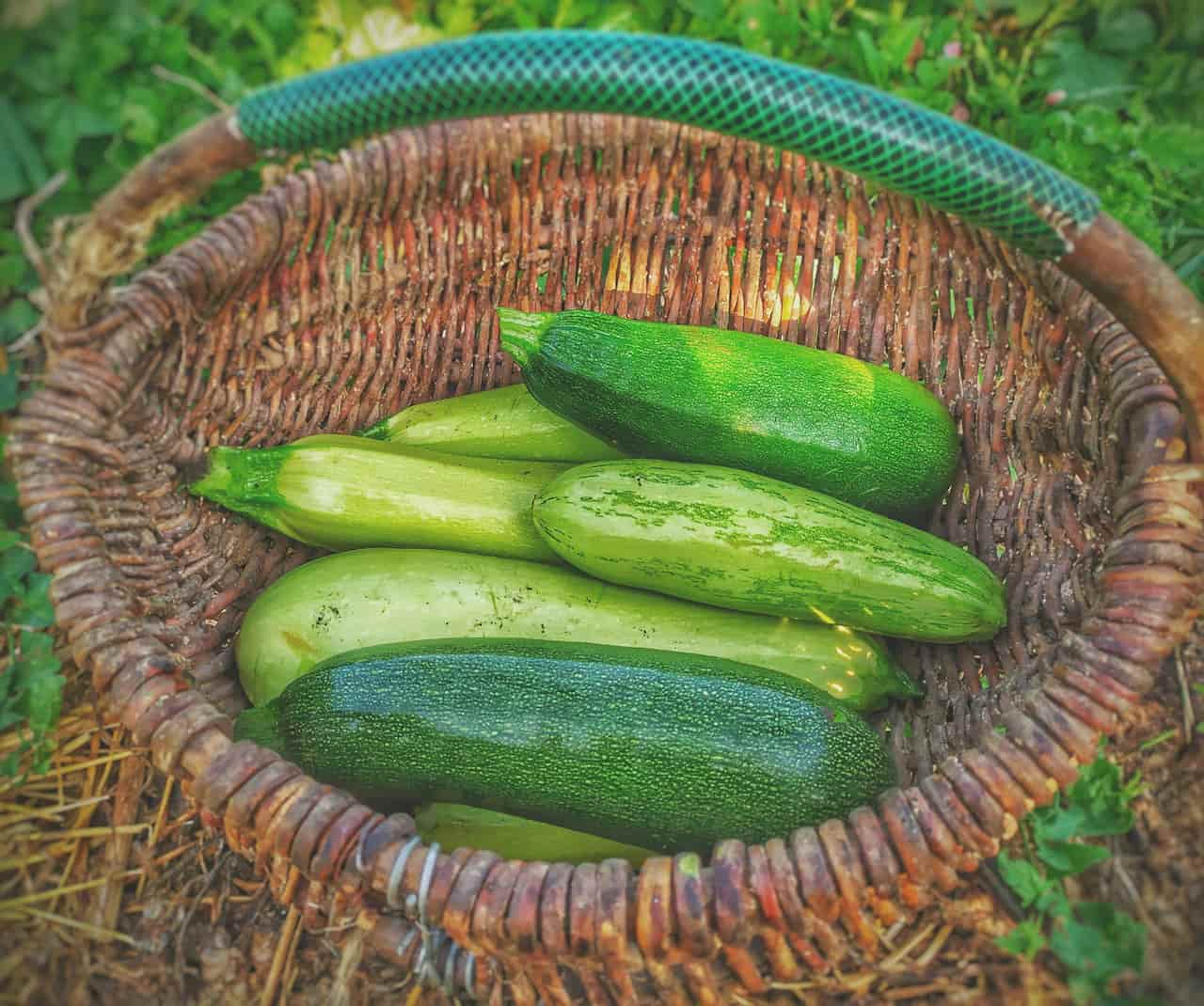
The single most important harvesting tip for courgettes is to pick them small. Fruits taste best at 10-15cm long – they are tender, flavoursome and have a thin, edible skin. Left to grow larger they quickly become marrows: watery, seedy and less useful in the kitchen. More critically, leaving large fruits on the plant signals it to slow or stop production. Harvesting regularly at the right size is what keeps the plant producing continuously through the season.
Check plants every two to three days during peak summer. At the height of the season in warm weather, a fruit can go from the ideal 12cm to an oversize 25cm in under 48 hours. Missing a single check can result in a courgette that has quietly become a marrow hidden under the large leaves. Use a sharp knife or secateurs to cut fruits cleanly from the stem – do not pull or twist, which can tear the plant tissue and create entry points for disease. If you go away for a week in August and return to find a row of enormous marrows, remove them all immediately rather than leaving them to signal the plant to stop producing – a clean harvest at any size resets the plant and new fruits will begin forming within days. Male flowers on straight stems can also be harvested and eaten stuffed or battered – they are a genuine delicacy and removing some does not reduce fruit set meaningfully as plants produce far more male flowers than are needed for pollination.
Common problems
Courgettes face a manageable set of problems in UK gardens. Most are preventable with good growing practice from the outset, and the severity of each issue varies considerably depending on when in the season it appears.
Best varieties for raised beds
For a raised bed, compact bush varieties are the best choice – they give a high yield without the sprawling stems of some older types. ‘Black Beauty’ is the benchmark UK courgette – dark green, prolific and reliable in almost all UK summers, producing heavily over a long season with minimal fuss. It holds an RHS Award of Garden Merit and is the most widely available variety for good reason. ‘Defender F1’ adds good resistance to cucumber mosaic virus on top of strong yield, which is particularly useful in wetter UK summers when virus pressure is higher. ‘Soleil’ produces bright yellow fruits that look striking in the bed and at the table, while ‘Romanesco’ has a ridged, pale green fruit with a nuttier flavour and firmer texture than standard types that makes it genuinely different in the kitchen.
For gardeners with very limited space, Patio Star is a genuine solution – at around 60cm spread it is roughly half the diameter of standard courgette plants, making it feasible even in a small raised bed shared with other crops. Yield is lower than full-sized types but still meaningful for a household through the season. Compact form also makes daily checking and harvesting easier and less disruptive to neighbouring plants.
Courgettes pair naturally with tomatoes and onions in a productive summer raised bed. All three have similar watering and feeding requirements, tolerate the same growing conditions, and none significantly shades the others when given adequate spacing. A raised bed planted with one courgette, three or four tomato plants and a row of onions along the edge makes highly efficient use of the space through the full summer season. The courgette provides ground-level cover that suppresses weeds beneath the tomatoes, while the onions occupy a compact footprint along the sunniest edge – the three together produce a combined harvest that significantly exceeds what any one of them alone would yield from the same area of growing space.
Share on socials: