At a glance
Cucumbers have a reputation for being a greenhouse crop in the UK – and for most of the long, smooth-skinned varieties grown in British glasshouses, that reputation is justified. But ridge cucumbers, the outdoor type bred specifically for cooler growing conditions, are genuinely productive in a UK summer if you give them the warmest position available, start them off indoors in April and keep them consistently well-watered. The flavour of a home-grown outdoor cucumber – thicker-skinned, more pronounced and less watery than the supermarket type – is something most gardeners find worth the effort.
The key to success outdoors is understanding that cucumber varieties are not interchangeable. Planting a greenhouse variety outside in a UK summer produces a weak, slow-growing plant that sulks in the cold and delivers almost nothing. Planting a ridge variety bred for outdoor conditions in the warmest available spot produces a vigorous plant that crops freely from July to September. The variety choice matters more with cucumbers than with almost any other vegetable crop.
Outdoor varieties only – why this matters
Most cucumber varieties sold in UK garden centres are greenhouse types. They are bred for the warmth and humidity of a glasshouse – long, smooth, thin-skinned fruits that require sustained warmth above 18°C to thrive. Planted outdoors in Britain they grow slowly, produce poorly and are highly susceptible to cold nights and poor summers. Using a greenhouse variety outside is the single most common reason outdoor cucumber attempts fail in the UK.
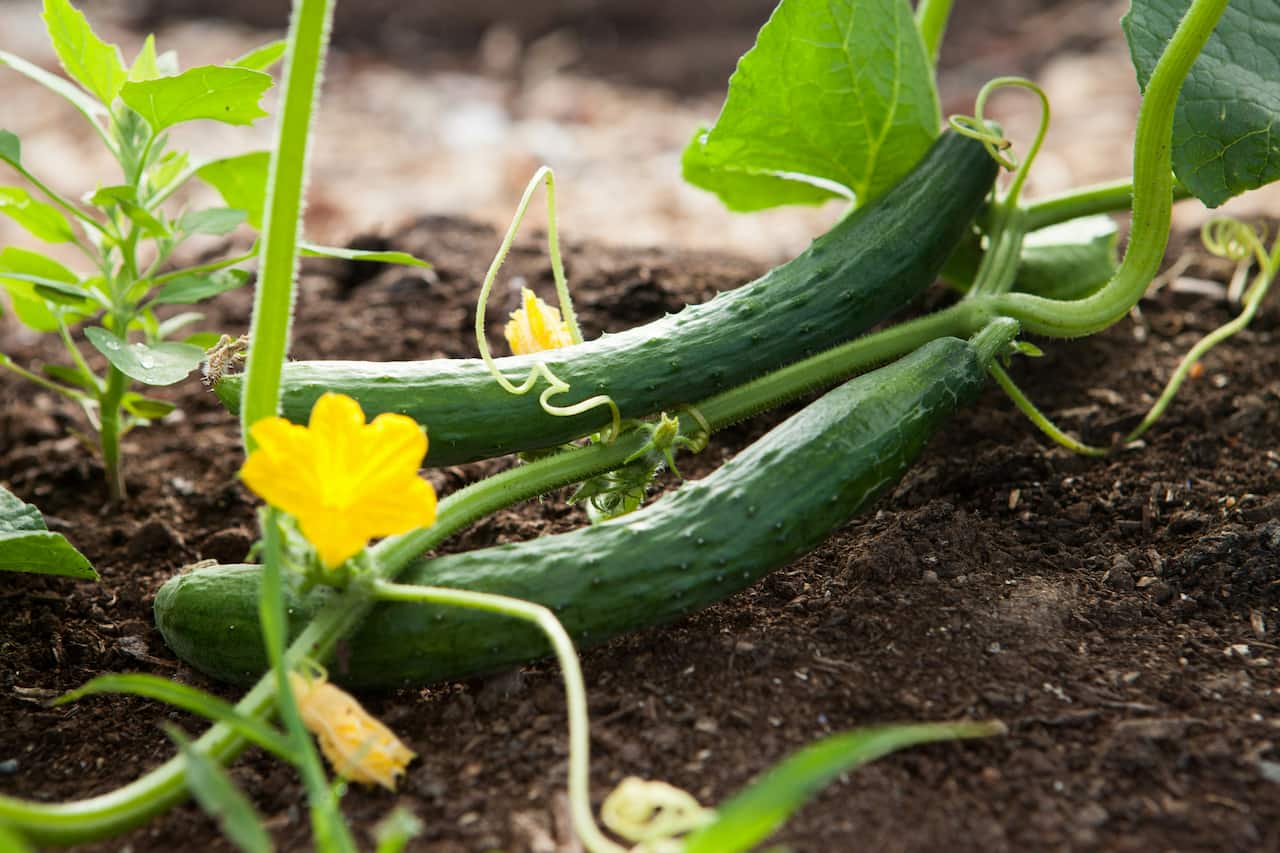
Outdoor ridge cucumbers are a different crop. They are shorter and often slightly rough-skinned, hardier and specifically adapted to produce in the more variable temperatures and less predictable sunshine of a British summer. The best varieties will set fruit in conditions that would stop a greenhouse type entirely. Always look for the words “outdoor”, “ridge” or “suitable for outdoors” on the seed packet before buying. If it just says “cucumber” with no outdoor qualifier, assume it is a greenhouse type.
Check the seed packet for “outdoor” or “ridge” before buying. The distinction between indoor (greenhouse) and outdoor (ridge) cucumbers is not always prominently labelled. Look specifically for the words “outdoor”, “ridge” or “suitable for outdoors”. If a packet just says “cucumber” with no qualifier, assume greenhouse type and do not plant it outside.
Sowing and planting out
Cucumbers resent root disturbance and grow quickly once established, so they are best sown into their own individual pot and transplanted just once. The indoor sowing window in the UK is April to mid-May – earlier than this and plants outgrow their pots waiting for frost-free outdoor conditions; later and there is insufficient season left for a worthwhile crop.
Training and support
Trailing outdoor cucumber varieties can be left to sprawl across the ground or trained up a support structure. In a UK garden, training upward is usually the better choice. It improves airflow around the foliage, which significantly reduces the powdery mildew that affects outdoor cucumbers from August onward. It keeps fruits off the wet soil, preventing the rot that affects ground-level fruits in wet summers. It makes harvesting easier and takes up considerably less ground space – a practical consideration in most UK gardens and allotments.
A simple framework of bamboo canes tied at the top with horizontal canes across works well, as does wire mesh attached to a fence or a proprietary trellis. The plants attach themselves with tendrils and need only occasional tying in. Bush varieties like Bush Champion need no support and are excellent in raised beds where their compact habit fills the space without sprawling outward.
Pollination – different rules outdoors
This is where outdoor cucumbers behave very differently to greenhouse types. Greenhouse cucumber varieties must not be pollinated – they produce seedless fruits, and if a male flower reaches a female flower the fruits become bitter and seedy. For this reason greenhouse types are often all-female varieties with no male flowers at all. This is the opposite of what you need outdoors.
Outdoor ridge cucumbers require pollination to set fruit. They produce separate male and female flowers on the same plant. The female flowers have a tiny immature cucumber visible behind the petals; the male flowers have a plain stem with no swelling behind them. In a normal UK summer with regular bee activity, pollination happens automatically. In cold, wet spells when bees are inactive, poor fruit set results – not because anything is wrong with the plant, but simply because no pollinator has visited the flowers. In these conditions, hand-pollinate by picking a fully open male flower and touching it gently inside a fully open female flower. This takes seconds and reliably solves the problem in difficult weather.
Do not buy all-female or “gynoecious” cucumber varieties for outdoor growing. All-female varieties are bred for greenhouse use only – they produce no male flowers and therefore cannot be pollinated by bees outdoors. If you plant an all-female variety outside it will flower prolifically and set almost no fruit. Check the seed packet and avoid any variety described as “all-female” or “gynoecious” for outdoor use.
Watering, feeding and problems
Cucumbers are one of the thirstiest crops in the vegetable garden. The large fruits are over 95% water and that water must come from consistent soil moisture. Inconsistent watering – alternating wet and dry conditions – causes bitter fruits and is the most common reason outdoor cucumbers disappoint. Water deeply and consistently at the base rather than overhead, twice to three times per week in dry weather. A mulch of compost around each plant conserves moisture significantly and should be applied as soon as plants are established.
Begin feeding with a high-potash liquid feed every 7 to 10 days once the first fruits start to swell. Before fruiting, a balanced general fertiliser or liquid seaweed at fortnightly intervals is sufficient. Do not overfeed with nitrogen before fruiting as this drives leaf growth at the expense of flowers and fruit.
Harvesting for continued production
Harvest outdoor ridge cucumbers before they reach full size. They are at their best when 15 to 20cm long and the skin is still dark, firm and slightly rough – at this stage the flesh is dense, the seeds are small and the flavour is at its peak. Overripe outdoor cucumbers turn yellow, the seeds become large and the flesh watery. The change from perfect to overripe happens quickly in warm weather – check plants every two to three days at peak production.
Cut rather than pull fruits from the plant, leaving a short section of stalk attached. Pulling risks damaging the stem and the root zone. Cutting back to a leaf joint also stimulates stronger replacement growth from the remaining stem. Like courgettes, leaving mature fruits on the plant signals to it that its reproductive work is done and slows subsequent fruit production significantly. Regular harvesting, even of fruits you cannot immediately use, keeps the plant in productive mode through to the first autumn frost.
Outdoor cucumbers do not store well – they are best eaten within three to four days of harvest. Unlike courgettes, they do not freeze usefully in their raw state. If you have a glut, they are excellent lightly pickled in salt and vinegar, which extends their usability by several weeks and handles the rapid production peaks that even a single well-grown plant can produce in a warm July.
Share on socials: