At a glance
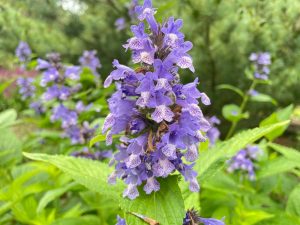
There is no blue in the plant world quite like the blue of Meconopsis betonicifolia. The flowers of the Himalayan blue poppy are an intense, saturated sky-blue with a central boss of golden stamens – a combination so improbable-looking that many gardeners who encounter it for the first time assume it must be artificially coloured. It is not. The colour is entirely natural and produced by the same pigment chemistry that colours the sky, making meconopsis perhaps the only plant whose flowers genuinely compete with the sky above them for intensity of blue.
The difficulty with meconopsis is equally well known. These are plants of the high Himalayas – of cool, moist, humus-rich slopes at altitude – and reproducing those conditions in a typical English garden is genuinely challenging. In the right conditions – the cool, damp climate of western Scotland, highland Wales, the Lake District and similar regions – meconopsis can be grown with moderate skill and will persist for years. In the south and east of England, where summers are warm and dry, long-term success requires significant effort and a degree of patience that not every gardener finds worthwhile. Understanding the geography of success with meconopsis before investing time and money is the most useful starting point.
Species and varieties
The most important distinction within the blue meconopsis group is between monocarpic species and genuinely perennial ones. Monocarpic plants flower once and then die – this is the behaviour of M. betonicifolia when it is not prevented from setting seed in its first flowering year. If a young M. betonicifolia plant flowers in its first season and is allowed to set seed, it will almost certainly die after that flowering. The standard technique to prevent this is to remove all flower buds in the first year to force the plant to persist, build a stronger root system and then flower freely from the second year onwards as a true perennial. This single piece of management makes a significant difference to long-term success rates.
The infertile hybrid group – sometimes sold as Meconopsis ‘Lingholm’, ‘Slieve Donard’ or under the collective ‘Big Blue’ descriptor – are sterile hybrids between M. betonicifolia and M. grandis that cannot set seed and therefore never die as a result of flowering. These are the most practical choice for most UK gardeners wanting long-lived plants, as they avoid the monocarpic risk entirely and can persist and increase as reliable perennials in the right conditions. They are the recommended starting point for anyone new to growing blue meconopsis.
Growing conditions
Soil preparation is the single most important step before planting meconopsis, and it is worth investing significant effort here. The ideal growing medium is a deep, humus-rich, moisture-retentive but free-draining acid soil – something approximating the leaf-mould-enriched soils of a cool temperate woodland. Work in large quantities of leafmould, composted pine needles or ericaceous compost to achieve this. The pH must be acid – above 6.5 meconopsis will show yellowing leaves and declining performance. If your soil is naturally alkaline, growing in raised beds or large containers filled with an ericaceous mix is a more practical solution than attempting to acidify in-ground soil.
Climate is the harder constraint. Meconopsis struggle in the warm, dry summers of southern and eastern England. They require cool temperatures through summer – consistently above 25C and they begin to decline regardless of watering. The combination of high humidity, cool air temperature and consistent moisture that characterises the Atlantic coast climates of Scotland, Wales and western Ireland is genuinely optimal, and many of the finest meconopsis collections in the UK are found in gardens in those regions. For gardeners in warmer parts of England, providing shade from afternoon sun, mulching heavily to keep roots cool, and choosing the shadiest available position will help but will not fully compensate for a warm English summer.
For gardeners in less favourable parts of the UK, the most productive approach is to think carefully about microclimate rather than garden-wide conditions. Even in a warm garden there are usually spots that receive dappled shade all day, remain noticeably cooler than open ground and hold moisture better than surrounding areas – the north side of a wall or large shrub, the edge of a woodland area, the shaded side of a garden building. These microclimates can differ by several degrees from the sunniest part of the garden and may well be cool enough to sustain meconopsis where an open, sunny border would not. Identifying and exploiting these spots is often the difference between moderate success and repeated failure in marginal climates.
Annual mulching with leafmould or composted bark in autumn is one of the most effective ongoing maintenance tasks for established meconopsis. A deep mulch of 8-10cm applied in October insulates the crown through winter, retains soil moisture through the following spring and summer and slowly improves the humus content of the soil as it breaks down. Never use mushroom compost as a mulch for meconopsis – it is alkaline and will raise the pH over time, eventually affecting both the vigour of the plants and the intensity of the blue colouration. A liquid feed of an ericaceous fertiliser applied every three to four weeks during the growing season provides the additional nutrients needed without altering soil pH.
Sowing, planting and care
Meconopsis seed is notoriously short-lived and should be sown as soon as possible after collection or purchase – seed stored for more than a year loses germination viability rapidly. Surface sow on moist, acid seed compost and do not cover the seed. Place the container in a plastic bag or propagator lid and refrigerate for two to three weeks before moving to a cool, bright position. This cold stratification mimics the natural conditions the seed experiences on Himalayan hillsides before spring arrives and significantly improves germination rates. Germination is slow and uneven – allow six to eight weeks and do not give up on a container that appears to have failed.
Seedlings are extremely sensitive to drying out – this is the stage where most losses occur. Keep the compost consistently moist at all times without waterlogging it. Pot on into individual small pots as soon as seedlings are large enough to handle and grow on through the first season in a cool, shaded position, outdoors from late spring. Plant into permanent positions in early autumn of the first year, before the ground gets cold. In all cases, remove any flower buds that appear in the first season – sacrificing the first year’s flowers is a small price for the years of flowering that follow.
Why meconopsis fail – and how to fix it
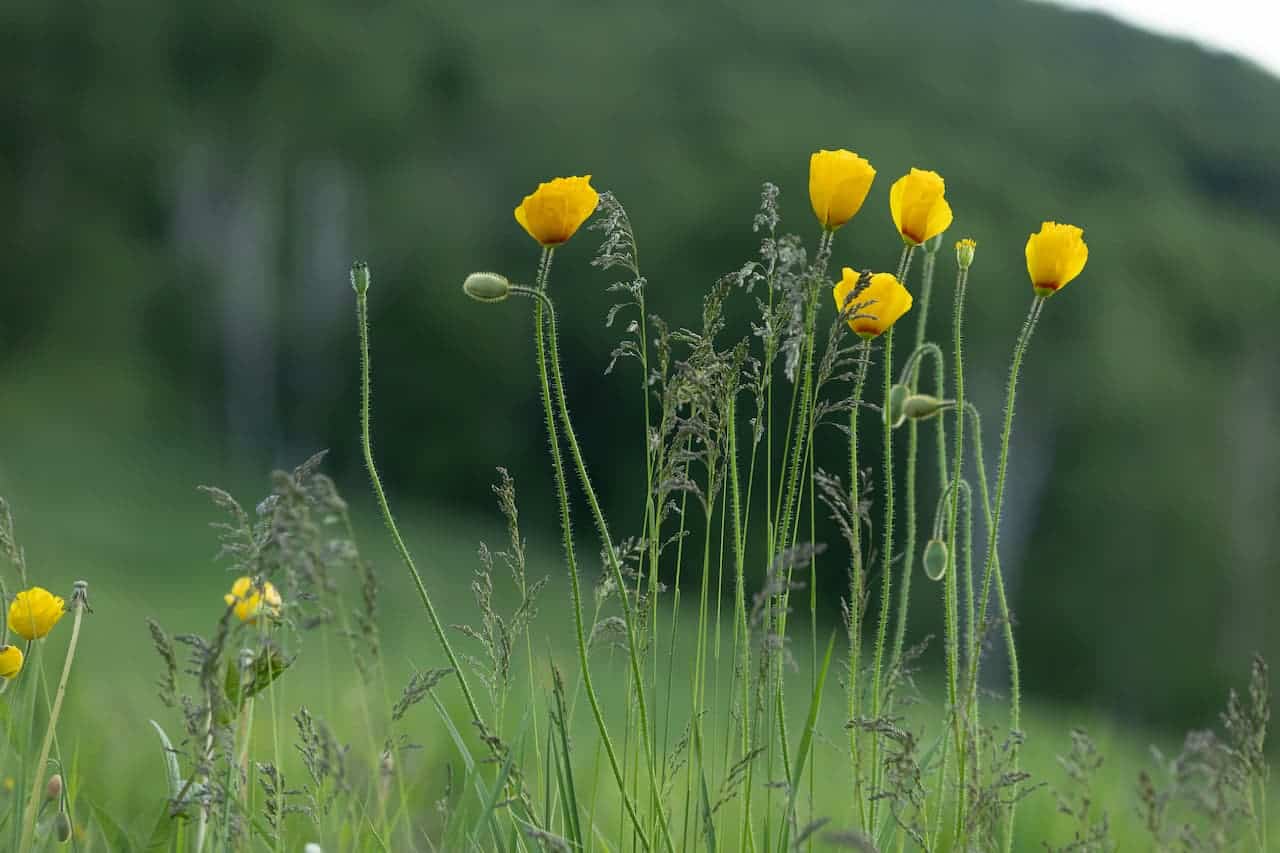
Do not attempt meconopsis in a hot, dry garden without significant modification. If summer temperatures regularly exceed 25C and rainfall is low, the honest assessment is that a standard in-ground bed will not sustain meconopsis long-term regardless of preparation. The realistic options are: choose the coolest, dampest microclimate available and accept that results will be variable; grow in containers that can be moved to shade in summer; or explore the Welsh poppy (Meconopsis cambrica) instead – easy, self-seeding, and genuinely beautiful in its own right even if the flowers are yellow rather than blue.
Share on socials: