At a glance
Wooden planters and pots are a popular choice for growing flowers on patios, balconies and in small gardens, and for good reason – they insulate roots better than terracotta or plastic, they look good in almost any setting, and they can be made large enough to support the deep root systems that many flowering plants need to thrive. The problem is that wood quality and construction in garden planters varies enormously, and an inexpensive softwood trough will typically rot through within two or three seasons in the UK climate, which turns a seemingly affordable purchase into a false economy.
This guide covers the practical differences between wood types, what sizes actually suit different flowering plants, and what to look for in construction that separates a planter worth buying from one that will need replacing within a few years. The ranked section focuses on styles commonly available in the UK with honest assessments of their strengths and weaknesses for flower growing specifically.
Wood Types and How Long They Last
The longevity of a wooden planter outdoors depends primarily on the wood species used and whether any preservative treatment has been applied. Wood in constant contact with moist compost is in a hostile environment – the inside base and lower sides are perpetually damp, which is exactly where rot starts. Hardwoods are naturally denser and contain oils and tannins that slow moisture penetration; softwoods are lighter and cheaper but need treatment to approach the same durability.
Oak is the benchmark for outdoor wooden planters in the UK – it weathers to an attractive silver-grey without treatment, contains natural tannins that resist fungal decay, and handles the freeze-thaw cycles of a British winter without splitting. Teak is technically superior but carries sustainability questions unless FSC certified, and the price premium is substantial. For most gardeners, a well-constructed oak or hardwood planter represents the best balance of longevity, appearance and value. Pressure-treated softwood planters can be made to last longer with annual application of a plant-safe wood preservative, but the treatment needs to be plant-safe – many standard wood preservatives contain fungicides that are harmful to plants and should not be used on the inside of a container.
Which Size Suits Which Flowers
The most common mistake with wooden planters for flowers is choosing one that looks good but is too shallow. A window box-style trough at 15cm depth is fine for trailing annuals but will stress bulbs and perennials that need depth to establish proper root systems. Shallow containers also dry out faster and suffer more from freeze-thaw damage in winter when roots are close to the frozen sides of the container. Spending a little more on a deeper, wider planter gives plants significantly more resilience and reduces the watering burden through summer.
Best Wooden Pots Ranked
The rankings below reflect practical performance for UK flower growing – drainage quality, construction joinery, wood species, and how well each style handles the wet winters that accelerate rot in poorly made planters.
A classic square hardwood planter in the 40cm range is the single most versatile wooden container for flowers. The depth accommodates roses, dahlias and perennials; the width gives enough soil volume to buffer against drying out; and the square format tiles neatly on patios or lines up along a fence. Oak and acacia versions from reputable suppliers use mortise-and-tenon or finger-jointed corners rather than just screws, which significantly extends the life of the planter by reducing the stress points where water pools and rot starts.
Look for slatted bases rather than solid bases – slatted bases allow drainage while maintaining structural rigidity. A solid base with a single drainage hole drilled through is the second choice; a solid base with no drainage at all is a serious problem for any flowering plant.
As an Amazon Associate I earn from qualifying purchases.
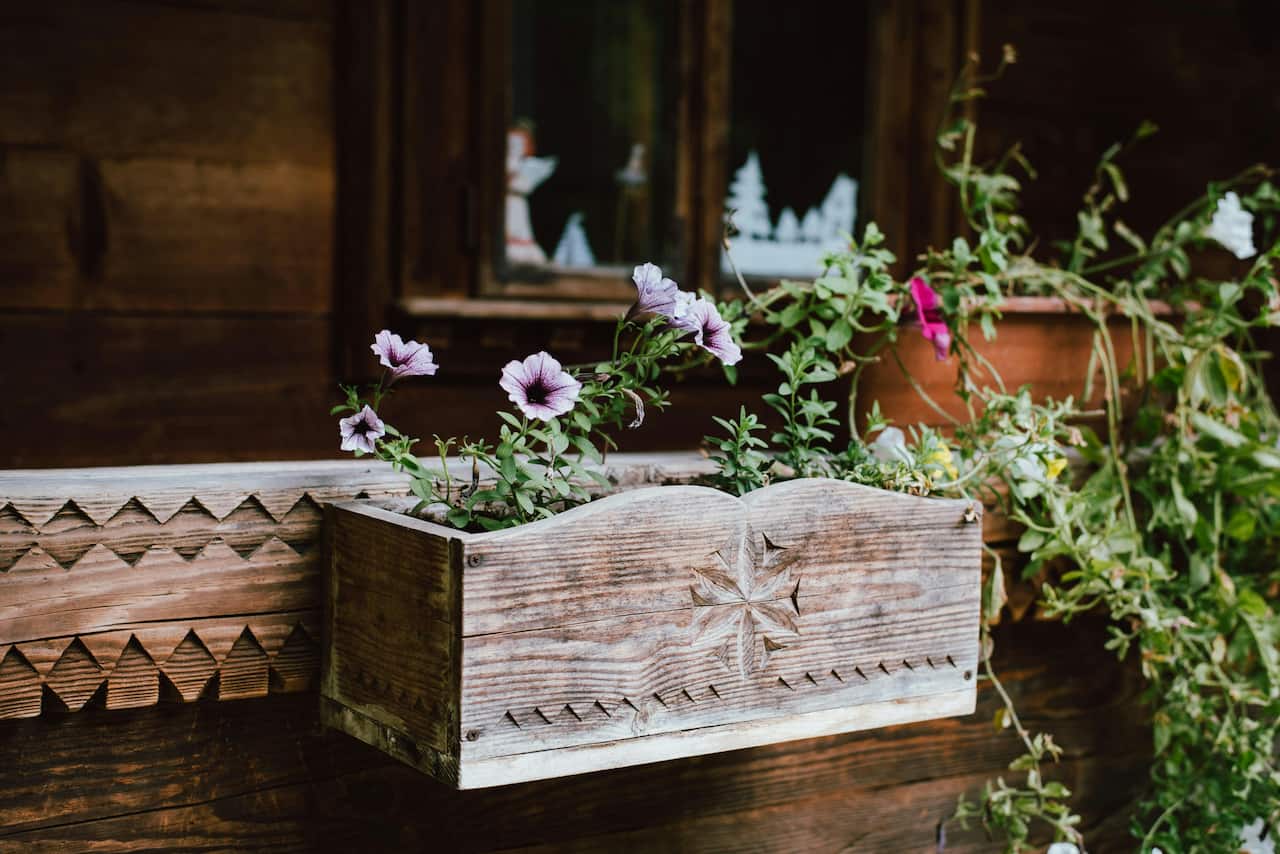
A good-quality treated pine window box trough is the best value option for seasonal flowering annuals – petunias, pansies, lobelia, verbena and similar shallow-rooted flowers that are replanted each year anyway. Because annuals do not need significant depth, the 15-20cm depth of a standard window box is perfectly adequate. The key is choosing a trough with proper drainage holes, not just a gap between slats, and ensuring any pressure treatment is plant-safe.
The major limitation is longevity – even treated pine in a moist environment will show rot at the base and corners within 5 years without additional preservative treatment. Annual application of a plant-safe wood oil extends this significantly. For a display that is completely replanted each year, this is an acceptable trade-off at the lower price point.
As an Amazon Associate I earn from qualifying purchases.
A taller cube format – typically 45 to 50cm in all three dimensions – is the best choice for perennial flowers that stay in the container for multiple years. The extra depth means that lavender, heuchera, salvia and similar plants can develop the root system they need without becoming pot-bound within a season or two. The additional soil volume also provides better insulation against winter cold and more buffer against summer drought.
These planters are heavy when filled – a 50cm cube with compost weighs approximately 35-40kg, which needs to be factored in for balcony use or any surface with a weight limit. The height also suits taller perennials like agapanthus or ornamental grasses that look awkward in a squat, wide container.
As an Amazon Associate I earn from qualifying purchases.
A wooden half-barrel made from genuine oak whisky barrel staves is a different category from purpose-made planters – the staves are curved, fit tightly together without gaps, and have been seasoned and pressure-treated through years of contact with spirits, which makes them highly rot-resistant by the time they reach a garden centre. A genuine half-barrel lasts 10-15 years outdoors without additional treatment and provides enough volume for the most demanding flowering displays.
As an Amazon Associate I earn from qualifying purchases.
What to Look for When Buying
Avoid planters described as “decorative use only” or “suitable for indoor use”. These will not have adequate drainage and the wood will not be rated for outdoor moisture exposure. They may look identical to proper outdoor planters in product photos but will fail within a single season when used outdoors with compost and regular watering.
How to Make Wooden Planters Last Longer
Even the best hardwood planter benefits from some care that significantly extends its useful life. The most impactful things a gardener can do are to raise the planter off the ground, apply a plant-safe preservative oil to the outside annually, and use a liner or crocking layer inside that prevents compost from sitting directly against the wood at the base.
Line the inside base with a piece of polythene or a bin bag before adding compost. This prevents compost from sitting directly against the wood at the base – the most rot-prone point of any planter. Pierce the polythene with several drainage holes aligned with the base holes or slats, then crock over the top with gravel or broken pot pieces before adding compost. The lining adds years to the base’s life with no impact on drainage or plant health.
Share on socials: