At a glance
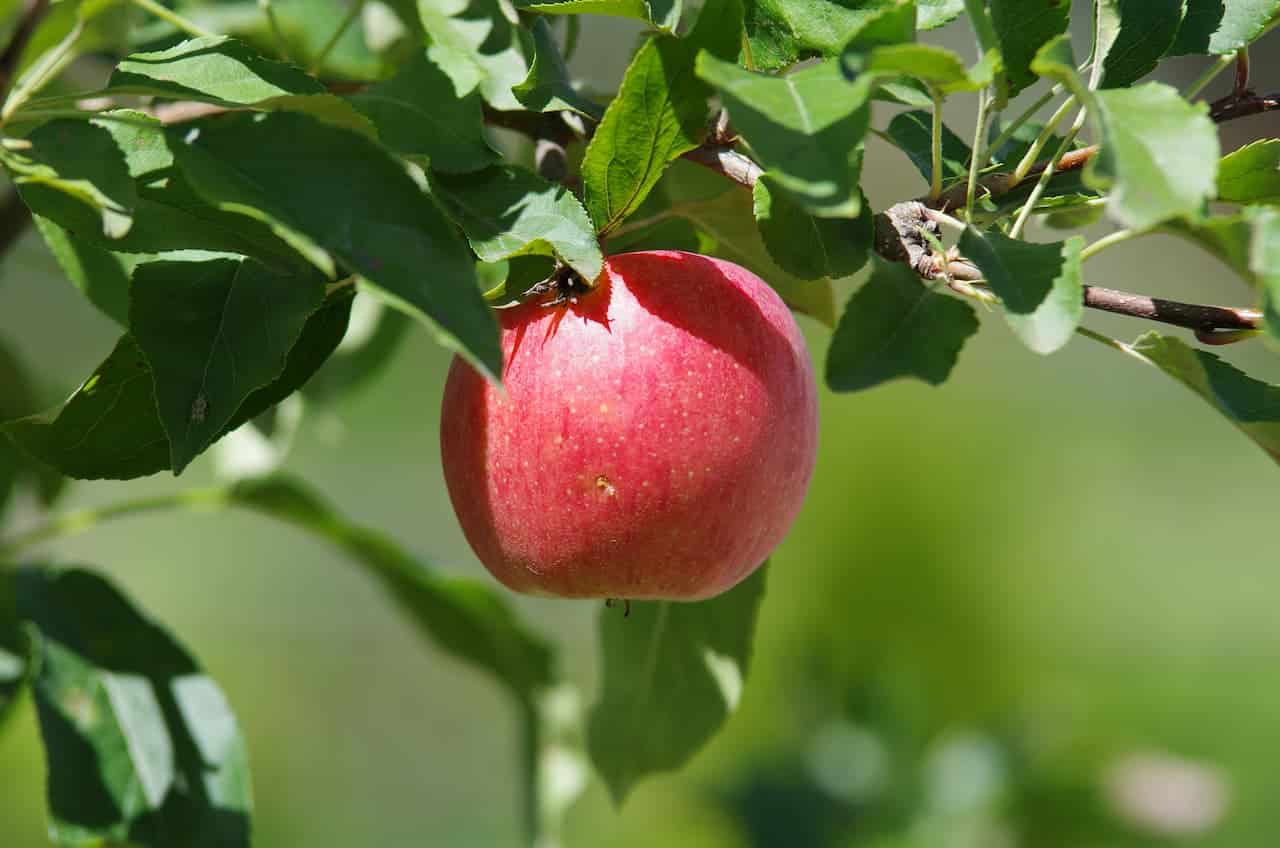
Dwarf apple trees are grafted onto size-controlling rootstocks that limit their final height to somewhere between 1.2 and 2 metres, depending on the rootstock used. This makes them genuinely suitable for small gardens, paved courtyards, raised beds and large containers – situations where a standard apple tree of 5 to 7 metres would be completely impractical. The term “dwarf” can be misleading because even trees on dwarfing rootstocks will vary considerably in size depending on soil quality and how they are managed, but a well-chosen tree on the right rootstock will stay at a manageable height for its entire life without requiring constant hard pruning to keep it in check.
The key decisions when buying a dwarf apple tree are rootstock, variety and pollination group. Getting all three right before purchase saves years of frustration with a tree that either outgrows its space, crops poorly, or never sets fruit because it has no compatible pollinator nearby. This guide covers each of those decisions in practical detail, along with planting, ongoing care and what to expect from your first harvests.
Understanding Rootstocks – What Makes a Tree Dwarf
Apple trees are not grown from seed in commercial production – they are grafted onto rootstocks, which are the root systems of other apple varieties selected specifically for the size and vigour they impart to the top growth. The rootstock controls how large the finished tree grows, how quickly it comes into fruit, and how well it performs in containers or poor soil conditions. The named rootstocks widely available in the UK are standardised, so any nurseryman using the same rootstock designation will produce trees of broadly similar final size.
M27 is the most dwarfing rootstock available and produces trees that genuinely stay small enough for a large container or a very confined border. The trade-off is that M27 trees need staking permanently, produce fewer apples per tree than larger rootstocks, and require good fertile soil or regular feeding to perform well. M9 is the most widely used rootstock for small gardens in the UK – it produces a slightly larger tree than M27 but is more productive, easier to establish, and performs well in a range of soil conditions. For a first dwarf apple, M9 is generally the better choice unless container growing is the specific goal.
Best Varieties for Small Gardens
James Grieve is particularly useful for small gardens because it is reliably self-fertile – meaning a single tree will produce a decent crop without a pollinator nearby. Most apple varieties produce better crops when cross-pollinated by a compatible variety in the same or adjacent pollination group, but James Grieve is an exception that also acts as a useful pollinator for many other mid-season varieties. Falstaff is another compact choice with a naturally upright, tidy habit that suits confined spaces and requires less formative pruning than spreading varieties like Cox.
Pollination – Do You Need Two Trees?
Most apple varieties are not self-fertile and require pollen from another apple variety flowering at the same time to set fruit reliably. Apple varieties are grouped into pollination groups numbered 1 through 7 based on their flowering time – early to late. For cross-pollination to occur, both trees must be in the same group or adjacent groups. A Group 3 variety pollinates well with other Group 3 varieties and with Group 2 and Group 4 varieties. A Group 1 variety cannot reliably pollinate a Group 5 variety because they will not be flowering at the same time.
How to Plant – Ground and Containers
Dwarf apple trees on M27 and M9 rootstocks are shallow-rooted and need staking permanently – unlike trees on more vigorous rootstocks, they do not develop a deep enough root system to be self-supporting. A stake should be placed before the tree is planted to avoid damaging roots, and a proper tree tie used at the correct height. In the ground, plant from November to March while the tree is dormant. Bare-root trees planted in winter establish far better than container-grown trees planted in summer and cost significantly less. Container-grown trees can be planted at any time of year but need careful watering through their first growing season.
For container growing, use a pot of at least 45 litres with good drainage holes. A loam-based compost such as John Innes No. 3 is better than multi-purpose compost for long-term container growing – it holds structure over years rather than compressing and becoming waterlogged. Re-pot into fresh compost every two to three years and top-dress with a layer of fresh compost each spring. Container trees need watering almost daily in summer and benefit from a liquid potassium-rich feed every two weeks from June to August to support fruit development.
Feeding, Watering and Pruning
Dwarf apple trees on M9 and M27 rootstocks are hungry plants that deplete soil nutrients faster than standard trees because their smaller root systems cannot forage as widely. A yearly application of a balanced fruit tree fertiliser in late winter or early spring maintains healthy growth and good crops. Avoid high-nitrogen feeds in summer, which promote leafy growth at the expense of fruit. Sulphate of potash applied in late summer improves fruit quality and hardiness going into winter.
Remove all blossom in the first spring after planting. It feels counterproductive but directing the tree’s energy into root establishment rather than fruit production in year one significantly improves long-term performance. A tree that fruits heavily in its first year often crops poorly in subsequent years because it has not developed the root system needed to support regular heavy fruiting.
Pruning dwarf apple trees follows the same principles as for any apple – remove dead, diseased and crossing branches in winter, and maintain an open goblet shape that allows light to reach all parts of the canopy. Spur-pruning in winter (cutting back lateral growth to 2-3 buds) maintains productivity on established spurs. Dwarf trees on M27 in particular can become overcrowded with short fruiting spurs quite quickly – removing some of these every few years keeps the tree productive and prevents biennial bearing.
Common Problems and How to Fix Them
Harvest and Storage
The test for ripeness is straightforward – cup the apple in your hand and give it a gentle upward twist. If it parts cleanly from the spur, it is ready to pick. If it resists, leave it for another week and test again. Early varieties like Discovery ripen in August and must be eaten fresh within a week or two – they do not store. Mid-season varieties like Cox and James Grieve ripen in September and October and keep for four to six weeks in cool conditions. Late varieties like Egremont Russet picked in October will store until December or January when kept in a cool, dark, frost-free environment.
Store apples individually without touching each other – stacking apples allows one rotten fruit to spread to its neighbours rapidly. A wooden tray lined with paper in an unheated garage or shed is ideal. Check stored apples every week and remove any that show signs of rotting. A healthy tree on M9 in its third or fourth year of fruiting will typically produce 10 to 25 kilograms of fruit per season – enough to keep a household well supplied and still have surplus to share or store.
Share on socials: