At a glance
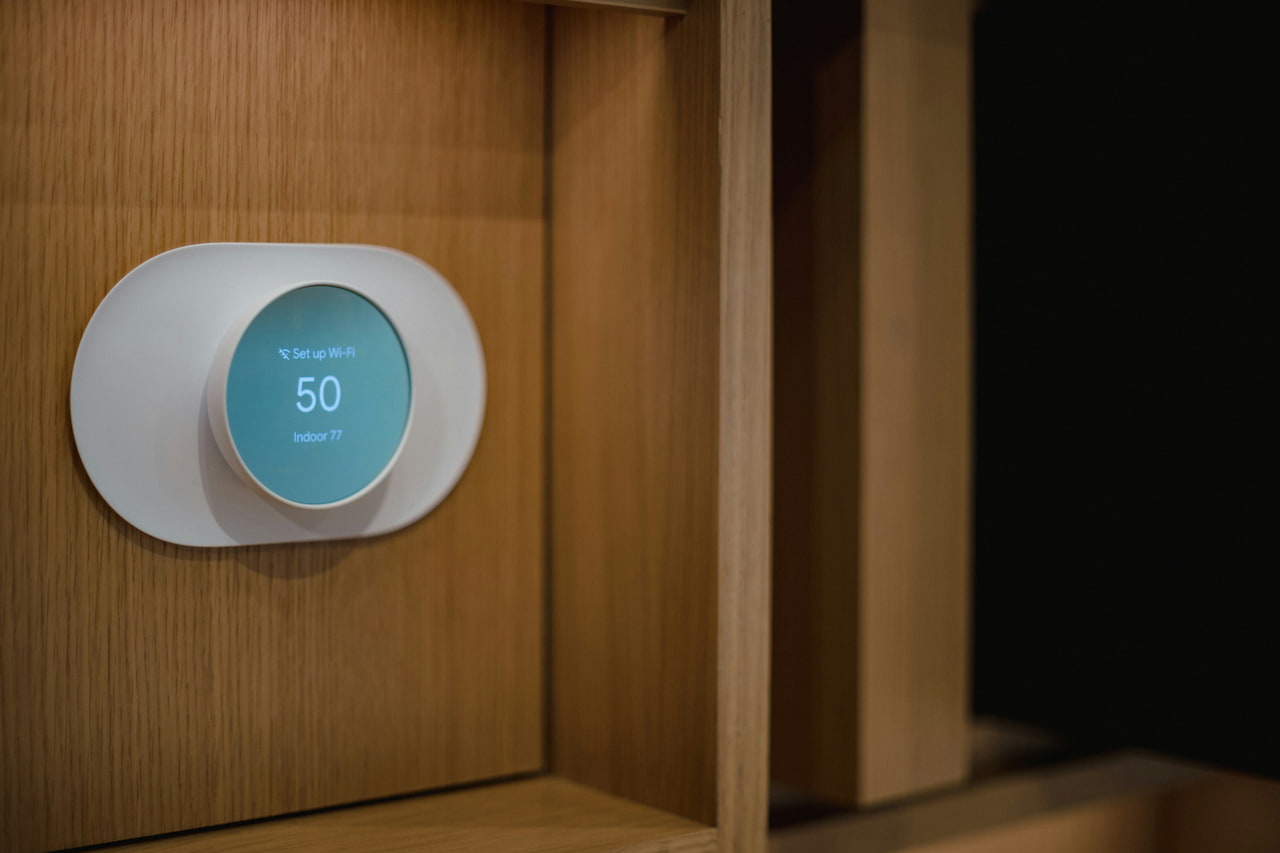
The Google Nest Learning Thermostat is the most distinctive smart thermostat on the market – literally. The stainless steel ring design, the colour display showing the current temperature in large clear numerals and the satisfying click of the rotating control dial make it the only thermostat in our test group that you would describe as attractive. It is also the most premium priced and the most technically capable standard option, with a genuine learning algorithm that observes your heating habits and builds a schedule automatically over the first week of use.
We tested the third-generation Nest Learning Thermostat in a four-bedroom detached house in Yorkshire over a full heating season. For a full comparison against the Tado and Hive, our best smart thermostats UK guide ranks all three head to head and covers the key differences in detail.
Overview and first impressions
The Nest makes an immediate and strong impression out of the box. The build quality is exceptional for a thermostat – the stainless steel finish feels genuinely premium and the magnetic wall plate system makes installation and removal for charging straightforward. The display is clear and the ambient light sensor dims it appropriately in a dark room without manual adjustment.
The rotating dial interface is intuitive within minutes – turn clockwise to increase temperature, anticlockwise to decrease, press to access the menu. For household members who are uncomfortable with app-based controls this physical interface is significantly more approachable than a touchscreen-only device. No hub is required – the Nest connects directly to your home Wi-Fi, which removes one component from the setup equation entirely.
Check Nest compatibility with your boiler before buying. The Nest Learning Thermostat is compatible with most UK combi boilers and conventional systems but it does not work with all boiler types. Nest provides a compatibility checker on their website. Some older UK heating systems – particularly those with a separate hot water cylinder – require additional components. This is worth confirming before purchasing as returns can be complicated once the system is opened.
Specifications and scores
Setup and installation
The Nest can be installed DIY on most standard UK combi boiler systems – a genuine advantage over the Hive which requires a professional. The installation process involves removing the existing thermostat, connecting the Nest base plate to the existing wiring and snapping the thermostat onto the base. The Nest app guides you through each step with clear illustrations. For a standard two-wire UK system this takes 20-30 minutes and requires no specialist knowledge.
The learning feature – does it work?
The learning capability is the Nest’s headline feature and the most common question asked about it. In our testing it works – but with nuance. Over the first week the Nest observes every manual temperature adjustment you make and the times you are typically home and away. By the end of the first week it has constructed a schedule that reflects your actual behaviour rather than one you have had to programme manually.
The quality of the learned schedule depends entirely on the regularity of your household’s routine. For households with consistent weekday patterns the learned schedule is impressively accurate within 10-14 days. For households with irregular routines – shift workers, people who work from home some days and not others, households with multiple people with different schedules – the learning produces a more approximate result that benefits from manual refinement. Home/Away Assist uses the location of household members’ phones to detect occupancy and adjusts the heating accordingly – this works reliably in testing and provides genuinely useful energy saving on days when your routine varies from the learned schedule.
Performance and energy saving
Google claims the Nest Learning Thermostat saves an average of 16.5% on heating bills. Our testing produced savings consistent with this figure – approximately 14-18% reduction compared to the previous season on the same property with a traditional programmer. The saving comes from a combination of better scheduling, Home/Away Assist reducing heating during unexpected absences and the Eco Temperatures feature which sets a minimum temperature rather than full heating when the home is empty.
The energy history feature in the app provides detailed monthly reports showing how many hours the heating ran and what percentage was due to weather changes versus schedule versus manual adjustment. This level of insight is genuinely useful for understanding your heating patterns and identifying further saving opportunities – and it is more detailed than anything either Hive or Tado provide.
- Genuine learning capability that works for regular households
- DIY installation possible on most UK combi systems
- No hub required – connects directly to Wi-Fi
- Best-in-class energy history and reporting
- Premium design – best-looking thermostat in our test
- No monthly subscription fee
- Most expensive in our test group at ~£219
- Learning less effective for irregular household routines
- No weather compensation – Tado wins on that metric
- Hot water control limited on UK conventional systems
- Compatibility issues with some older UK boiler types
- Households with regular weekday and weekend routines
- Anyone wanting DIY installation without engineer costs
- Google Home users wanting seamless integration
- Those who want detailed energy usage reporting
- Households with highly irregular or shift-based routines
- Budget-conscious buyers – Hive or Tado offer better value
- Those wanting maximum energy optimisation – Tado wins on that
Final verdict
The Google Nest Learning Thermostat is our top pick in this comparison and the smart thermostat we would recommend to most UK households with a regular routine. The learning capability genuinely works, the DIY installation saves money upfront, the energy history reporting is best in class and the design is in a different league from its competitors. At £219 it is the most expensive of the three but the combination of features, performance and no monthly subscription makes the price justifiable.
The Tado edges ahead on weather-based energy efficiency and the Hive on simplicity and UK support, but for a well-rounded smart thermostat that handles most UK households’ needs excellently the Nest is the one to buy. If you are also thinking about reducing your home’s energy use more broadly, our guide on what is an EPC rating UK is worth reading alongside this review.
The Google Nest Learning Thermostat is the best all-round smart thermostat for UK households with a regular routine. It is the most expensive in our test but delivers on its headline claim – the learning works, the energy saving is real and the design genuinely elevates a usually unremarkable household fitting. Our top pick for most UK homes.
Share on socials: