At a glance
Pak choi – also written bok choy – is one of the fastest and most versatile leafy vegetables you can grow in a UK raised bed. From sowing to harvest in as little as four weeks for baby leaves, or eight weeks for full heads, it fills gaps in the growing calendar that few other vegetables can match. It is particularly valuable in spring and autumn when many other crops are not yet ready or have already finished, and its ability to grow from seed to harvest twice in a single season makes it one of the most productive crops per square metre available to the UK raised bed gardener.
The main challenge with pak choi in the UK is bolting – the tendency to run to flower rather than form a useful leafy head if conditions are not right. Understanding when to sow and when to avoid sowing is the single most important factor in getting consistent results. Once you understand the timing, pak choi is genuinely straightforward to grow and delivers one of the fastest returns of any vegetable you can sow.
About pak choi
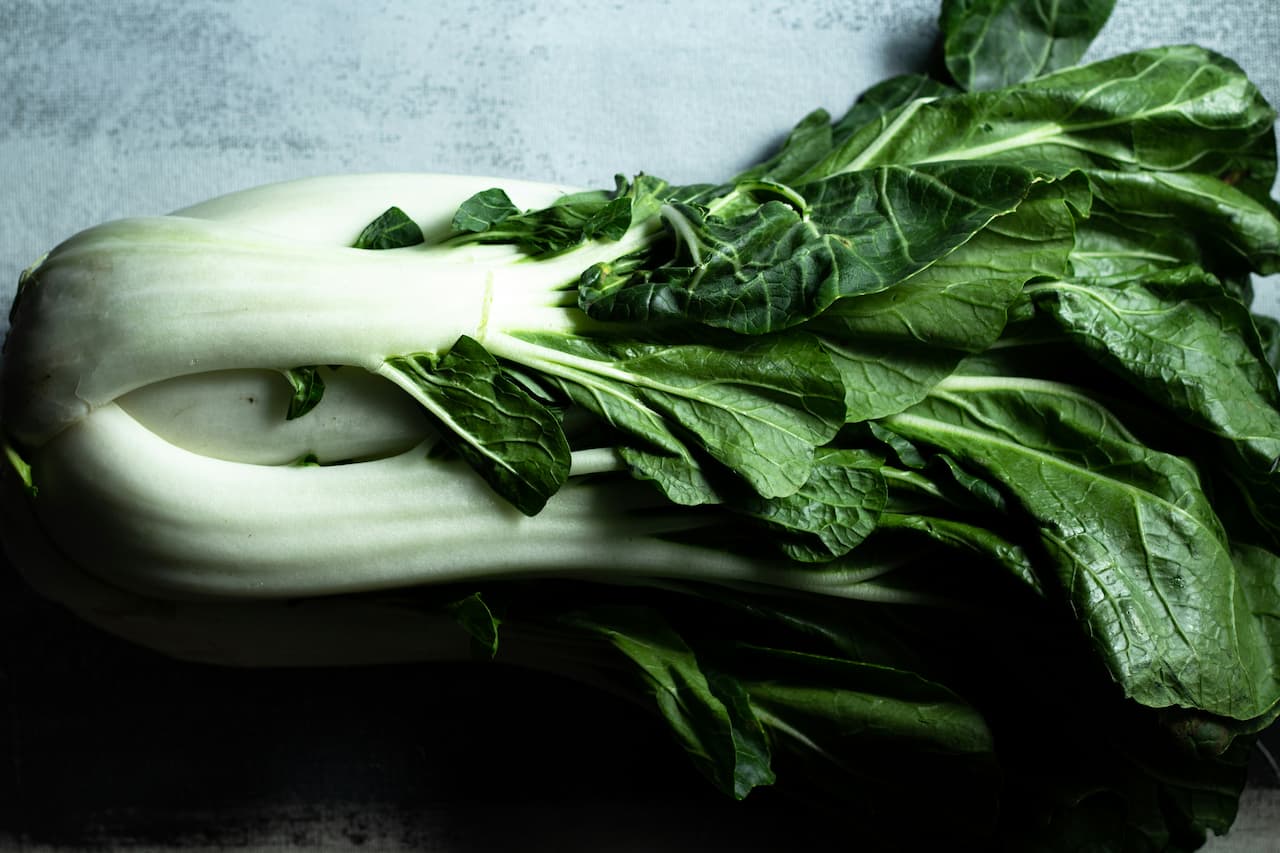
Pak choi (Brassica rapa subsp. chinensis) is a member of the brassica family with origins in China, where it has been cultivated and selected for over two thousand years. It forms a loose rosette of glossy, dark green leaves on thick, fleshy white or green stems depending on the variety. The whole plant is edible – leaves, stems and even the flowers if the plant bolts before you can stop it. The flavour is mild and slightly peppery, considerably more delicate than cabbage and without the bitterness that some people associate with brassicas, and it pairs particularly well with garlic, ginger and soy in Asian-style cooking. It also works well wilted alongside noodles or rice dishes where a soft leafy green is needed at the last moment.
Unlike many brassicas, pak choi does not form a tight, dense head like a cabbage or cauliflower. The leaves are arranged in an open, spreading rosette, making it straightforward to harvest individual outer leaves as a cut-and-come-again crop from early in the plant’s development, or to cut the whole plant at the base for a full single harvest once it has reached the desired size. This flexibility in harvesting approach is one of pak choi’s most practical virtues. It is also more cold-tolerant than many gardeners expect – established plants will survive light frosts down to around -2C, making it a genuinely useful crop well into autumn and even early winter in mild UK gardens.
Sowing and planting
The timing of pak choi sowing is the most critical factor in the whole growing process. Plants sown during midsummer – roughly June through to mid-July – are highly prone to bolting because the long days and warm nights trigger the flowering response before the plant has developed properly. The two best sowing windows are spring (March to May) and late summer into autumn (late July to September). Spring sowings give a harvest before the summer heat peaks and are ideal for the earliest salad greens of the year. Late summer sowings mature in the cooler, shortening days of autumn when the bolt response is naturally suppressed by declining day length – these are often the most productive sowings of the year and can provide fresh pak choi right through October and into early November in mild UK gardens.
Sow seeds 1cm deep, thinly in rows 30cm apart. For full heads, thin seedlings to 20-25cm between plants once they are large enough to handle without damaging the roots of the ones being left in place. For baby leaf production, leave plants more closely spaced at around 10cm and harvest young leaves progressively from around four weeks after sowing, always cutting outer leaves first and leaving the growing centre intact. Pak choi can also be started in modules indoors and transplanted out, though direct sowing into the raised bed avoids the root disturbance that can itself trigger bolting in young transplants – if transplanting, do so as early as possible, when seedlings are small, to minimise the shock.
Do not sow in June or early July. This is the highest bolt-risk period for pak choi in the UK. The combination of long days and warm nights almost always causes plants to run to flower before they develop any useful leaves or head. Wait until late July when day length begins to shorten meaningfully – even a few weeks makes a significant difference to bolt resistance.
Ongoing care
Pak choi needs relatively little care but what it does need – consistent moisture, early weed control and pest protection – has a direct and measurable effect on quality and bolt resistance. A stressed, drought-affected plant bolts far more readily than a well-watered, weed-free one, and flea beetle can destroy young seedlings within days if no protection is in place. The care you put in during the first three weeks after sowing has an outsized effect on the final result and determines whether you get a full, productive plant or a bolted disappointment.
Harvesting
Pak choi gives you two distinct harvesting approaches depending on whether you want a continuous supply of young leaves or larger single harvests of whole heads. Both are valid and the choice depends mainly on how you plan to use the crop in the kitchen.
After cutting a full head, leave the root and stem stump in the ground rather than pulling it out immediately. A flush of small new leaves will often regrow from the cut surface within two to three weeks, providing a useful bonus harvest before the space is needed for the next sowing. The regrowth leaves are smaller than the original plant and looser in arrangement, but they are perfectly usable for stir-fries, soups and noodle dishes where size matters less than flavour. In a productive raised bed, this stump regrowth habit effectively gives you three to four weeks of additional cropping from a single sowing with no extra effort.
Common problems
Most pak choi problems in the UK fall into one of four well-understood categories, each with a clear preventative or corrective action available. Bolting is overwhelmingly the most common issue that gardeners encounter, but the others are worth knowing about before sowing – flea beetle in particular can devastate young seedlings within a few days of emergence in warm, dry weather if mesh protection is not already in place by the time the first shoots appear.
Best varieties
Variety choice for pak choi in the UK should prioritise bolt resistance, particularly for spring sowings. A variety labelled as “slow bolting” on the seed packet will perform noticeably better in warmer conditions than a standard type. For autumn sowings the bolt risk is lower and a wider range of varieties performs well.
Variety choice for bolt resistance is particularly worth considering if you plan to sow in late spring – ‘Hanakan F1’ is another slow-bolting variety worth seeking out alongside Summer Breeze F1 for gardeners who want maximum reliability in borderline sowing periods. For the most straightforward experience, sow in August and harvest in October, when the cool autumn conditions do most of the bolt-prevention work for you naturally.
Pak choi makes an excellent companion to other cool-season crops in a raised bed. It grows well alongside spinach and chard – all three prefer cool, moist conditions, mature quickly and can be harvested progressively as cut-and-come-again crops. Combining all three in a single bed gives you a reliable supply of leafy greens from early spring right through to the first hard frosts of winter, with the succession of sowing dates and different maturity speeds ensuring that something is always ready to harvest rather than everything being ready at the same time.
Share on socials: