At a glance
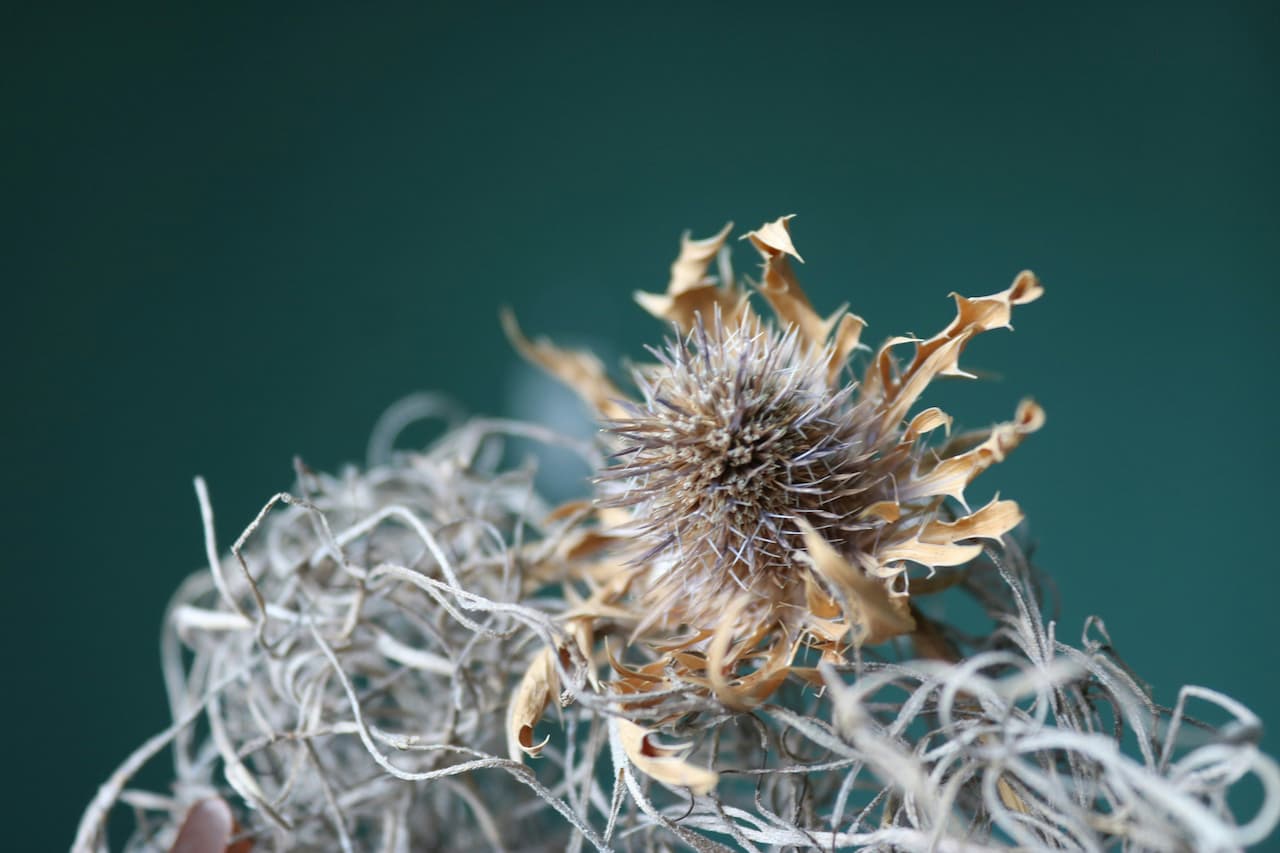
Eryngium – commonly called sea holly – is one of the most distinctively beautiful perennials for UK gardens, producing spiky, thistle-like flower heads surrounded by sharp, deeply cut bracts in steely blue, silver and violet through midsummer and into September. The architectural quality of the plant is striking at every stage: the jagged, spiny foliage forms a bold basal rosette from spring, the flower stems rise stiffly to their full height in June before the blooms open, and the dried seed heads that remain through autumn and winter are equally decorative. For this reason many gardeners leave eryngium standing through winter rather than cutting it back, where it adds skeletal structure and catches frost beautifully.
Eryngium is native to dry, rocky habitats across Europe and Central Asia, and this origin explains both its outstanding drought tolerance and its near-indifference to poor soil. It is one of the few ornamental perennials that genuinely thrives on neglect: rich, fertile, well-watered conditions cause lax, floppy growth and reduced flowering. The plants that perform best in UK gardens are invariably those growing in the leanest, fastest-draining soil available – a sunny spot against a south-facing wall or in gravel, where moisture drains away quickly and the roots never sit wet. In this position, established plants require almost no maintenance beyond an occasional tidy and, for biennial species, seed collection to maintain the colony.
Growing Conditions
Soil quality – or rather the lack of it – is the key to eryngium success. Rich, fertile soil causes the plant to produce excessive leafy growth at the expense of the structural flower stems, and the overall plant becomes floppy and needs staking, which defeats the purpose of growing what is otherwise a completely self-supporting plant. Incorporate grit or sharp sand into heavy clay soils before planting, or position eryngium in an existing area of poor, light soil. Raised beds filled with a free-draining mix, or gravel garden plantings over a compacted base, are ideal. Eryngium grows well in coastal gardens where salt-laden winds and thin sandy soil deter other plants – it is genuinely adapted to these conditions in the wild. Established plants on suitable soils are almost completely self-sufficient, requiring no watering, feeding or intervention through the growing season. This combination of low maintenance and high visual impact makes eryngium one of the best-value plants for a hot, sunny border in the UK.
Full sun is non-negotiable. Eryngium in partial shade produces fewer flowers, paler colouring and weaker stems. In UK gardens, a south or west-facing border against a wall or fence is ideal – the reflected warmth extends the flowering season and the fast drainage at the base of walls suits the plant perfectly. Avoid north-facing positions entirely and any spot where the roots might sit in moisture from overhanging structures or slow-draining soil in winter. The combination of cold and wet is more likely to kill eryngium than any degree of cold alone. Plants that have established themselves against a south-facing wall in well-drained conditions can be remarkably long-lived – clumps of perennial species like E. x tripartitum will persist and self-seed for many years in the right position with minimal attention.
Best Varieties for UK Gardens
‘Miss Willmott’s Ghost’ (E. giganteum) is the most spectacular eryngium commonly grown in UK gardens – a tall, imposing biennial with enormous silver-white bracts that glow luminously in evening light. It self-seeds prolifically on free-draining soil and forms self-sustaining colonies where conditions suit, eventually requiring more management to contain than to encourage. Being biennial, individual plants flower in their second year and die after setting seed, so a colony at different stages of development is always in flower while younger plants build their rosettes. E. x tripartitum is the most reliable perennial species for UK conditions: long-lived, free-flowering with small but abundant violet-blue heads from July to September, and hardy throughout the UK. E. alpinum ‘Blue Star’ has the most ornate bracts of any eryngium – deeply cut and feathery, giving a very different texture from the spikier planum and giganteum types. It is slightly less vigorous than tripartitum but worth the additional care in a sheltered, well-drained position.
Eryngium is one of the best plants for supporting late-season pollinators in UK gardens. The flowers are rich in nectar and produce a steady supply from July through to September – exactly the period when many earlier-flowering plants have finished and pollinator food sources are reducing. Bumblebees, solitary bees and hoverflies visit eryngium flowers regularly and the plant’s long flowering season provides sustained rather than brief support. Leaving the dried seed heads through winter also provides structure and shelter for overwintering insects.
Planting and Propagation
Container-grown eryngium can be planted at any time from spring to early autumn, though spring planting gives the best establishment before winter. Bare-root plants and divisions should go in during spring only. Dig in generous quantities of grit if the soil is heavy before planting, and set plants at the same depth as they were growing. Space perennial varieties 45-60cm apart – they spread slowly but need room to develop their full structural form without crowding. Do not plant eryngium into freshly enriched soil or add compost or fertiliser to the planting hole – lean conditions from the outset give much better results.
Propagation from seed is the most economical way to establish a colony, particularly for the biennial species like E. giganteum. Sow fresh seed outdoors in autumn immediately after collection – eryngium seed needs a period of cold to break dormancy, and fresh seed sown in autumn germinates reliably the following spring. Stored seed sown in spring often fails or produces erratic germination. Root cuttings taken in late autumn or winter are the most reliable method for propagating named perennial cultivars – take sections of thick root 5-7cm long, insert vertically in a gritty compost mix and keep frost-free until spring when new shoots emerge. Division of established perennial clumps in spring is also possible but requires care – eryngium resents root disturbance and divided plants may sulk for a season before recovering. Where possible, take root cuttings rather than dividing, as this avoids disturbing the main plant entirely and produces good results from a relatively small amount of root material.
Care, Cutting and Common Problems
Established eryngium requires almost no routine care. Perennial species do not need staking in a well-chosen position with poor soil and full sun. Feeding should be avoided – a light top-dressing of grit around the crown in autumn improves drainage at the most critical point and is the only amendment worth making. Do not mulch with compost or bark chip, which retains moisture around the crown and promotes the same conditions that cause rot in winter. In practice, the maintenance requirement for well-placed eryngium is lower than almost any other ornamental perennial – the main task across the season is leaving the plant alone. The plants that are most commonly lost in UK gardens are those that have been fed, watered, mulched or planted in rich soil by well-meaning gardeners who would have had more success with benign neglect.
Handle eryngium with gloves – the spines on mature plants are sharp enough to cause injury. The bracts and leaves on fully grown plants, particularly the larger species like E. giganteum, have rigid, needle-sharp points that penetrate skin easily. Wear thick gloves when handling, deadheading or dividing plants. The same spines make eryngium completely rabbit and deer-proof in the garden, which is a significant practical advantage in many UK rural and suburban gardens.
Share on socials: