At a glance
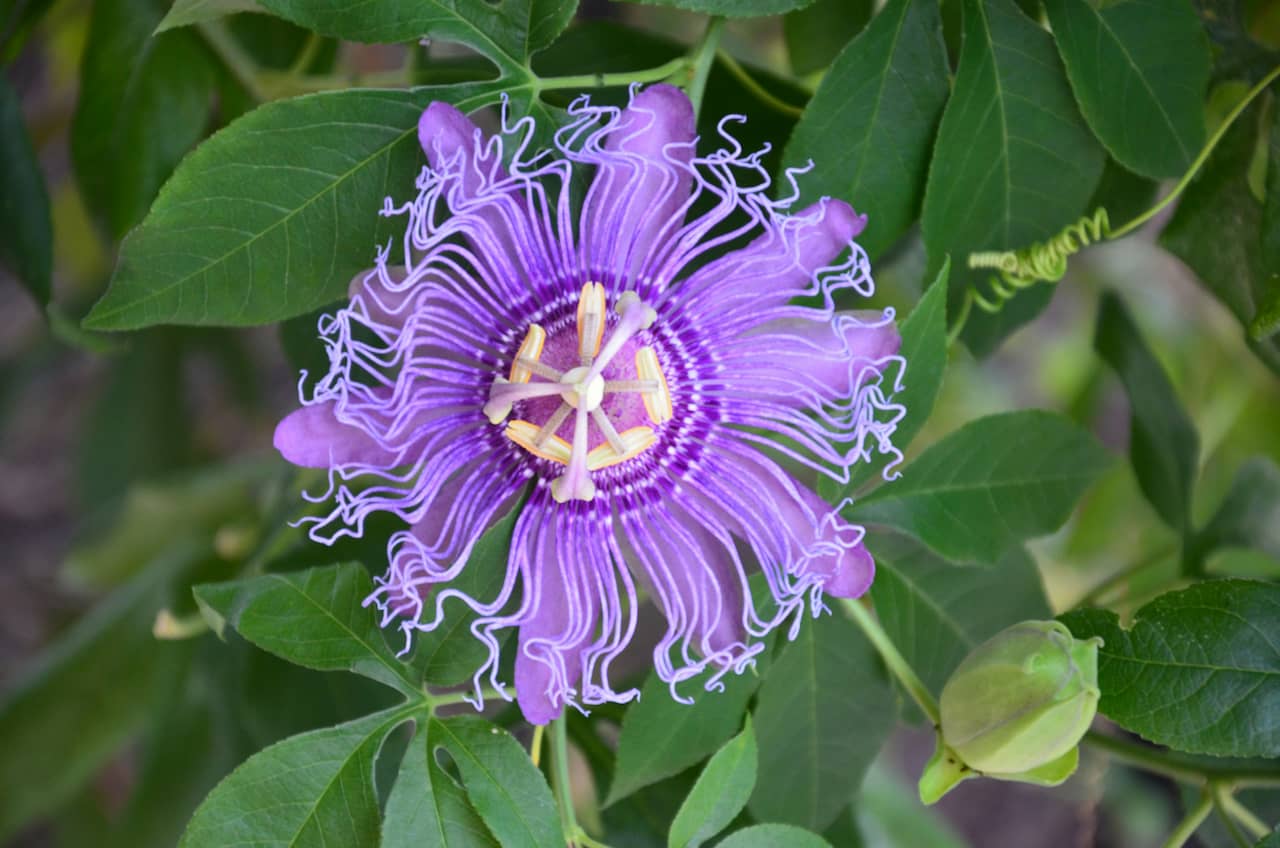
Passion flower (Passiflora) produces some of the most exotic and intricate blooms in the plant kingdom – flowers that look as though they belong in a tropical garden rather than a British one. The good news is that the hardiest species are perfectly capable of surviving UK winters outdoors, particularly on a sheltered south or west-facing wall, and will reward you with months of extraordinary flowers from midsummer right through to autumn. The flowers are followed by egg-shaped orange fruits that are edible, though not as intensely flavoured as tropical varieties.
Passion flower grows fast – a well-established plant can add two metres or more of growth in a single season – and clings to its support using tendrils, which means it needs something to grip rather than smooth masonry. Against a fence, trellis or wire system it will cover a surprisingly large area within three or four years and create a genuinely spectacular display. Growing it successfully in the UK is largely a matter of choosing the right position and knowing how to handle the plant after a hard winter.
Best varieties for UK gardens
For most UK gardeners the choice is straightforward: Passiflora caerulea is the one to plant outdoors. It is fully hardy in most of the country, grows vigorously and produces a continuous succession of the iconic blue, white and purple flowers from July to October. P. caerulea ‘Constance Elliott’ is worth seeking out if you prefer a white flower – it holds the RHS Award of Garden Merit and matches the species for toughness.
Where and how to plant
Position is everything with passion flower in the UK. It needs a south or west-facing wall or fence that catches maximum sun and provides shelter from cold north and east winds. The wall itself acts as a thermal store, absorbing heat during the day and releasing it overnight – a genuine advantage in colder months. In northern England and Scotland, the warmest possible wall position is not a preference but a necessity if the plant is to survive reliably.
Passion flower tolerates most well-drained soils and actually performs better in poorer soil than in rich, heavily fed ground – too much fertility produces excessive leafy growth at the expense of flowers. Plant in spring or early summer once the risk of frost has passed, setting the plant slightly deeper than it was growing in the pot. Water in well and apply a mulch around the base, keeping it clear of the stems.
Plant at the base of a south-facing wall and you are giving the plant its best possible chance. The reflected warmth from brickwork raises the local temperature by several degrees compared to an open site. On a particularly warm south-facing wall in a sheltered urban garden, passion flower can behave almost like a semi-evergreen, retaining most of its foliage through mild winters.
Training and support
Passion flower climbs by tendrils, which means it needs something to grip – it cannot self-cling to smooth masonry or flat painted timber. The most practical support is horizontal wires spaced 30-40cm apart across the wall, fixed with vine eyes set 5-8cm proud of the surface. This keeps the stems away from the wall, improving air circulation and reducing fungal disease risk. Trellis panels also work well and are easier to install, though they should be fixed with spacers rather than flush against the wall for the same reason.
In the first season, guide the main stems to the wires and loosely tie them in every 30cm or so with soft garden twine. Once established, the plant will find its own way, but regular guidance in the early years prevents a tangled mass of growth that is difficult to manage later. Train the main framework horizontally along the lower wires first – this encourages the plant to break into multiple vertical shoots rather than racing upwards as a single stem and leaving the lower section bare.
Feeding, watering and pruning
Passion flower is a vigorous grower that needs relatively little feeding – a general-purpose slow-release fertiliser applied in spring is sufficient for most established plants. Avoid high-nitrogen feeds which push leafy growth at the expense of the flowers. In the first season after planting, water regularly to help the plant establish, but once the root system is developed it is surprisingly drought tolerant for short periods.
Pruning is straightforward but timing matters. The main pruning season is early spring, just as new growth begins to show. Cut back any frost-damaged or dead shoots to healthy wood – you will often find that what looks dead has viable buds much lower down the stem. For an established plant that has outgrown its space, harder pruning in March – cutting back the previous season’s growth by half or two-thirds – encourages a flush of new flowering shoots and keeps the plant within its allotted area without harming it.
Winter care in the UK
This is where most passion flower failures happen. The plant itself – P. caerulea – is hardy to around -10°C, but the roots are hardier than the top growth and the key is protecting the crown from prolonged freezing. The most important thing you can do before winter is apply a deep mulch – at least 10cm of bark chip, straw or garden compost – around the base of the plant, keeping it clear of the main stems but covering the root zone generously. This insulates the crown and roots from the worst of the cold.
Do not cut the plant back in autumn. This is a common mistake. The old stems, even if they look bedraggled, act as insulation for the crown below and provide a small amount of frost protection. Wait until March, when new growth begins to show, and then prune back to healthy wood. What looks completely dead in February often has perfectly viable buds lower down. In northern gardens, an additional layer of horticultural fleece over the main stems during the coldest nights can make the difference between a plant that comes back strongly and one that dies back to the roots and spends the next season struggling to recover.
Never assume a passion flower has died after a hard winter without waiting until May. The plant can appear completely dead through March and April and then burst into new growth from the base in May. Even if all top growth is lost, the roots often survive and will regenerate. Give it until late spring before making any decisions.
Common problems
Passion flower is one of the most rewarding climbers for a UK garden – exotic in appearance but genuinely tough once established in the right position. The combination of months-long flowering, rapid coverage of a fence or wall and relative ease of care makes it excellent value. If you are planning other climbers for the same space, it pairs well with late-flowering clematis varieties that can thread through the passion flower’s growth and extend the display into autumn.
Share on socials: