At a glance
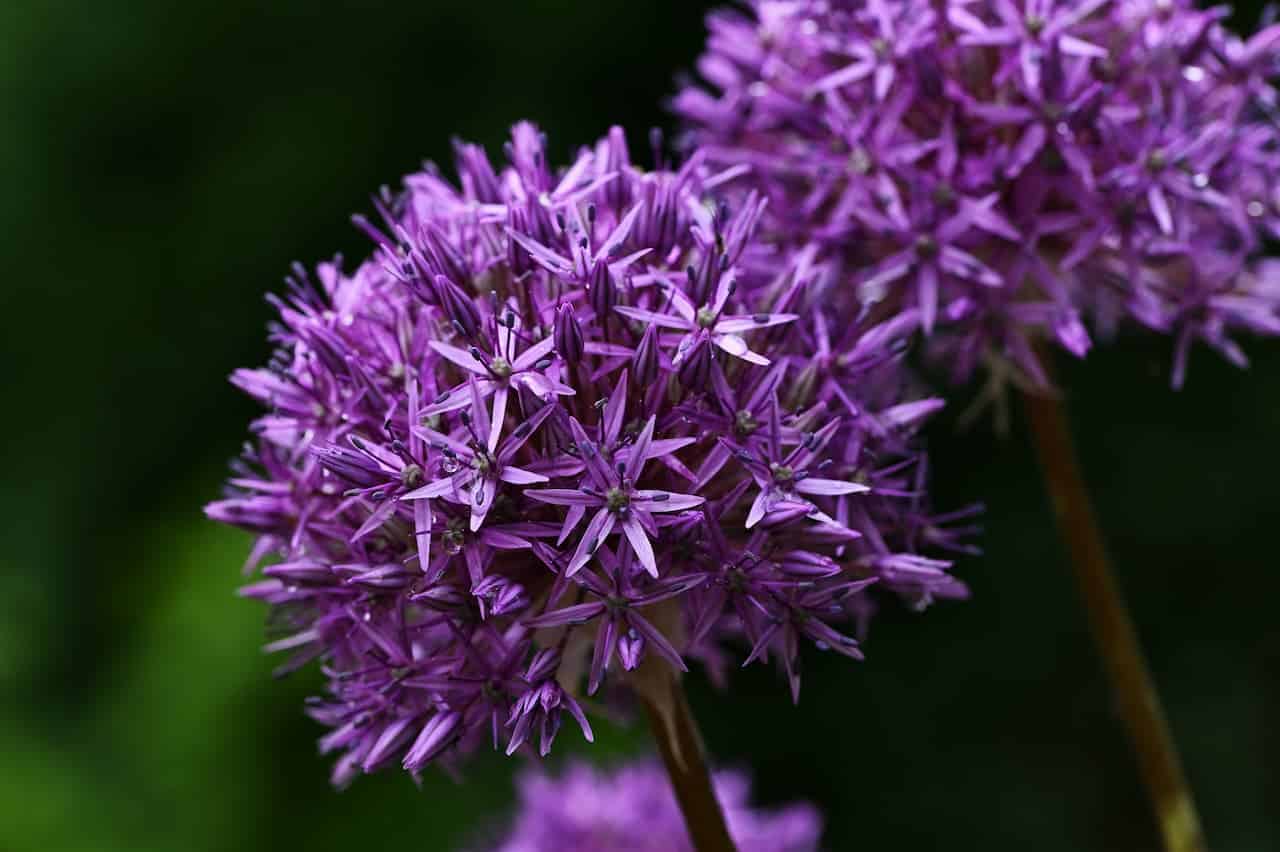
Ornamental alliums are among the most architecturally striking bulbs available for UK gardens. Their perfectly spherical flower heads – ranging from golf-ball sized to the massive 15cm globes of Allium giganteum – rise on tall straight stems in May and June, providing a structural quality that few other flowers can match at this season. Unlike most bulbs that disappear once the petals drop, alliums continue to contribute for months after flowering: the dried seed heads persist on their stems well into autumn, catching the light and providing skeletal interest that bridges the summer border and the first frosts. A single planting of alliums delivers ornamental value from May through to October – five or six months of garden interest from one autumn effort.
Alliums are members of the onion family, and like their edible relatives they are virtually unbothered by the slugs, deer and rabbits that trouble many other garden plants. The sulphur compounds that give onions and garlic their characteristic smell make ornamental alliums unpalatable to most pests – a meaningful practical advantage in gardens where pest pressure is high. Combined with their tolerance of most well-drained soils, reliable perennial performance and the extended season their seed heads provide, alliums represent outstanding value as a garden plant.
Varieties – what makes each worth growing
The range of ornamental alliums extends from tiny species types to architectural giants over a metre high. Understanding what the main varieties offer makes it possible to build a planting that has variety in height, flower form, flowering time and decorative quality well beyond the flowering season. Most of the varieties covered here are widely available from UK bulb suppliers each autumn – the more unusual ones such as schubertii may need a specialist supplier but are worth seeking out.
Planting – depth, position and timing
Allium bulbs should be planted in autumn, from September through November. Unlike tulips, alliums do not need to wait for cooling soil temperatures – getting them in the ground in September gives the longest possible period to develop roots and typically produces stronger first-year flowering. The bulbs are fully frost-hardy once in the ground and need no protection. If bulbs cannot be planted immediately on arrival, store them in a cool, dry, well-ventilated place and plant within two to three weeks – do not leave them in warm storage conditions for extended periods as they deteriorate.
Drainage is the single most important factor for allium success. Allium bulbs sitting in waterlogged soil through winter will rot before they flower. On clay soils, planting in raised beds or working generous amounts of horticultural grit into the top 30cm before planting is essential. On free-draining sandy, chalky or loam soils, alliums thrive with minimal preparation. Full sun produces the best flowering; alliums tolerate light shade but produce weaker stems and smaller flower heads in shadier positions.
Aftercare – seed heads, foliage and dividing
Alliums are among the lowest-maintenance bulbs in the garden. Once planted in well-drained soil in a sunny position, they require no supplementary watering or feeding in normal UK conditions. The aftercare principles are simple and identical to those for all bulbs.
Allium foliage often begins to yellow before the flowers have fully opened – this is normal and not a sign of disease or poor growing conditions. The leaves are still photosynthesising and contributing to the bulb’s energy reserves even as they yellow. Leave all foliage until it pulls away cleanly from the plant base. Cutting it back early reduces bulb vigour and impairs the following year’s performance.
Seed heads are one of the greatest assets of ornamental alliums. Rather than removing spent flower heads, leaving them in place provides months of additional ornamental interest as they dry and take on the skeletal structure that makes them so distinctive in the late summer and autumn border. Allium christophii and schubertii in particular produce seed heads of extraordinary decorative quality. The dried heads can also be cut for indoor arrangements where they last for months without deteriorating. Seed heads also self-seed freely in many garden soils – new seedlings appear the following spring, reach flowering size in two to three years, and gradually colonise the border without any additional effort from the gardener. If self-seeding is not wanted in a particular position, remove the seed heads before they shatter in late summer.
Established clumps multiply by producing offset bulblets alongside the parent. After several years, lifting and dividing congested clumps in late summer – once the foliage has died back – refreshes performance and provides free stock to plant elsewhere. Alliums increase more slowly than some other bulbs, but a clump of Purple Sensation or christophii left undisturbed for five to seven years can yield a surprising number of individual bulbs when lifted and separated. Work a garden fork carefully around the clump, lift the entire mass, and tease the individual bulbs apart by hand. Replant the largest immediately at the correct spacing, and grow on the smaller offsets in a nursery row for a season before they reach flowering size.
One further consideration: alliums placed near vegetable beds provide a secondary benefit. Their sulphur compounds deter certain pests – aphids in particular are less attracted to nearby plants when ornamental alliums are present. This companion planting effect is secondary to their ornamental value but worth noting for gardeners planning beds close to a kitchen garden.
Using alliums in border design
The most effective allium plantings use the vertical stems and spherical heads as structural punctuation within lower, more horizontal planting. Tall varieties such as giganteum and Purple Sensation work well rising above a carpet of geraniums, catmint or salvia, with the globe heads visible above the surrounding foliage. This multi-level layering – shorter spreading plants at ground level with allium stems rising through them – produces the kind of naturalistic planting that has defined UK garden design for the past two decades.
The foliage challenge is the main design consideration. Allium leaves yellow before or alongside the flowers and are unattractive once they begin to die back. The solution is to plant perennials in front of the alliums – or in the space where their leaves emerge – so that those companions grow up through and around the dying foliage as the season progresses. Hardy geraniums, nepeta, salvia and low ornamental grasses all work well for this purpose. By the time the allium foliage is at its most yellow and untidy, the companion plants will have grown up around it while the flower heads above remain spectacular.
For succession, alliums bridge the gap between the main tulip season in April and May and the main summer perennials from late June onward. A border combining late tulips, alliums and early-flowering roses creates a sequence through May and June that is hard to match with any other combination. Allium christophii and schubertii planted through the mid-border then provide structural interest through the seed head phase from July into October, extending the effective season of the planting to nearly six months from a single autumn effort.
For colour harmony, ornamental alliums are predominantly in the purple-violet spectrum, with exceptions in white (Mount Everest) and yellow (moly). The purple tones combine particularly well with soft blues, silvers and lavenders – catmint, lavender, penstemon, salvia – and with the warm pinks and creams of English roses. Planting alliums alongside white cow parsley (Anthriscus sylvestris) or white honesty in late spring creates a delicate combination very different from the more formal appearance of alliums planted in regimented borders. For a more relaxed meadow-inspired planting, mixing Purple Sensation with Allium sphaerocephalon (the drumstick allium, which flowers later in June and July) creates a bridge between late spring and midsummer with minimal effort, as the sphaerocephalon’s smaller egg-shaped burgundy-purple heads thread through grasses and perennials in a completely different way to the larger globe-headed varieties.
Alliums are excellent pollinators plants. The open flower heads attract a wide range of bees, hoverflies and other beneficial insects, making them doubly valuable in a wildlife-friendly garden. The late-flowering Allium sphaerocephalon in particular flowers when many other early summer sources are declining, providing a useful supplemental nectar source through late June and July when the garden can go through a quieter patch for pollinators between spring and high summer flowers.
Alliums in containers
Mid-sized and smaller varieties perform well in containers. Purple Sensation, Gladiator, christophii and moly all suit container growing. Giganteum is possible in a very large container but the height makes it unstable outdoors and it is better planted in the open ground where the stems can root deeply enough to anchor themselves.
Use a mix of two parts loam-based compost to one part horticultural grit – free drainage is essential. Plant at the same depth as in the ground. Water sparingly through winter – enough to prevent the compost drying out completely but not enough to cause waterlogging. A liquid feed applied once as the shoots emerge in spring improves flower size in container-grown plants. Move containers to a sheltered position in the most severe winter weather, as containers freeze more readily than open ground and prolonged frozen conditions can damage even hardy bulbs.
Alliums combine well with tulips in large containers: plant a lower layer of late-flowering tulips at the base with alliums above, timed to come into flower as the tulips finish. This produces a seamless sequence from a single container across six weeks from late April through June. After the allium display is over, the seed heads continue to provide structure in the container well into autumn. Unlike tulip foliage, allium seed heads are genuinely attractive and worth displaying rather than hiding.
Common problems
Alliums are robust and disease-resistant compared to many garden bulbs. The most common problems in UK gardens are almost all preventable through correct site selection and planting.
White rot (Sclerotium cepivorum) is the most serious disease affecting alliums, causing a white fluffy mould at the base of affected plants and complete collapse of the stems. The sclerotia of the fungus persist in the soil for up to 20 years, making the affected area unusable for any member of the onion family for a very long time. The first sign is often wilting and yellowing of the stems well before the expected natural die-back, followed by visible white mould at the base when the plant is examined. Remove all affected material immediately and destroy it – do not compost. There is no chemical treatment available to UK gardeners and the only effective long-term approach is preventing introduction of infected material in the first place. Buy bulbs from reputable suppliers and inspect all purchased bulbs before planting, discarding any with suspicious soft patches or mould.
Allium leaf miner (Phytomyza gymnostoma) is an increasing pest in UK gardens, producing characteristic white serpentine tunnels in the leaves and potentially allowing secondary bacterial and fungal infections into the plant. It is less significant on ornamental alliums than on edible crops but worth monitoring. There is no chemical control available to UK gardeners. Physical exclusion using fine insect mesh over susceptible plants during the two egg-laying periods – March to May and September to November – is the most effective preventive. Removing affected leaves promptly reduces the secondary infection risk.
Stems toppling in heavy rain or wind during flowering are almost always the result of planting too shallow rather than any structural weakness in the plant. Tall varieties planted at insufficient depth lack the anchor they need to stay upright when the heavy, wet flower head is exposed to spring winds. The solution is deeper planting next time. Staking individual stems as a temporary measure during a particularly windy period works, but correct depth is the real fix.
Alliums growing in too much shade produce weak, floppy growth and small flower heads. Moving bulbs to a sunnier position when the foliage has died back in summer resolves this – dig up the bulbs carefully once the foliage is fully dead, dry briefly and replant in a better position in autumn. Any allium that has produced foliage but very small or absent flowers in a well-established position that once performed well is likely in increasing shade from neighbouring plants that have grown up around it – reassess the position and move if necessary.
Allium leaf miner (Phytomyza gymnostoma) is an increasing pest in UK gardens, producing characteristic white serpentine tunnels in the leaves and potentially allowing secondary bacterial and fungal infections into the plant. It is a greater concern on edible allium crops such as leeks and garlic than on ornamentals, but worth monitoring. There is no chemical control available to UK gardeners. Physical exclusion using fine insect mesh placed over susceptible plants during the two egg-laying periods – March to May and September to November – is the most effective preventive for edible crops, and removing affected leaves promptly on ornamentals reduces secondary infection risk. Ornamental alliums are generally more tolerant of cosmetic leaf damage than edible crops because the flower display rather than the foliage is the object.
Overcrowding after several years of successful growth can reduce flowering vigour as bulb clumps multiply. Lifting congested clumps once the foliage has died back, separating individual bulbs and replanting at wider spacing restores performance. This is rarely needed more than every five to seven years in a well-established planting and is a straightforward operation requiring no specialist equipment – simply lift carefully with a fork, split the clump by hand and replant immediately.
Share on socials: