At a glance
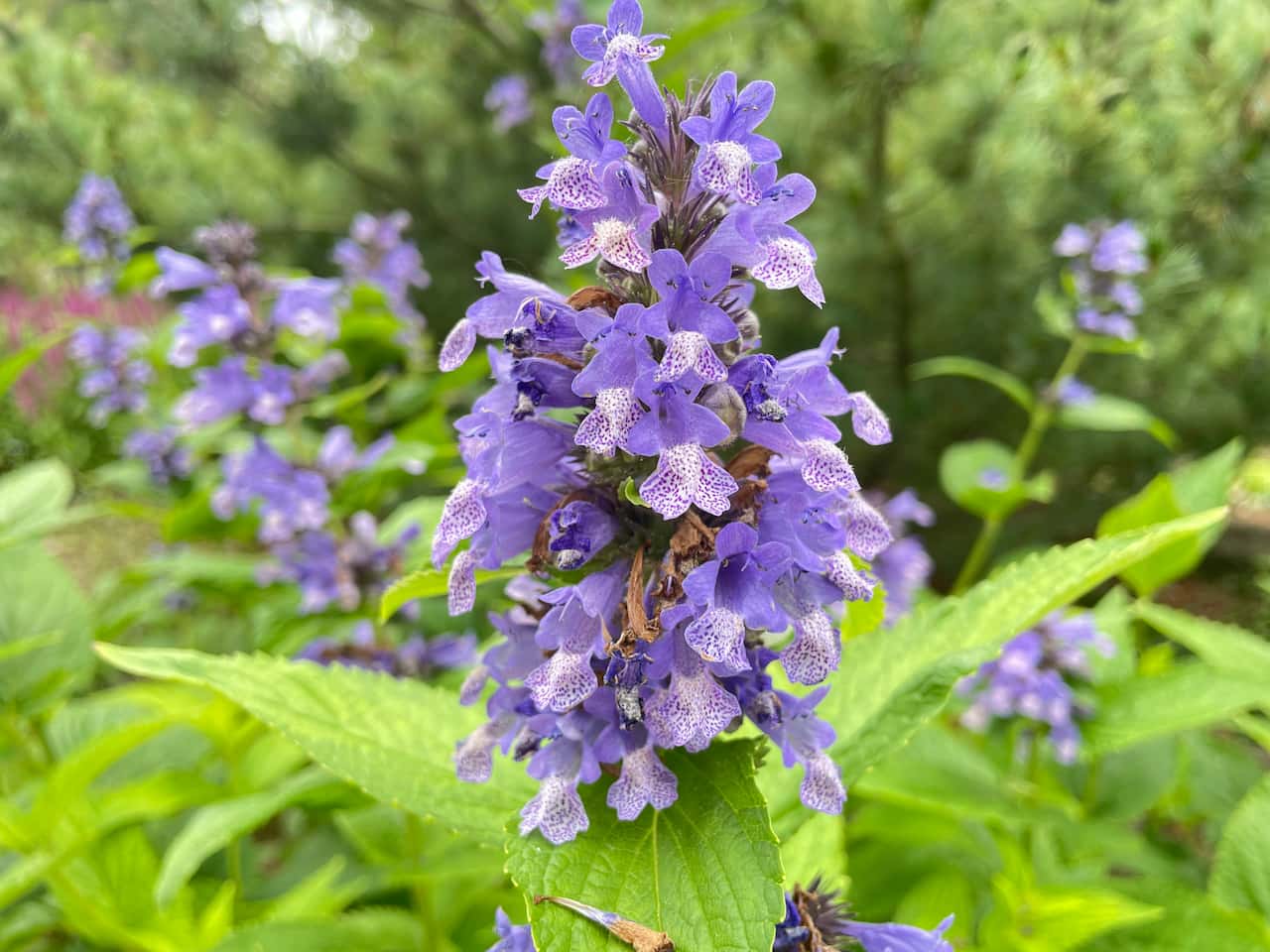
Catmint (Nepeta) is one of the most reliably rewarding perennials you can plant in a UK border. From May onwards, its mound of silvery-grey aromatic foliage disappears beneath a haze of soft lavender-blue flower spikes that continue for weeks. Cut it back hard after the first flush fades and it will rebound with a second, often equally generous, display in August and September – a performance that many other perennials simply cannot match for the same level of effort. For a plant that asks almost nothing of the gardener in return – no watering once established, no feeding, no staking – the return is extraordinary.
Catmint is also among the most effective pollinator plants available in UK gardens and one of the longest-flowering. Bees of all species – honeybees, bumblebees and solitary bees alike – work catmint flowers from the moment they open, and the long flowering season means it is productive for pollinators right through the summer. If you are trying to attract bees and support garden wildlife, catmint is a non-negotiable addition to the planting scheme. This guide covers how to grow it to its full potential in UK conditions, from planting and variety selection through to the shearing technique that unlocks two generous flushes instead of one exhausted trickle.
About catmint
Catmint belongs to the genus Nepeta, a large group of aromatic perennials and annuals in the mint family (Lamiaceae). The plants most widely grown in UK borders are Nepeta x faassenii and its cultivars, along with the taller and more vigorous Nepeta ‘Six Hills Giant’. All produce the characteristic aromatic grey-green leaves and upright spikes of two-lipped flowers in blue-purple, lavender or soft white shades. The foliage is pleasantly aromatic when brushed or touched, with a scent similar to mint but with a slightly medicinal, herbal character that many gardeners find as appealing as the flowers themselves.
Despite the common name, catmint does not have the same strong intoxicating effect on cats as catnip (Nepeta cataria) – though cats do occasionally roll in established clumps and can flatten younger plants before the stems become woody and more resilient. Garden catmint is fully hardy across the whole of the UK and genuinely long-lived, with established clumps persisting for many years and slowly expanding into larger masses. It spreads at a steady, moderate pace to form a gently mounding mass of silvery foliage that looks tidy and genuinely attractive even when not in flower, making it a valuable border plant across twelve months of the year rather than just the flowering season alone.
Planting catmint
Catmint grows best in a sunny position with well-drained soil. It tolerates poor and dry soils exceptionally well – in very fertile or consistently moist soils the growth tends to be lush and floppy rather than the neat, compact mound the plant makes in leaner conditions. A gravel garden, the edge of a path, a sunny bank or the front of a sunny border in average to poor garden soil are ideal situations. Avoid heavy clay soils that remain wet and waterlogged in winter – crown rot is a genuine risk in these conditions and is the one situation where catmint reliably fails.
Plant catmint at the same depth it was growing in the nursery pot. Firm it in well and water thoroughly after planting to settle the soil around the roots and close any air pockets. Beyond that initial watering, established catmint very rarely needs irrigation – it is one of the most drought-tolerant perennials available for UK gardens and handles dry summers that would stress many other border plants without showing any sign of distress.
Path edging. Catmint is one of the classic plants for softening the hard edge of a path or border. The arching stems spill gently forward over the edge, softening paving lines, and the aromatic scent is released every time someone brushes past. Plant it along both sides of a sunny path for maximum visual and sensory impact – the effect when the plants are in full bloom is one of the most pleasing in the summer garden.
Care and pruning
The single most important technique for getting the best from catmint is the post-flowering shear. After the first flush of flowers fades in July, cut the entire plant back by about half to two-thirds using garden shears in one decisive cut. This looks brutal but it is entirely correct – within two to three weeks fresh growth pushes strongly through from the base and a full second flush of flowers follows in August or September, often as generous as the first and sometimes exceeding it. Without this shearing, the plant tends to look tatty and exhausted through midsummer and produces only a thin, scattered second flush of flowers rather than the full second performance it is capable of.
In spring, cut the remaining stems back to about 10cm from the base once new basal growth begins to emerge from around the crown – typically in March or early April depending on how mild the winter has been and where in the UK you are gardening. This removes the woody previous year’s growth and encourages strong new stems from the base. Beyond these two annual interventions, catmint needs virtually no other attention whatsoever – no supplementary watering once fully established, no feeding at any point in the season, and no staking provided it is growing in good well-drained soil with adequate sun exposure.
Best varieties
‘Six Hills Giant’ is the most vigorous catmint widely available in UK nurseries and garden centres, forming large, billowing mounds to 90cm in height and spread when well established. It is outstanding as a specimen plant or for filling generous gaps in a border, and its size makes it particularly effective for the billowing path-edge effect. ‘Walker’s Low’ – despite the name it reaches about 60cm – is arguably the most free-flowering catmint available and holds an RHS Award of Garden Merit. For a smaller garden or tighter planting scheme, ‘Junior Walker’ is a compact form of Walker’s Low reaching 30-40cm with all the same virtues in a smaller package, while ‘Purrsian Blue’ offers particularly intense, saturated flower colour in a naturally neat, non-flopping habit that suits formal or structured borders well.
Common problems
Catmint is almost completely problem-free in UK gardens – it is genuinely one of the least troublesome perennials available, resistant to virtually all pests and diseases, which is a significant part of its enduring appeal to gardeners who want consistently reliable results without intensive ongoing management. The most common complaint from UK gardeners is flopping – stems that sprawl outward rather than forming a tidy mound – which is almost always caused by growing in too fertile or too moist soil, or in insufficient sun. In the right conditions – lean, well-drained soil and a sunny aspect – catmint forms a perfectly self-supporting compact mound that never requires staking or any other physical support.
Planting combinations
Catmint is the classic companion for roses – the cool lavender-blue flowers complement virtually every rose colour from soft blush pinks to deep crimsons, and both plants share a preference for sunny, well-drained conditions. The silvery-grey aromatic foliage of catmint also acts as a natural visual buffer between stronger flower colours in a mixed border, softening colour transitions that would otherwise clash and providing a consistent neutral foliage tone throughout the season. Combined with lavender at the border edge it creates the definitive cottage garden effect, with complementary flower colours ranging across the blue-purple spectrum and a continuous silver-grey foliage palette that works in virtually any sunny UK garden setting, from formal to relaxed.
For a longer season of continuous colour and pollinator interest, plant catmint as the early-summer component of a border that also includes sedum spectabile for August colour and verbena bonariensis threading through above both. This three-plant combination provides continuous colour and pollinator interest from May to October with almost no maintenance. Bees that work the catmint in May and June will move through the border to the verbena and sedum later in the season – for anyone wanting to attract bees to the garden, this is one of the most effective and low-maintenance planting combinations available in UK horticulture.
Share on socials: