At a glance
The single biggest mistake in wildflower meadow establishment – and the reason most attempts fail – is trying to grow wildflowers in fertile soil. Native wildflowers evolved in the low-fertility soils of ancient meadows, downland, roadsides and wood edges. Put them in a typical garden border or lawn that has been fed, composted and cultivated for years, and the fertility drives vigorous growth of coarse grasses and annual weeds that outcompete wildflowers before they can establish. The wild plants you are trying to establish are genuinely adapted to impoverished conditions – nutrient-rich soil actively works against them.
Understanding this one principle changes every decision that follows. It changes how you prepare the site, which seed mix you choose, how you sow, and how you manage the meadow year after year. Get the fertility question right and a wildflower meadow is not a complicated project. Get it wrong and even the best seed mix will struggle. Everything in this guide flows from the same starting point: reduce fertility before sowing, and never add it back.
Why fertility is the enemy of a wildflower meadow
Native wildflowers are adapted to genuinely impoverished conditions – nutrient-rich soil actively works against them. This means the fundamental rule is to reduce soil fertility before sowing, not increase it. Do not add compost, fertiliser or well-rotted manure to a wildflower meadow area. Do not improve the soil in the usual garden sense. Instead, strip topsoil if the site is rich, exhaust fertility over a season by growing and removing a leafy crop, or import low-fertility subsoil to create a deliberately impoverished seedbed. The counterintuitive nature of this approach is why meadow establishment is often more successful on difficult, thin, stony soils than on the deep, rich borders that most gardeners tend carefully.
Never add compost or manure to a wildflower area. Even one application of enriched organic matter tips the fertility balance in favour of coarse grasses and docks, which will overwhelm wildflowers within a season. Any organic matter added to the site should be removed along with clippings when the meadow is cut each year. The only acceptable organic input is the plant material allowed to stand through the growing season and then removed – never returned to the soil.
Site preparation
For a new meadow on an existing lawn, the preparation method depends on how fertile the lawn is. A thin lawn on sandy or chalky soil may require only thorough scarifying to remove the thatch layer and create bare soil for seed contact. A thick, lush lawn on fertile soil needs more intervention: either strip the top 15cm of turf and topsoil entirely to expose the lower-fertility subsoil beneath, or exhaust fertility over a full growing season by repeatedly sowing and removing a fast-growing leafy crop like mustard.
On heavy clay soils, drainage improvement matters as much as fertility reduction – wildflowers tolerate dry impoverished conditions well but most dislike waterlogging. Incorporating coarse horticultural grit at 20-30% by volume into the top 15cm of a clay site significantly improves drainage and the germination environment. Avoid adding any organic matter in the process. Clear all perennial weeds – especially couch grass, creeping thistle and dock – thoroughly before sowing. Dock seedlings in particular are vigorous enough to suppress establishing wildflowers and are very difficult to remove selectively once mixed into a meadow stand.
Choosing the right seed mix
Buy a seed mix matched to your soil type and region. A chalk and limestone mix contains different species from a clay lowland mix, and a northern upland mix differs from a southern lowland one. Generic wildflower mixes sold without soil or regional specification will contain some inappropriate species for any given site – some will establish and some will not, wasting seed and producing a less coherent result. Good UK seed suppliers such as Emorsgate Seeds, Pictorial Meadows and Meadowmania specify which soil types their mixes suit and provide both annual and perennial options.
Choose a mix that includes native grasses as well as flowering plants – a meadow without grass is an annual flower bed, not a meadow. Fine-leaved fescues (red fescue, sheep’s fescue) and bent grasses are the appropriate meadow grass components, not ryegrass which is far too vigorous and will dominate. A ratio of roughly 80% grass to 20% wildflower by weight is standard for a perennial meadow mix. This looks like a lot of grass relative to flowers, but the grasses provide the long-term structure the flowering plants thread through. A mix that strongly attracts butterflies will include bird’s foot trefoil, red clover, oxeye daisy, knapweed and field scabious – all of which are high-value nectar sources for UK butterfly species.
Yellow rattle is the most important species in a perennial meadow mix. This semi-parasitic annual attaches to grass roots and reduces their vigour, creating gaps where wildflowers can establish and persist. Without yellow rattle, vigorous grass species gradually outcompete the flowering plants over several years. It must be sown fresh – it loses viability quickly – and needs a cold stratification period, making autumn sowing essential for this species specifically.
Sowing and establishing
September is the best sowing month for most UK regions – autumn sowing gives seeds the cold period many native species need to break dormancy, and winter rain aids establishment without the stress of summer drought in the first year. Spring sowing (March to April) is the second option where autumn preparation was not possible. Avoid sowing into cold, waterlogged or frozen ground.
Prepare the seedbed to a fine tilth, rake level and firm lightly. Mix seed with dry silver sand at a ratio of around 1 part seed to 4-5 parts sand to improve even distribution across the area – the sand helps you see where you have sown and slows the pour to prevent patchy density. Broadcast by hand in two passes at right angles to each other for even coverage. Do not bury the seed – rake very lightly or simply firm the surface with a board or roller. Most wildflower seeds need light to germinate and burying them reduces emergence significantly.
Prepare the site
Strip or exhaust fertility. Clear all perennial weeds completely. Rake to a fine tilth and firm the surface lightly.
Mix seed with sand
Mix 1 part seed to 4-5 parts dry silver sand. This slows the pour and shows coverage as you sow.
Broadcast in two passes
Walk the area in two directions at right angles for even coverage. Do not concentrate seed in one direction.
Firm without burying
Press seed into contact with the soil using a board or roller. Rake very lightly or not at all – most wildflower seeds need light to germinate.
Wait and observe
First-year results are often patchy and many species will not flower until year two. Resist the urge to intervene – the meadow fills in naturally over years two and three.
Converting an existing lawn patch is easier than starting from bare soil. Scalp the grass with a mower set to its lowest setting in late summer, scarify thoroughly to remove thatch and expose bare soil patches, then oversow directly into the rough surface in September. The existing fine grasses are not removed but weakened – the wildflower seed establishes alongside them. This method gives a more natural result than bare soil sowing and requires less site preparation work. Results in the first year are patchy, but the meadow fills in over years 2 and 3.
Long-term management
An established wildflower meadow is cut once per year in late summer – typically August to September – after the wildflowers have set seed. Cut to a height of 7-10cm, not scalped to the ground. Crucially, leave all the cut material in situ for at least a week after cutting to allow seeds to fall from the heads before removing all the cuttings from the site. This two-stage process both seeds the meadow naturally and removes the organic matter that would otherwise enrich the soil. Never leave cut material to rot in place – it raises fertility and undermines the meadow over time.
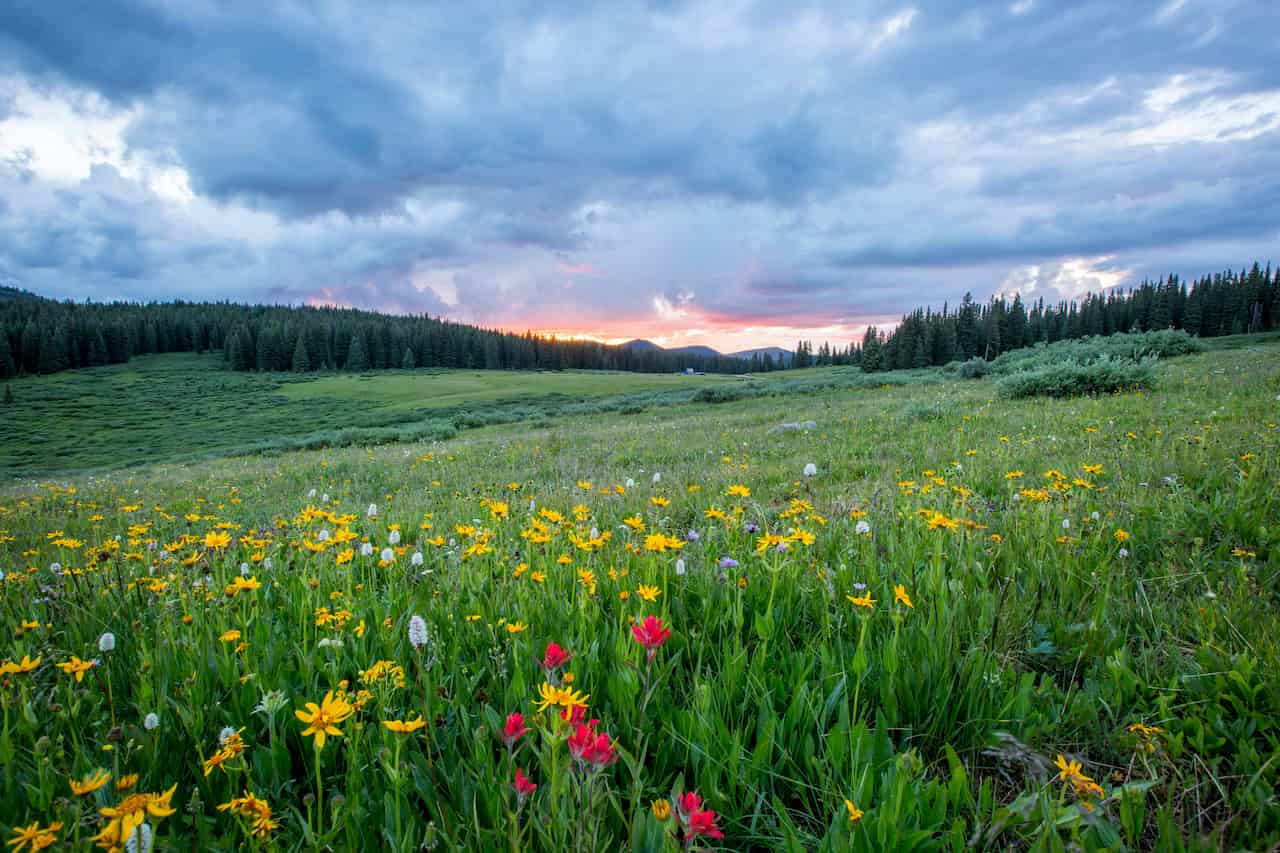
A well-managed meadow improves year on year as less competitive wildflowers establish more firmly and coarse species are gradually exhausted. The key ongoing tasks are prompt removal of any vigorous perennial weeds before they set seed, removal of cut material every year without exception, and patience – many native wildflowers do not flower in their first year and a meadow that looks disappointing in year one often transforms completely in year two. A meadow in full flower from June to September is one of the richest wildlife habitats a UK garden can contain, supporting the same pollinators that benefit from a nearby bee house and creating a complete seasonal resource from early spring blossom through to late summer seed heads that finches and sparrows rely on through autumn and winter.
Share on socials: