At a glance
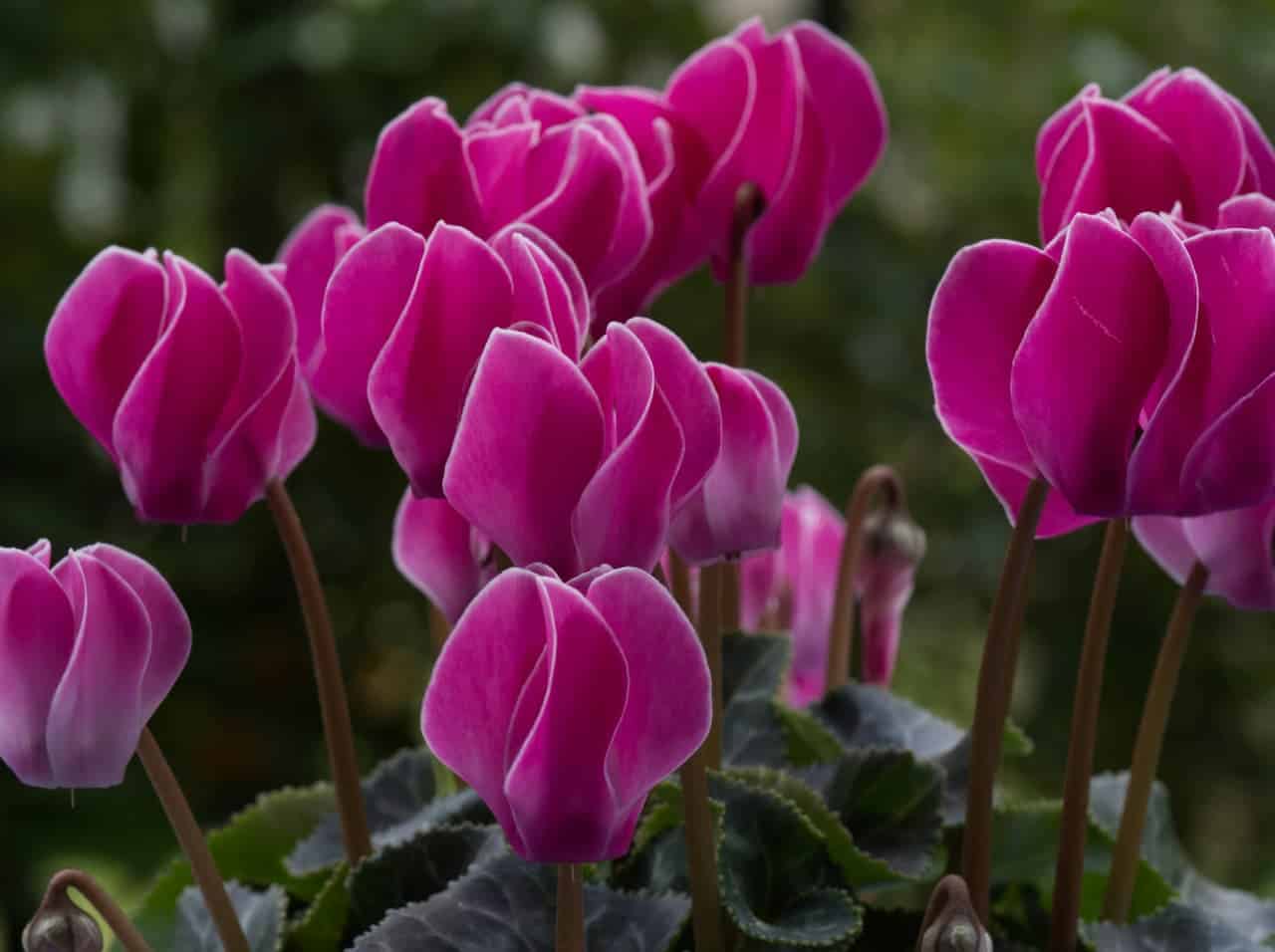
The cyclamen is one of the most misunderstood houseplants sold in the UK. It arrives in October looking spectacular: bright flowers in pink, red, white, or purple above silver-marbled leaves, widely available, not expensive, and it becomes a gift, a window display, a Christmas table decoration. And then in March or April it looks dreadful: leaves yellowing, flowers gone, the whole thing apparently dying. Most people throw it away at this point. That is the mistake. The plant is not dying. It is doing exactly what it evolved to do, and if you understand that, the same plant will flower for you every autumn for years.
The thing to know about cyclamen is that the species sold as houseplants, Cyclamen persicum, comes from rocky hillsides in North Africa and the Eastern Mediterranean, where hot dry summers are followed by cool wet winters. That is its lifecycle: grow and flower through autumn and winter, go dormant in summer, come back in autumn. Kept at the right temperature, watered correctly, and given a proper rest in summer, a cyclamen is not a difficult plant. Get the temperature or the watering wrong and you will be back buying a new one every year. The two things are related: most of the watering mistakes also happen because the plant is too warm.
What you are actually buying and what to look for
The cyclamen sold as houseplants are cultivars of Cyclamen persicum, not the hardy outdoor species. This matters because people sometimes try to keep florist cyclamen outdoors year-round or to bring outdoor cyclamen plants inside, and neither works well. Cyclamen persicum is tender. It cannot cope with frost, and it is adapted to cool but not cold indoor conditions. The outdoor plants, varieties of C. hederifolium and C. coum, are completely different in their needs and are best kept outside.
When buying a cyclamen, look for one that has plenty of buds rather than fully open flowers. A plant with lots of buds will give you weeks more display than one that has already peaked. Look at the base too: pick up the pot and press gently around the tuber at soil level. It should feel firm and solid. A soft or mushy base is the beginning of basal rot, which is difficult to reverse.
Cyclamen are available in UK shops from October to early February. The discounted stock that appears at the end of this season can represent good value, but check the tuber carefully. Plants that have been kept too warm in a shop, or overwatered in display conditions, may already have rot starting.
One thing worth stating at the outset: all parts of the cyclamen are toxic to pets and to people, with the tuber being the most toxic part. If you have cats, dogs, or small children, keep cyclamen out of reach. Ingestion causes vomiting, nausea, and loss of appetite, and large amounts can be more serious.
The right spot: why most cyclamen fail in a fortnight
The temperature is usually what kills a cyclamen in a UK home, and it happens before the watering even becomes an issue. Most living rooms and kitchens sit at 18 to 22 degrees, which is comfortable for the people in them but too warm for a cyclamen. The moment the temperature consistently goes above 15 degrees, the plant starts to decline: flowers fade quickly, leaves yellow, and the plant begins to push into dormancy ahead of schedule. Put it on top of a radiator or a shelf above a heat source and you will have bare compost within weeks.
The correct spot is a cool room at between 10 and 15 degrees. In a typical UK house this usually means a cool conservatory, a porch, an unheated spare bedroom, or a windowsill on a north or east-facing wall. The windowsill on the main sitting room window often works well in winter because the glass keeps it a few degrees cooler than the room itself. The plant wants bright, indirect light, not direct sun, which causes the leaves to scorch. A few hours of gentle morning sun through an east-facing window is good. Strong afternoon sun through west or south-facing glass is too much.
At night, most UK rooms cool down naturally and cyclamen appreciate this. If you are regularly heating a room above 18 degrees in the evenings, the cyclamen is in the wrong place. Move it to a hallway or landing for the evenings, or accept that it will not last as long.
The ideal conditions at a glance:
Watering: the skill that keeps cyclamen alive
More cyclamen die from overwatering than from any other cause. The tuber, the swollen underground stem that drives the plant’s growth, is extremely vulnerable to rot if it sits in wet compost or if water is allowed to pool in its surface hollows. Once the tuber rots, the plant is lost. There is no coming back from it.
The best method is bottom watering. Set the pot in a shallow dish of water for about an hour, or until the surface of the compost feels moist when you press it with a finger. Then lift the pot out and let the excess drain away completely before putting it back on its saucer. This gets water to the roots without any reaching the crown. The crown, the point where the leaves emerge from the top of the tuber, must stay dry. Any water that settles in the hollows of the tuber will cause rot or grey mould within days.
If you prefer to water from above, do it from the edge of the pot, not over the centre. Aim for the compost at the rim, not the plant. Do it slowly, and stop before water reaches the crown. Some growers find this harder to control than bottom watering and switch to the saucer method for exactly that reason.
How often to water depends on the conditions. In a cool room, a cyclamen may only need watering every week to ten days during the flowering season. In a warmer spot it will dry out faster. The correct trigger is the feel of the compost: when the top centimetre or two starts to dry out, water. If the pot feels heavy when you lift it, the compost is still moist enough. If it feels light, time to water. Do not water on a schedule. Use the pot weight as your guide.
During dormancy, watering changes entirely. Once the leaves yellow and die back, reduce watering to almost nothing. The tuber needs to stay alive but not wet. A small amount of water every two to three weeks is enough to prevent it from shrivelling. Err on the dry side.
The most important watering rules:
The crown must stay dry at all times. The crown is the top of the tuber where the leaf stalks emerge. Any water that sits in its hollows will cause basal rot or grey mould within a few days. This is why bottom watering is so strongly preferable: it physically cannot wet the crown.
The yearly cycle: dormancy and how to get flowers every autumn
This is the part most people get wrong, and it is the difference between a cyclamen that flowers for one season and one that flowers for years. When the leaves begin to yellow in late winter or spring, that is not the plant failing. That is the beginning of dormancy: the plant shutting down in response to increasing warmth and day length, exactly as it would on a Mediterranean hillside as summer approaches. Fighting it by trying to keep the plant going is a mistake. Go with it.
Let the leaves die back. Continue removing them as they yellow, but do not try to force the plant to stay in leaf by watering more. Once flowering has finished and the leaves have all yellowed, cut the remaining foliage back to about two centimetres from the soil. Stop watering almost entirely. The pot should now go somewhere cool, dark, and well-ventilated. A frost-free shed, an unheated conservatory, a shaded outdoor spot in summer: all of these work. The goal is a dry, cool rest.
Through June, July, and most of August, leave the pot alone. Check it every couple of weeks and give it the smallest amount of water if the compost feels completely bone dry. If you leave the pot outdoors in a wet summer, lay it on its side to stop the compost from waterlogging. The tuber is ticking over, resting.
In late August or early September, small pointed petioles will push up through the soil. These are new leaves beginning to emerge. This is the signal to bring the plant back indoors, to a cool bright spot, and to resume normal watering. Growth will accelerate once it is in the right conditions and the first flowers should follow within a few weeks, usually by October.
When new growth has been established for a few weeks and the buds are forming, start feeding again. A general houseplant fertiliser every couple of weeks works for the early growth phase. Once flowers are opening, switch to a potassium-rich product labelled for flowering plants, which supports bloom production rather than leafy growth.
What to do at each stage of the year:
Feeding, deadheading, and repotting
Feeding during the active season is beneficial but needs to be modest. Too much feed, especially nitrogen-heavy products, produces lush leafy growth with fewer flowers. Feed every third watering while the plant is in bloom, every fourth watering while it is growing leaves but not yet flowering. Always water the compost before feeding to avoid chemical burn on the roots. Nothing during dormancy.
Deadheading extends the flowering season and prevents disease. Remove spent flowers and yellowing leaves by gripping the stem close to the base and pulling with a firm downward and slightly sideways tug. The goal is to remove the complete stem cleanly, not to snap off just the flower head. Stubs left behind rot and become entry points for botrytis. If you want to try saving seed, leave a few spent flowers to develop seed pods, which are ready to collect when they turn brown and feel dry.
Repotting should happen only every three years, and never while the plant is in flower. Cyclamen do better slightly pot-bound. The right time is at the end of the third dormancy, when new leaves are just beginning to emerge, signalling the tuber is alive and ready to grow. Use a terracotta pot only three centimetres wider than the current one. Fill it with a free-draining mix: cactus and succulent compost, or a soil-based multipurpose with added grit. Set the tuber so the upper half sits above the compost surface. Terracotta is strongly preferable to plastic because it helps prevent waterlogging.
The key rules for each care task:
Choosing between the two watering approaches. If you find it difficult to avoid wetting the crown when watering from above, the bottom watering method is the answer. Stand the pot in a shallow bowl of water, come back in an hour, then empty the bowl and let the pot drain. It takes almost no more effort and removes the risk entirely.
What the symptoms mean and what to do about them
Yellow leaves in autumn or early winter are usually caused by too much heat or overwatering. Move the plant to a cooler spot and check the soil before the next watering. If the compost is still moist, leave it. Yellow leaves in late winter or spring may just be the start of dormancy: if the plant has been flowering for two or three months and the temperature is climbing, this is probably natural. Do not water more in an attempt to stop it.
Wilting that comes on suddenly and does not recover after watering is usually root or tuber rot. Check the base of the plant: if the tuber is soft and mushy, the plant is unlikely to survive. Wilting that recovers after a thorough watering is just drought. Water more frequently.
Grey mould (botrytis) appears as fuzzy grey patches on flowers and stems. It is caused by excessive humidity and poor air circulation, usually combined with water on the crown or foliage. Remove all affected plant material immediately, move the plant somewhere with better air movement, and switch to bottom watering if you have not already.
No flowers is almost always a temperature or rest issue. A cyclamen that has not had a proper dormancy period in a cool, dark spot will often fail to bloom the following season. A plant kept consistently above 15 degrees during what should be its growing season will also not flower well. The most common cause is a warm room that never gets cool enough to trigger proper bloom development. Sort the temperature, give it a proper summer rest, and the flowers should follow.
Cyclamen mites are the main pest concern specific to this plant. Unlike spider mites or aphids, which are visible to the naked eye, cyclamen mites are tiny and cause characteristic damage: severely distorted, twisted, and stunted new growth, especially in the growing tips. The damage looks like the plant has been attacked by something invisible. There is no good chemical treatment available to home growers. Remove and destroy severely affected plants to prevent spread to other houseplants.
Common problems and what causes them:
Share on socials: