At a glance
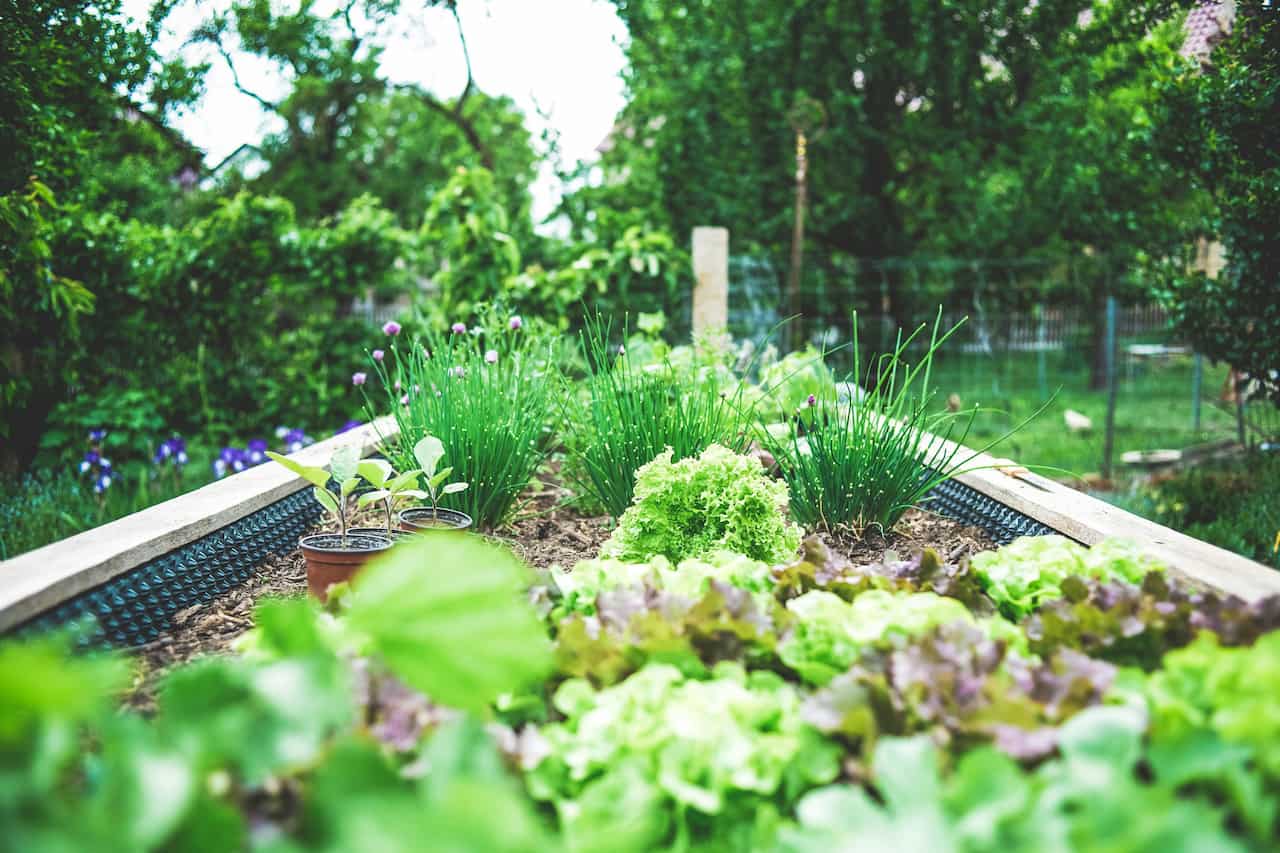
Raised beds offer something open ground cannot: complete control over what your plants grow in. In a UK garden where the native soil might be heavy clay, compacted subsoil or so shallow it hits rubble within 20cm, a raised bed lets you sidestep the existing ground entirely and fill the structure with exactly the soil mix your crops need. That control, used well, produces noticeably better results than fighting with difficult ground year after year.
The techniques that make raised bed gardening genuinely productive are not complicated, but they are specific. Getting the soil mix right, spacing plants for the bed rather than for open rows, managing moisture in a structure that drains faster than open ground – these details separate beds that perform from beds that merely exist. This guide covers the practices that consistently produce results in UK growing conditions.
Soil Preparation and Filling
The soil mix in a raised bed is the single most important factor in its productivity. The UK Raised Bed Soil Mix Recipe that works consistently across a wide range of crops is: 60% topsoil, 30% well-rotted compost, 10% horticultural grit or perlite. The topsoil provides structure and mineral content, the compost provides nutrients and improves moisture retention, and the grit ensures drainage so roots never sit in waterlogged conditions.
Never fill a raised bed with bagged compost alone. Pure compost is too light, too nutrient-rich in the short term but nutrient-poor in subsequent years, and it compacts badly over a single season. Garden centre topsoil mixed with homemade or bagged compost at the proportions above gives a stable, long-lasting growing medium that improves rather than degrades over time as you add organic matter annually.
Fill beds in autumn for spring planting. Filling a raised bed in autumn and leaving it to settle over winter means the soil has consolidated and any initial nutrient flush from fresh compost has passed by planting time. Spring-filled beds often suffer from air pockets and compaction in the first season.
Planting Density and Spacing
Raised beds are not open rows. The traditional row spacing used in allotment growing – wide gaps between rows to allow access with a hoe – is designed for ground you walk between. In a raised bed, you never walk on the soil. Spacing can be reduced significantly, with plants arranged in a grid pattern across the whole bed rather than in single rows. This close-spacing approach dramatically increases yield per square metre and, crucially, the dense canopy suppresses weeds by shading the soil surface throughout the growing season.
The principle is simple: space plants so their leaves will just touch at maturity. This creates a living mulch effect that keeps the soil cool and moist while crowding out weed seedlings. The spacing figures on seed packets are designed for open-row growing and are often wider than necessary for raised bed grid planting. With practise and observation over a couple of seasons, you will develop an instinct for how close is close enough for each crop in your specific beds – soil quality, sun levels and variety all influence the final result slightly.
Watering Raised Beds Effectively
Raised beds drain faster than open ground. This is largely an advantage – roots never sit in waterlogged soil – but it means watering frequency needs to increase compared to ground-level planting, particularly during dry spells. A raised bed in full sun can need watering daily during a UK heatwave, while the same crops in open ground might go three or four days between watering. Sandy or grit-heavy soil mixes drain even faster than a balanced mix, so if you went heavy on grit during filling, expect to water more often from May onwards.
The most effective long-term solution is a drip irrigation system or soaker hose laid under the soil surface at planting time. These deliver water directly to the root zone without surface evaporation, dramatically reducing water consumption while maintaining consistent moisture. For gardeners not ready to install irrigation, consistent hand watering in the morning, directed at the base of plants rather than the foliage, is the next best approach. Mulching the surface of the bed with straw, wood chip or well-rotted compost significantly reduces moisture loss and is worth doing on every bed in summer.
Crop Rotation in Raised Beds
Crop rotation prevents the buildup of soil-borne diseases and pests that target specific plant families, and it is one of the most important long-term practices in any productive vegetable garden. In a raised bed system with multiple beds, the standard four-bed rotation works well: brassicas, legumes, alliums/roots, and potatoes/tomatoes each occupy a different bed each year, rotating clockwise. Even with two or three beds, a simplified rotation – separating brassicas from roots and changing bed for potatoes each year – significantly reduces disease pressure compared to growing the same crop in the same soil year after year.
Never rotate tomatoes into the same bed as potatoes. Both are members of the Solanaceae family and share the same soil-borne diseases including blight. They should always be treated as one group in the rotation even though they are different crops.
Extending the Growing Season
Raised beds warm up faster in spring than open ground because the elevated soil mass is exposed to sunlight and air on multiple sides. This gives a two to four week head start on the growing season compared to ground-level planting in the same garden. Extending that advantage further with cloches, fleece or cold frames transforms a UK raised bed into a year-round growing space rather than a March-to-October one.
Fitting a simple cloche frame over a standard 1.2m wide bed allows sowings to start in late February or early March, with crops like broad beans, peas, salad leaves and early carrots producing much earlier than outdoor conditions would permit. A layer of horticultural fleece draped directly over plants on frosty nights provides significant protection without the need for a permanent structure. In autumn, the same protection extends the season into November and December for hardy crops like kale, chard, winter lettuce and spinach. Even a sheet of clear polythene weighted at the edges does a reasonable job at trapping warmth and extending the useful growing period by several weeks in either direction of the main season.
Annual Maintenance and Topping Up
Raised bed soil compresses and depletes over each growing season as plant roots break down organic matter and nutrients are extracted by crops throughout the year. An annual topping-up programme keeps the bed productive without stripping and refilling it completely. Each autumn, once crops are cleared, spread a 5-8cm layer of well-rotted compost or manure across the surface and leave it undisturbed over winter. Worms and soil organisms work this material in naturally, and by spring the bed level is restored and the soil structure improved without any digging required.
Every three to four years, add a more substantial refresh: mix horticultural grit into the top 20cm if the soil has become dense or compacted, adjust pH if growing brassicas (they prefer slightly alkaline conditions – add garden lime if the soil has acidified below pH 6.5), and consider adding a slow-release balanced fertiliser in early spring before the main planting season begins. A simple pH test kit used each spring costs very little and prevents years of underperformance from crops that are silently struggling with soil acidity. Checking pH takes five minutes and removes all the guesswork about why certain crops are not performing as well as they should.
One advantage of raised beds that is often overlooked is the absence of compaction. Because you never walk on the growing surface, the soil stays loose and aerated year-round. Roots penetrate easily, water moves through freely, and soil organisms thrive in undisturbed conditions. The no-dig approach – adding organic matter on top each year without turning the soil – works exceptionally well in raised beds precisely because the structural integrity of the soil is never broken by feet or tools. After the first season of establishing good soil, the ongoing maintenance work is minimal compared to maintaining open ground at the same level of productivity over time.
Share on socials: