At a glance
Geum – avens – is one of those border perennials that experienced gardeners recommend enthusiastically while beginners often overlook it entirely in favour of more familiar names. The reasons for this recommendation are practical rather than sentimental: modern Geum cultivars produce flowers in warm orange, coral, red, yellow and soft peachy-pink from April onward, flower over an exceptionally long season compared with most spring perennials, require almost no maintenance beyond an occasional divide and a cut-back after the first flowering flush, and are fully hardy throughout the UK including in northern Scotland. For gardeners who want reliable warm colour in the spring and early summer border without demanding plants, Geum is consistently one of the best options available.
The genus has been transformed by breeding over the past fifteen years. The old cultivars – ‘Mrs J Bradshaw’ in scarlet and ‘Lady Stratheden’ in yellow – were well-regarded but flowered relatively briefly and had a tendency toward semi-double forms that set seed poorly and lost vigour after a few seasons. The newer cultivars from breeders including Blooms of Bressingham, Terra Nova Nurseries and others have addressed these issues directly: ‘Totally Tangerine’, ‘Sangria’, ‘Cosmopolitan’ and ‘Georgia Peach’ all flower for two to three months longer than the old varieties, produce more flowers per plant, and maintain vigour over many seasons without deteriorating. These modern cultivars represent a genuine improvement and are the ones worth growing in a UK border today.
Best Geum Varieties for UK Gardens
The modern Geum range covers a wider spectrum of colour and height than most gardeners realise. The following varieties are all widely available from UK nurseries and online suppliers and represent the strongest performers across the range of UK growing conditions.
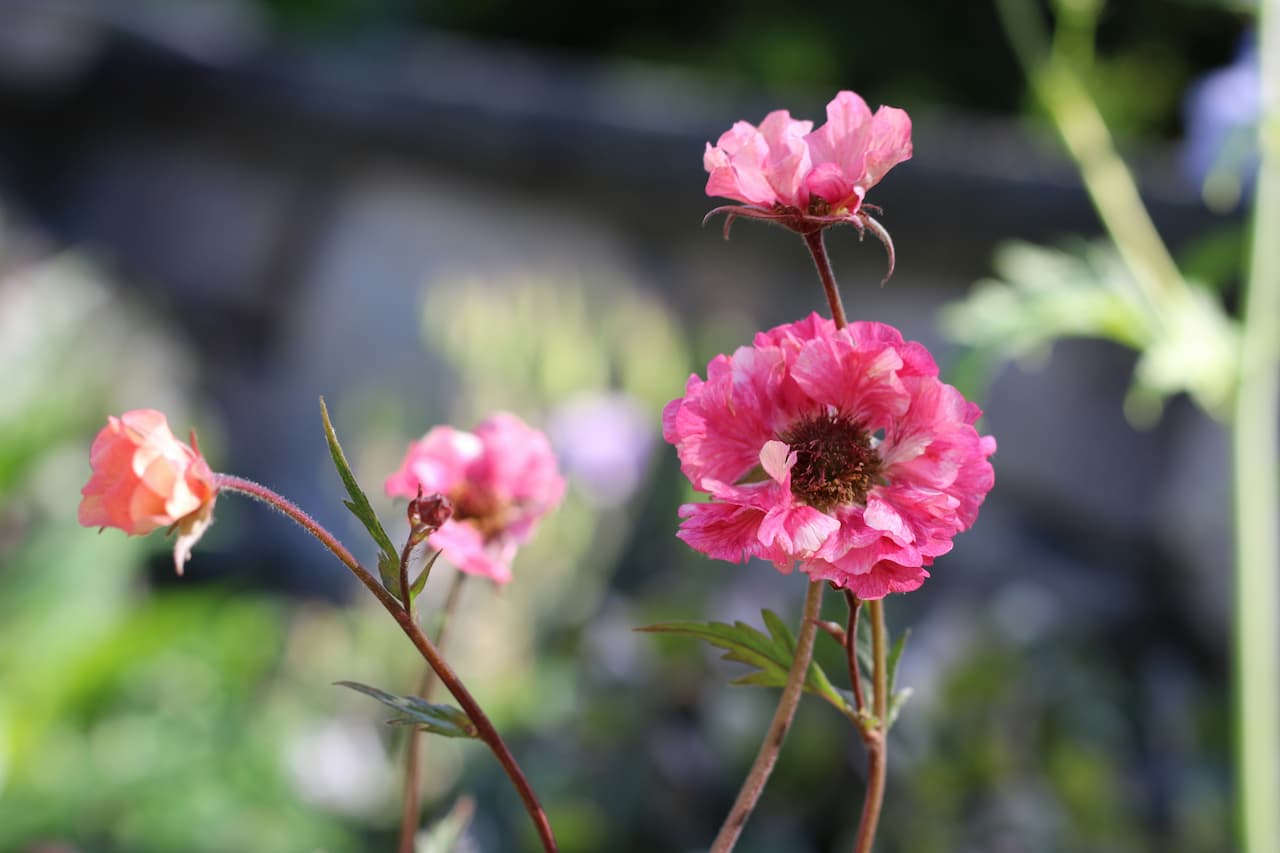
‘Totally Tangerine’ remains the most widely planted modern Geum for good reason. The apricot-orange single flowers on wiry 60cm stems bloom from April and, with regular deadheading, continue well into August – an exceptional flowering period for any herbaceous perennial. The flowers are beloved by bees and hoverflies, which are attracted to the open, accessible form of the single flower. Unlike some of the double-flowered cultivars, the pollen and nectar are fully accessible to pollinators, making it a genuinely wildlife-friendly choice as well as a visually attractive one.
‘Georgia Peach’ represents the softer end of the Geum palette and works particularly well in combination with salvias, catmint and other lavender-blue perennials where the peachy-pink tone provides warmth without the intensity of the orange and red cultivars. It associates naturally with the cottage garden planting style and pairs well with late tulips in May and early June before the tulips fade. ‘Sangria’ is the choice for gardeners who want rich, jewel-like colour – the deep crimson semi-double flowers are dramatic and work well with burgundy-leaved plants like Cotinus and dark-foliaged dahlias in late summer combinations.
Growing Conditions and Planting
Geum is genuinely unfussy about soil, which is one of its great practical virtues. It establishes in clay, sandy loam, chalk and most other UK soil types provided drainage is adequate. The one condition it genuinely dislikes is sitting in waterlogged soil through winter – the crown and root system are susceptible to rotting in persistently wet conditions, and Geum planted in low-lying areas with poor drainage will fail even if everything else is right. On heavy clay soils, improving drainage by incorporating grit and organic matter before planting, or raising the bed by 10-15cm, makes a significant difference to establishment success and winter survival.
Geum is an excellent choice for the middle layer of a mixed border where it fills the height band between low-growing edging plants and taller perennials at the back. At 40-60cm tall, the modern cultivars sit naturally in front of salvias, penstemons and taller geraniums, and their wiry branching stems give a lightness and movement to the planting that denser, more upright perennials cannot provide. In terms of companion planting, Geum works particularly well with ornamental grasses – the warm orange and coral tones of ‘Totally Tangerine’ and ‘Cosmopolitan’ glow against the buff and silver foliage of Stipa gigantea, Calamagrostis and Deschampsia in early summer, and the grasses’ movement gives the combination a naturalistic quality that formal perennial groupings rarely achieve.
From seed, Geum germinates readily but the cultivated hybrids do not come true to type – seedlings from named cultivars will be variable, typically producing flowers in a mix of orange, yellow and red that may or may not resemble the parent. This is not a problem if you want a mixed planting, but for specific cultivar colours it is better to buy pot-grown plants or divide established clumps. Geum seeds require a period of cold stratification to germinate well – either sow in autumn and leave outside through winter, or refrigerate moist seed for 4-6 weeks before sowing indoors in spring. Germination typically takes 2-4 weeks at 15-18°C once the cold requirement has been satisfied.
Growing Stages Through the Year
The Geum growing year starts earlier than most gardeners expect. New basal leaves begin to emerge from the crown in February and March – often while overnight frosts are still occurring – and the first flower buds appear in April on established plants. This early start is one of Geum’s most valuable characteristics, as it provides colour in the border at a time when relatively few perennials are in flower. The first flush of flowers typically runs from April through June, after which the plant benefits from having spent flower stems cut back to the basal rosette to encourage a second, longer-lasting flush of blooms from July into August.
Established plants in their second and third seasons flower significantly more prolifically than newly planted specimens in their first year. A Geum planted in spring will produce some flowers in its first season but will not reach full productivity until the following year once the root system has established properly. This is normal and expected – planting out in autumn gives the root system a full winter to establish before the first full flowering season the following spring, which is why autumn planting often produces better first-year results than spring planting. Mulching around the crown in late autumn with a layer of garden compost helps retain soil moisture and provides modest frost protection during establishment.
Common Problems and Fixes
Tips for Best Results
Share on socials: