At a glance
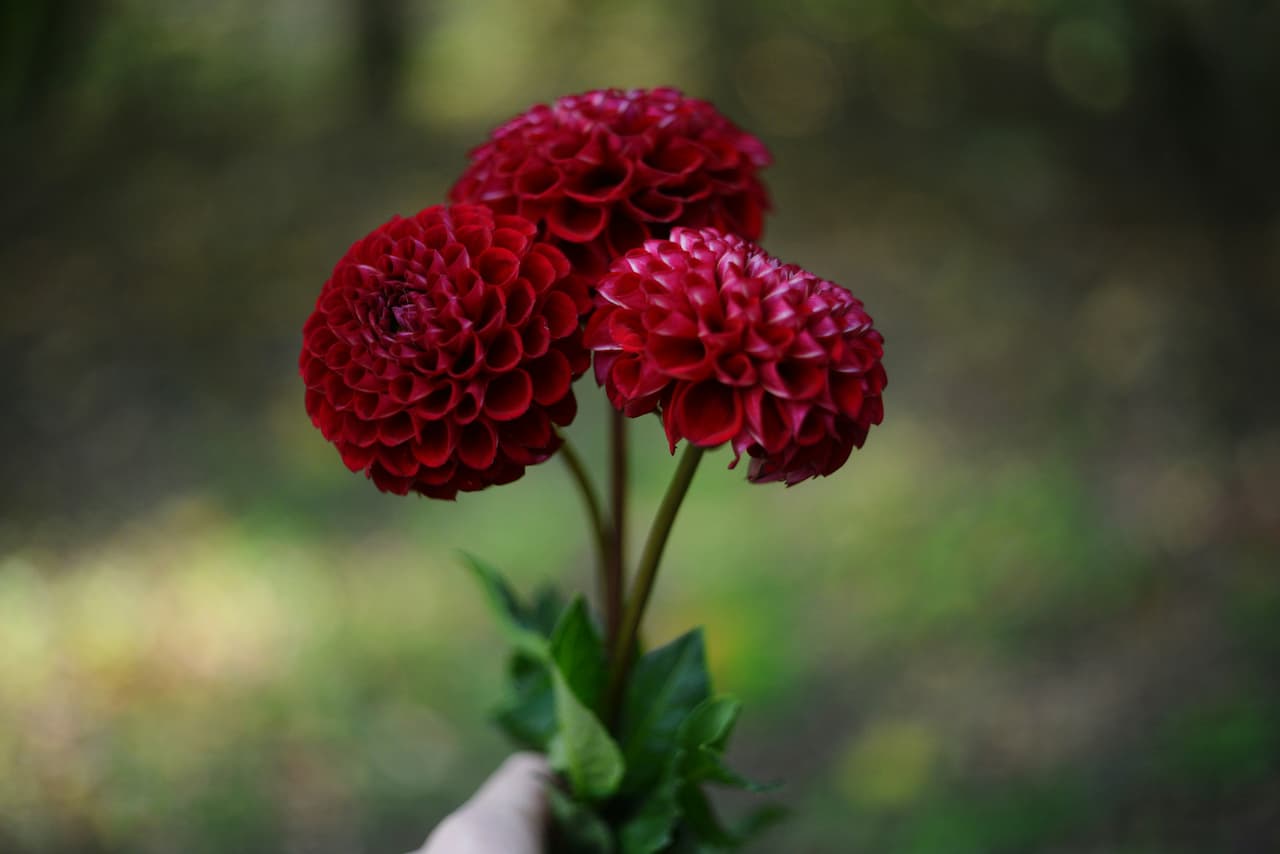
Black dahlias are not a single variety but a category of dahlias with very dark flowers, ranging from deep burgundy-red through chocolate-maroon to the closest available approximation of true black. No dahlia produces genuinely black flowers. The darkest cultivars achieve a very deep, saturated plum or near-black in certain light conditions, particularly on overcast days or in the evening when bright sunlight is not bleaching the colour toward red. The effect is dramatic and unlike anything else available for a late-summer and autumn garden.
The most useful dark dahlias for UK gardens combine deeply pigmented flowers with dark or near-black foliage, which amplifies the flower colour and provides sustained interest before flowering begins. Dahlias are mildly toxic to dogs, cats and horses if ingested and the tubers in particular should not be eaten, though they do not pose a serious risk to people.
What black dahlias are
The Bishop series, which includes Bishop of Llandaff, Bishop of Auckland and related cultivars, is the best-known group combining very dark flowers with near-black foliage. Other dark-flowered dahlias without dark foliage, such as Black Jack, Arabian Night and Nuit d’Ete, produce the same intense flower colours on green-leaved plants. Each type offers a different character in the garden, and the choice depends on whether the combination of dark flower and dark foliage is the priority or whether a larger, more fully double dark flower is the goal.
The flowering season for all these varieties runs from midsummer through to the first frost, providing colour over a longer period than almost any other garden plant. They need lifting and storing through winter in most UK gardens, but the effort is straightforward and the tubers increase in size and number each year, quickly building a larger display.
Choosing dark dahlia varieties
The table below covers the most reliable dark dahlia varieties for UK gardens, including flower form, colour depth and approximate height. All are readily available as tubers in early spring.
The Bishop series varieties are the most versatile for a UK garden because the dark foliage contributes colour from the moment the plants emerge until the first frost, providing a much longer season of interest than varieties where the foliage is plain green. Bishop of Llandaff was bred by a Cardiff nurseryman and named in 1924 to honour the Bishop of Llandaff, making it genuinely Welsh in origin and one of the oldest still-popular dahlia cultivars in UK gardens.
Planting black dahlias
Dahlias are frost-tender. Do not plant outside until after the last frost date, which in most of the UK falls in mid May. In cold northern or upland areas, wait until late May or even early June. Plant tubers in a sunny position in well-drained, fertile soil. Full sun is essential for the best flower colour and most abundant flowering. Dark dahlias in partial shade produce fewer flowers and the foliage colour on Bishop types will be less intense. Dig a hole large enough to accommodate the tuber comfortably, typically 15 to 20 centimetres deep. Place the tuber horizontally with the old stem or the visible eye pointing upward. Cover with soil and water in gently.
Space plants 60 to 90 centimetres apart for most cultivars. The Bishop types and other medium-height dahlias can be slightly closer at 60 centimetres, while larger decorative types need the full 90 centimetres to develop properly. In containers, use a pot at least 30 centimetres in diameter with fertile, free-draining compost. Containers heat up faster in spring, which can allow slightly earlier planting in a sheltered spot before moving outside permanently.
Supporting dahlias
Dahlias taller than about 60 centimetres need staking. Insert a strong stake or bamboo cane at planting time, before the tuber is covered, to avoid damaging it later. A single cane driven in beside the tuber is sufficient for small to medium varieties. Larger decorative dahlias may need a cage of three or four canes with soft twine running between them. Tie the main stem loosely to the stake as it grows, using soft ties or garden twine. Do not tie tightly or the stem will be constricted as it grows. Stake at planting, not later, because pushing canes into established growth risks spearing a tuber or severing roots.
Watering
Dahlias need consistent moisture through the growing season but cannot tolerate waterlogged conditions. Water regularly during dry spells, aiming for a deep watering once or twice a week rather than frequent shallow watering. Deep watering encourages the roots to develop downward rather than staying near the surface where they are vulnerable to drying out. Mulching around the base of established plants with 5 to 8 centimetres of well-rotted compost or bark mulch helps retain moisture and reduces how often watering is needed. Keep mulch away from the stem base to prevent rotting. After the first frost blackens the foliage, stop watering entirely as the plant has finished its growing season.
Feeding
Dahlias are heavy feeders, but the type of feed matters as much as the frequency. The table below sets out what to use and what to avoid.
Pinching out
Pinching out the growing tips of young dahlia plants when they reach around 30 centimetres tall encourages branching and produces a bushier plant with significantly more flowering stems. Remove the tip of the main stem just above a pair of leaves. This causes the two leaf buds below to develop into side shoots, each of which will go on to produce flowers. A pinched plant produces noticeably more flowers than an unpinched one, though flowering begins a week or two later.
The Bishop series benefits particularly from pinching out. Without it the plant tends to grow as a single tall stem with a single flower on top. With it, the plant branches into three or four main stems each carrying multiple buds, which is far more effective. Pinch out once when the plant reaches 30 centimetres. Do not continue pinching throughout the season or you will delay flowering indefinitely.
Pinch at 30 centimetres, not earlier. Pinching too early when the plant is still small removes the main growing point before the plant has built enough root and leaf area to respond well. At 30 centimetres the plant has enough energy reserves to branch vigorously in response.
Deadheading
Deadheading spent flowers extends the flowering season significantly. Remove finished flowers as soon as the petals begin to drop, cutting back to a healthy pair of leaves or the next bud in the stem. Left unpicked, dahlias will set seed and reduce their production of new flowers. Regular deadheading every few days through the season keeps the plant producing new buds continuously from midsummer to the first frost. On dark-flowered varieties, spent flowers are particularly visible as the petals bleach and fade, making it easy to identify what needs removing.
Lifting and storing tubers
After the first frost blackens the foliage, the tubers need to be lifted for winter storage in most UK gardens. The process below sets out the correct sequence, which matters because rushing any stage leads to tuber loss in storage.
In milder areas of the UK with good drainage, dahlias can be left in the ground over winter. Cut the stems back, apply a thick mulch of straw or dry bark over the crown, and mark the position clearly. This works reliably in the south and west of England but is not recommended in colder, wetter areas or on heavy clay soil where the combination of cold and moisture will kill the tubers.
Growing from cuttings
Dahlias are straightforward to propagate from basal cuttings taken in spring, which is the best way to increase stock of a favourite dark variety. Dahlia seed does not come true to type, so seedlings rarely reproduce the parent’s colour characteristics reliably. The process below works consistently.
Pests and diseases
Dahlias are targeted by a predictable set of pests and diseases each season. The following are the most commonly encountered in UK gardens, with the symptom to look for and the correct response.
Earwig damage is commonly misdiagnosed. The irregular notching of petals caused by earwigs feeding at night looks like disease damage. If the flowers have ragged holes but the foliage looks healthy, check for earwigs inside the flowers during the day before assuming a disease problem.
Share on socials: