At a glance
Every winter, thousands of UK homeowners come home to a ceiling that has turned brown, a carpet that squelches underfoot, or a kitchen that has flooded while they were at work. Burst pipes are one of the most destructive things that can happen to a house, and most of the damage is preventable. The burst itself often happens in minutes. The water damage that follows can take weeks to dry out and months to put right. Getting ahead of it is far easier than dealing with the aftermath.
The good news is that pipes burst in predictable places, at predictable times, for predictable reasons. Understanding why it happens and where gives you most of what you need to stop it happening to you.
What you’ll need
Why pipes burst
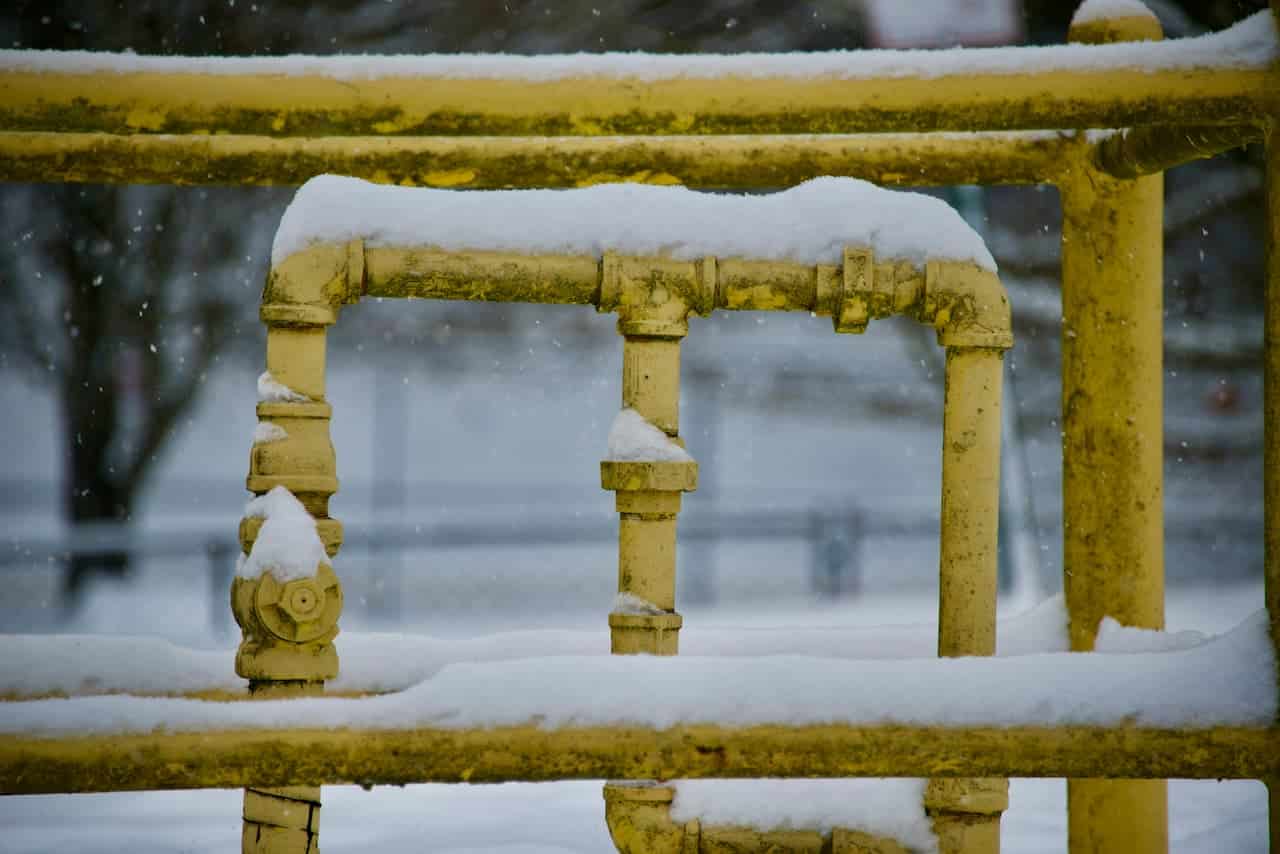
Water expands by roughly nine percent when it freezes. In a sealed metal or plastic pipe, that expansion has nowhere to go. The pressure that builds up can reach levels high enough to split copper and burst plastic, usually at joints, bends, or sections of pipe that have already been weakened by corrosion or earlier stress. The crack or split is rarely in the middle of a straight run of pipe. It is nearly always at the weakest point.
The actual burst usually happens not when the temperature is lowest, but when it starts to thaw. While the pipe is frozen solid the water is locked in place. As it begins to melt, the water that has been under pressure for hours or days is suddenly free to move and the damage becomes visible. This is why people return from a holiday to find a burst that happened while they were away, even though the temperature has risen again.
Pipes that run through unheated spaces are the most vulnerable. Any pipe that is genuinely exposed to outside temperatures without insulation is at risk the moment the temperature drops far enough for long enough. Older galvanised steel pipes are more vulnerable than copper and plastic: they corrode from the inside over decades, narrowing the bore and weakening the wall, and they are more brittle when cold. Houses built before the 1970s that have never had their pipework updated may have sections of steel pipework many decades old. These are a known risk.
Where burst pipes most commonly happen
Burst pipes are not random. They concentrate in a handful of predictable locations, almost all of which share the same characteristic: inadequate insulation from outside temperatures.
Insulating pipes to prevent freezing
Pipe lagging is cheap, straightforward to fit, and genuinely effective. Foam pipe insulation comes in sections sized for 15mm and 22mm copper pipe, which covers the vast majority of domestic cold water pipework. It has a pre-cut slit down one side that allows it to snap onto the pipe without tools. The joins and ends must be sealed with lagging tape or a proprietary joint cover. A join that is not sealed lets cold air reach the pipe at exactly the point where the insulation is thinnest.
For loft pipework, every pipe running from the cold water tank should be lagged, including the overflow pipe. Insulate the tank itself on its sides and top but leave the base open. This sounds wrong but it is deliberate: the small amount of warmth rising from the house below is the only consistent heat source the tank gets, and blocking it off entirely increases the risk of the water inside freezing.
For outside taps, insulation alone is not enough. A foam tap cover helps but it is not reliable protection in a prolonged freeze. Fit a proper isolating valve inside the house, close it at the start of winter, and drain the pipe to the outside. A drained pipe cannot burst.
Knowing where your stopcock is
If a pipe does burst, the first action is to find the stopcock and turn it off. Every person in the house should know where it is and be able to use it without looking for it. In practice, a significant number of homeowners do not know where theirs is, or have never checked whether it still turns.
The main stopcock is almost always located under the kitchen sink, on or near the pipework coming in from the street. In some properties, particularly flats or older terraced houses, it may be in a utility room, a hallway cupboard, or under a floorboard near the front door. Turn it clockwise to close, anticlockwise to open.
Test the stopcock once a year. Turn it fully off, confirm the water stops at the taps, then open it fully again. A stopcock that has not moved in many years can seize. If it will not turn or turns only partway, call a plumber before winter rather than finding this out in an emergency. The water company has a further stopcock at the boundary of the property, in the pavement or garden, but this requires a special key and is not for household use.
In a burst pipe situation, turn off the electricity too. If water has reached any area where there are light fittings, sockets, or the consumer unit, turn off the mains electricity at the consumer unit. Do not restore it until a qualified electrician confirms it is safe.
What to do if a pipe bursts
The first two minutes after a burst are the ones that matter most. How quickly the water is isolated and the electricity made safe determines whether the damage is serious or catastrophic. Speed here is worth more than any other preparation.
Turn off the water at the stopcock
Turn it clockwise until it will go no further. Every second the water is still running adds to the damage. If the stopcock is stiff or will not close fully, turn on every cold tap to reduce pressure while you deal with the immediate situation.
Turn off electricity in affected areas
If water may have reached any electrical fitting, turn off the mains at the consumer unit. Do not turn it back on until a qualified electrician has confirmed it is safe. Water and electrics together cause fires and electrocution risk.
Drain the system
Open every cold tap in the house and flush every toilet. This empties the pipework rapidly and reduces the volume of water remaining in the system. Leave taps open while you deal with the damage.
Find the burst
Water travels along ceiling joists and down wall cavities before it becomes visible. Where you see the water emerge is rarely where the pipe has split. Trace it back toward its source before attempting any repair.
Make a temporary repair or call a plumber
A pipe repair clamp will stop the flow as a temporary fix. To make a permanent repair, cut out the damaged section with a pipe slice and fit push-fit connectors with a short new piece of pipe to bridge the gap. For anything involving the boiler, the gas supply, or pipework you cannot safely access, call a registered plumber.
Holiday and long-absence preparation
More burst pipes happen during winter holidays than at any other time. A house that is empty and unheated for a fortnight in January, when a cold snap arrives, is the scenario that causes the worst damage. The two approaches to managing this are leaving the heating running at a low level, or draining the water system down entirely. Both work. The right choice depends on how long the absence is and how reliable the heating is.
Ask a trusted neighbour or friend to check the property every few days in cold weather. If a pipe has begun to freeze or a small leak has started, catching it early makes an enormous difference to the outcome. Leave your contact number and the location of the stopcock with them.
Insurance and documenting your pipework
Take photographs of your visible pipework before winter, particularly in the loft and under the kitchen sink, and store them with your household documents. If you ever need to make an insurance claim, being able to show the condition of the pipework before an incident is useful. It also helps any tradesperson who comes to do work.
Check your home insurance for trace and access cover and escape of water cover, and note what excess applies. Some policies have high excesses for water damage claims. Know what you are covered for before you need it. If you are going away for an extended period, check whether your policy requires the heating to be left on or the water to be isolated. Some policies will not pay out for burst pipe damage in an unheated vacant property.
If your property has an old lead supply pipe running from the street into the house, consider having it replaced. Lead pipes are old enough to be at higher risk from frost and corrosion, and there are public health reasons to replace them regardless. Some water companies offer part-funding for lead pipe replacement schemes.
Problems, symptoms and fixes
Most burst pipe issues follow recognisable patterns. Knowing the symptom and the right response can save a great deal of time and damage.
Share on socials: