At a glance
Solar panels are one of the most financially significant home energy upgrades available to UK homeowners. A well-sized system reduces electricity bills substantially, generates income through the Smart Export Guarantee by exporting surplus power to the grid, and adds demonstrable value to the property. The technology is mature, the installation process is well established, and the payback period for a typical UK system has shortened considerably as electricity prices have risen and panel costs have fallen. For most south-facing or south-west-facing homes with adequate roof space, the financial case for solar is now clearly positive.
Installing solar panels is not a DIY project. UK regulations require solar PV systems to be installed by a Microgeneration Certification Scheme (MCS) certified installer. Only MCS-certified installations qualify for Smart Export Guarantee payments and any available government incentives. The process involves a site survey, system design, scaffolding, electrical work and notification to the local Distribution Network Operator – all of which are handled by the installer as part of the installation package. This guide covers what you need to know before getting quotes, what happens during installation, and how to get the most from your system once it is live.
Is your home suitable?
The most important factor is roof orientation and pitch. South-facing roofs at a pitch of around 35-40 degrees produce the maximum annual output in the UK. South-east and south-west orientations typically deliver around 95% of the output of a true south-facing roof and remain financially viable in most cases. East or west-facing roofs deliver roughly 75-80% of south-facing output and can still work, particularly where electricity consumption patterns favour morning or evening generation. North-facing roofs are not suitable for solar PV in the UK – the reduction in output is too significant to justify the installation cost.
Shading is the other critical factor. Even partial shading from a chimney stack, a neighbouring tree or a dormer window can significantly reduce output, particularly in systems without microinverters or power optimisers fitted to each panel. A good installer assesses shading during the site survey and either recommends panel placement that avoids shaded areas or specifies optimiser technology where some shading is unavoidable. If your roof is heavily shaded for significant portions of the day, the financial case is weakened considerably and an honest installer will tell you so.
Roof condition matters too. If the roof covering is near the end of its serviceable life, replacing it before solar installation avoids the cost of later removing and reinstalling the panels. Most installers flag obvious concerns during the survey, but having a roofer assess the condition independently before committing to solar is sensible on an older property. Planning permission is not normally required for solar panels on a house in England, Scotland or Wales under permitted development rights, but exceptions apply to listed buildings, conservation areas and some flat-roof installations. Your installer confirms the planning position for your specific property as part of the survey process.
One factor that catches homeowners by surprise is how much shading changes between seasons. A chimney that casts no shadow in summer may shade part of a roof for several hours each day in winter when the sun is lower. Trees that appear to have gaps when surveyed in summer can create dense shade in other seasons. A thorough installer will consider shade paths at the worst-case winter sun angle, not just on the day of the survey. If you have any doubt about shading, ask the installer to show you their shade analysis and how they have accounted for it in the system design and expected output figures.
System size and what to expect
The right system size depends on your household electricity consumption and available roof space. A typical UK household uses around 2,700 kWh of electricity per year according to Ofgem’s standard consumption figures, though all-electric homes with no gas supply will be considerably higher. A 4kWp system on a south-facing roof generates roughly 3,400 kWh per year at average UK irradiance – enough to cover a significant proportion of a typical household’s annual demand, with surplus available to export.
System sizes for domestic installations typically range from around 3kWp (roughly 6-8 panels) for a smaller home or limited roof space up to 6kWp or more for larger households. Most domestic installations fall in the 3-6kWp range. Modern panels are typically in the 350-430W range, meaning a 4kWp system is usually 10-12 panels rather than the older figure of 16 or so. Roof space is rarely the limiting factor on a typical UK semi-detached or detached house – the inverter size and your electricity consumption are the more important considerations when sizing a system.
Battery storage can be added at the time of installation or retrofitted later. A home battery stores surplus solar generation during the day for use in the evening when panels are not producing, raising self-consumption from around 40-50% to 70-80% for a typical household. This significantly increases the financial return from the system over time and reduces dependence on grid electricity in the evening. For households with electric vehicles, combining solar with a home battery and smart EV charging creates an integrated system that can cover a very high proportion of total energy needs.
The decision on whether to add battery storage at the point of solar installation depends on your household’s daily electricity pattern. If your consumption is concentrated in the daytime when solar is producing – say, because someone is at home during the day, or because you can shift your appliance use to solar hours – then battery storage adds less marginal value. If your household uses most of its electricity in the evening when the panels are not generating, a battery captures generation that would otherwise be exported at the (typically lower) SEG rate and allows you to use it later at the much higher import rate. Understanding this dynamic helps you evaluate whether the additional upfront cost of a battery makes sense for your specific situation.
The installation process
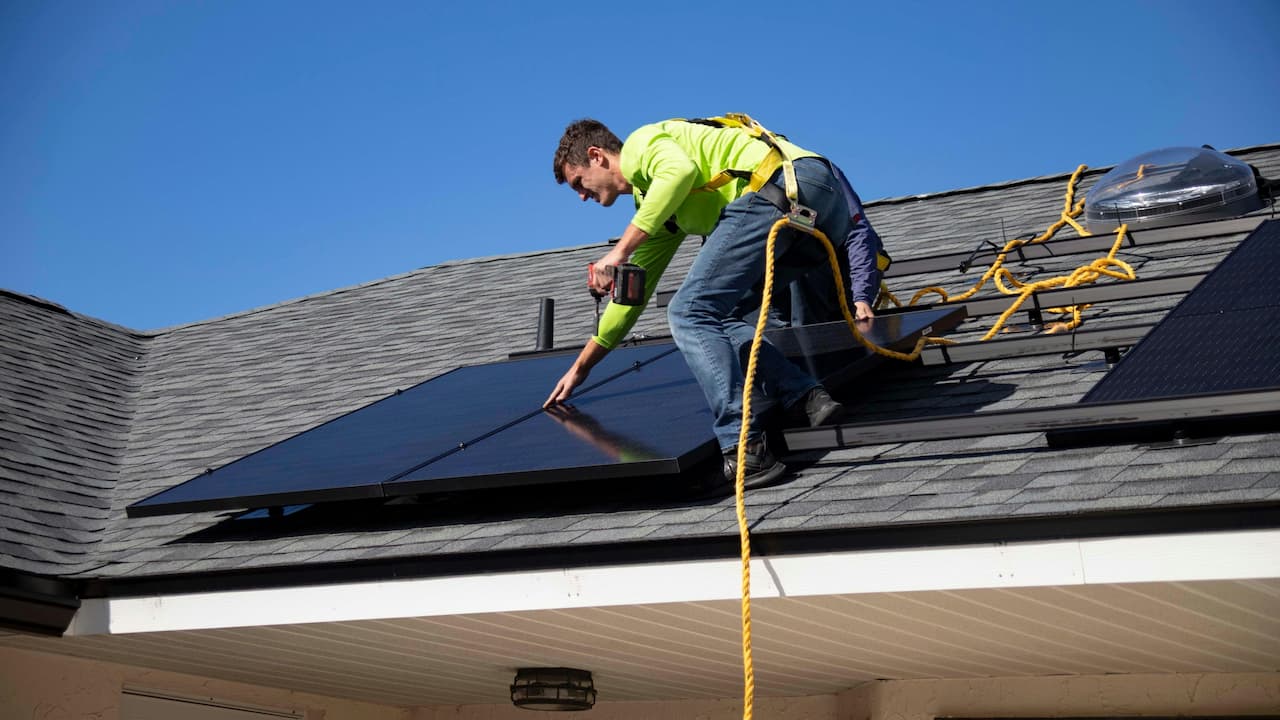
Solar installation involves several distinct stages, each handled by the installing company. A typical domestic system takes two to three days from scaffolding erection to final commissioning. Understanding the process helps you know what to expect and what to look for when comparing quotes from different installers.
Always get at least three quotes. Solar installation pricing is not standardised. The cheapest quote is not always the best value – panel quality, inverter brand, warranty terms and the quality of the mounting system all matter for a system expected to last 25 years. MCS certification is non-negotiable: only MCS-certified installations qualify for Smart Export Guarantee payments.
The Smart Export Guarantee
The Smart Export Guarantee (SEG) is the UK government scheme that requires licensed energy suppliers with 150,000 or more domestic electricity customers to offer export tariffs to eligible small-scale generators. When your solar system exports power to the grid that you are not using at home, the SEG pays you for each unit exported. The rate varies by supplier and tariff and changes over time. To be eligible, your installation must be MCS certified – this is one of the most important practical reasons to insist on an MCS-certified installer.
You choose your SEG supplier independently of your electricity supplier, and you can switch SEG tariff provider without changing your electricity supply. Comparing available SEG tariffs before registering is worthwhile – rates vary significantly between suppliers and the difference over the lifetime of the system adds up meaningfully. The SEG is not available in Northern Ireland, where separate arrangements apply through local energy suppliers.
Registering for the SEG requires your MCS certificate (provided by the installer), your MPAN (electricity meter number), and a smart meter with an export register. Most modern installations include a smart meter as standard, but if your home does not already have one your supplier will arrange installation. Once registered, SEG payments are typically made monthly or quarterly based on your export meter readings.
The volume of electricity you actually export – and therefore your SEG income – depends significantly on how much of your solar generation you self-consume. A household where everyone is at home during the day will self-consume a much higher proportion than one where the property is empty from 8am to 6pm. This is why usage pattern is one of the key factors an installer should discuss with you during the site survey: a household with low daytime consumption and high evening consumption benefits more from battery storage, while a household with high daytime consumption benefits more from maximising system size.
Maximising your returns
The financial return from a solar system depends heavily on how much of the generation you use directly in the home rather than exporting. Solar panels generate most power between roughly 10am and 3pm on clear days. Running high-draw appliances – dishwasher, washing machine, tumble dryer – during these hours rather than in the evening significantly increases self-consumption. Smart plugs and time-controlled appliances make this straightforward to manage without significantly changing daily habits. Electric vehicle owners can charge during peak solar generation hours, absorbing large amounts of otherwise-exported power at a considerably higher effective saving than the SEG export rate pays.
Monitoring your system properly is particularly important for long-term performance. Most modern inverters connect to a smartphone app that shows real-time generation data. A system that is consistently generating below its expected output for the time of year may have shading that was not anticipated during installation, a panel or connection fault, or an early-stage inverter issue. Catching this early avoids months of reduced generation and export income.
Annual maintenance requirements for solar PV are minimal. Panels should be inspected for obvious damage after severe storms and cleaned if monitoring data confirms that soiling is reducing output. In practice, UK rainfall handles routine cleaning and professional panel cleaning is rarely needed more than once every few years if at all. The inverter is the component most likely to require attention during the system’s lifetime – a quality string inverter typically needs replacing once over a 25-year panel life, which is a planned maintenance cost worth factoring into your long-term financial calculations from the start.
Choosing an installer
MCS certification is the non-negotiable starting point. An MCS-certified installer has met the scheme’s technical competence and quality standards, and the installation is covered by a workmanship warranty under MCS requirements. You can verify whether a specific installer is MCS certified using the search tool on the MCS website before getting a quote.
Beyond certification, look for an installer who has been trading for at least a few years and has verifiable customer reviews. Solar installation companies come and go, and a company with a solid trading history and review record is a considerably more reliable choice than a recently formed company offering attractive pricing. Aftercare matters over a 25-year system life – you want a company likely to still exist when you need support. This applies particularly to inverter replacement, which is typically needed around year 10-15.
Get at least three quotes and ask each installer to specify the panel manufacturer, panel model and inverter brand in writing so you can compare like for like. Panel quality and inverter brand vary significantly and both affect long-term performance and warranty coverage. String inverters typically carry a 5-10 year standard warranty and have a lifespan of 10-15 years – one replacement is likely to be needed over a 25-year panel life. Microinverters from established manufacturers carry longer warranties and typically match the lifespan of the panels but cost more upfront. Ask your installer which inverter type they specify and why.
Watch for red flags during the quote process. A company that pushes for a quick decision, refuses to provide detailed written specifications, or offers a price significantly below all other quotes without a clear explanation for the difference deserves caution. Legitimate installers are generally happy to explain the components they specify, why they have chosen them, and what distinguishes their installation from a cheaper alternative. A brief conversation about their approach to workmanship and warranty cover tells you a great deal about the quality of service you can expect over the next 25 years.
Common questions answered
Share on socials: